

Demographers attribute the decline to factors common in countries around the world: urbanisation, changing lifestyles and the spread of higher education, especially among women
President Recep Tayyip Erdogan of Turkey has called birth control a “betrayal” and his country’s falling birthrate a “disaster.” For much of his 23 years as Turkey’s top politician, he has urged Turks to have more children and promoted traditional families, in which fathers provide and mothers focus on the home — with three children, if not more.
“Why not have at least four children, or five?” Erdogan said recently. More births, he said, would empower Turkey to “proceed into the future in a stronger fashion.” His pitch is not working. Turkey’s total fertility rate has been declining for more than a decade. It now sits significantly below the 2.1 needed to keep the population stable without migration.
Demographers attribute the decline to factors common in countries around the world: urbanisation, changing lifestyles and the spread of higher education, especially among women. They also blame the economy shaped by Erdogan’s economic policies. Persistently high inflation and low wages have left many families struggling to afford housing, childcare and other necessities.
“Food is very expensive,” said Cigdem Akyuz, 41, a mother of two in Istanbul. She wanted a third child, she said, but found the prospect unaffordable. “He keeps saying: ‘Have more children! Have three kids!’” she said. “How is that even possible?”
Many countries, including the US and South Korea, are experiencing declines in fertility, raising fears among policymakers that ageing populations will cause labour shortages, bankrupt pension funds and weaken economies.
Driving Erdogan, analysts say, are not only economic concerns, but also a conservative Islamic vision for Turkish society. They also leave limited room for career-minded women, as Erdogan made clear before a large audience in Parliament while welcoming a new lawmaker to his party in 2022. “Children, how many of them?” Erdogan asked the lawmaker, Mehmet Ali Celebi. “One,” Celebi said. The president frowned. Celebi pointed to his wife, and said she had a career, and a PhD. The president was not impressed.
“Career is having children,” Erdogan said. “We have to increase the numbers.”
While Turkey’s fertility rate is not among the world’s lowest, its decline has been swift. The rate last peaked in 2014. In 2017, it fell below the replacement level. In 2024, the last year for which the government has released statistics, it reached an all-time low of 1.48. Hoping to turn the demographic tide, Erdogan has launched initiatives to encourage procreation. It declared 2025 the “Year of the Family.” This year begins the “Decade of Family and Population,” to last through 2035.
This month, the government extended parental leave for mothers to 24 weeks from 16 and for fathers to 10 days from five. Other new policies grant parents a payment of about $110 on the birth of their first child. Families can get monthly stipends if they have more than one child, $33 for the second and $110 for any others. Parents said these incentives were too small to influence their family planning, given how expensive basics have become. “It’s only enough for diapers,” said Zahide Erte, 38, who receives $110 per month from the government for her fourth child. She does not work outside the home, she said, and her husband, who works in a clothing factory, earns close to the minimum wage of $625 per month. Erte’s children attend public schools, and the family owns a two-bedroom apartment, but the quarters are tight. “We used to eat out once a month,” she said. “Now we can’t.”
Demographers expressed doubts that the government’s incentives would greatly affect the fertility rate.
Turks today are more likely than their predecessors to live in cities, have university degrees and want to start careers before having children, he said. That has increased the marriage age and decreased the number of children couples have.
“The new Turkish families of the younger generation are turning into one-child families,” he said. “A dual income is the ideal, with one child.”
Erdogan, who has four children, has been calling on Turks to have at least three for many years. Turkey’s minister of family and social services, Mahinur Ozdemir Goktas, called the population issue “a matter of survival.” “Our strongest fortress is the family,” Goktas said.
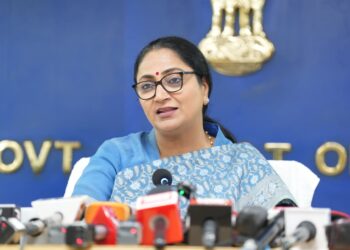
In an interview, Leyla Sahin Usta, a senior lawmaker in Erdogan’s governing Justice and Development Party, called raising the birthrate a long-term challenge. “We exist as a force with our young population and we want to keep it, in terms of labour force, economy and dynamism,” she said. Still, she said, others should have three children. “People should embrace the consciousness that the country needs this,” she said.
Parents who have followed Erdogan’s guidance said life was tough. “We survive, but if you ask if we go on vacation, I’ll say no,” said Fatma Avci, 39, who has two sons and a daughter.
Her husband is an electrician and she stopped working to raise the children. Her family lives in a one-bedroom apartment, she said, the largest they can afford. How many children would she advise young couples to have? “Two at most under the current circumstances,” she said. “Because it is very hard.”