
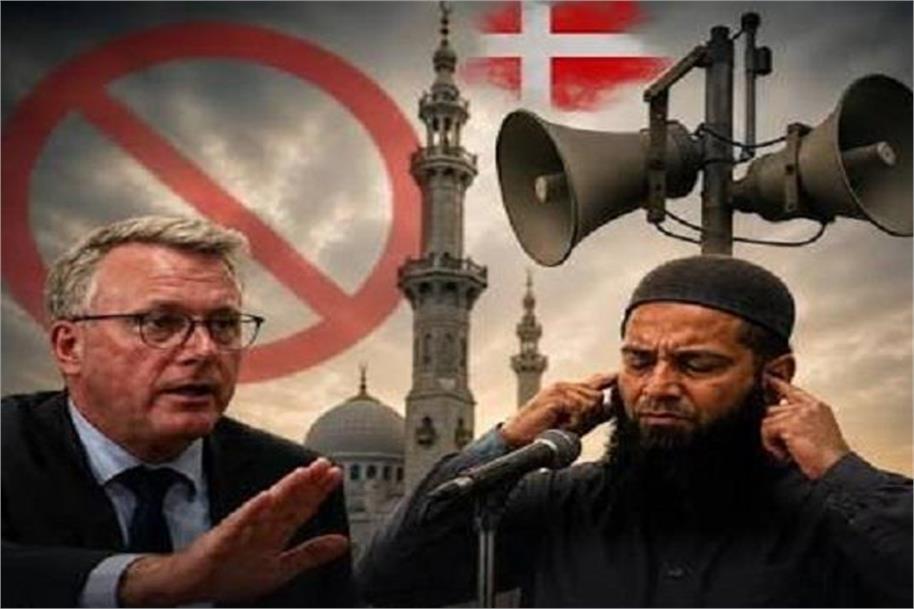
The Danish government is considering a legal ban on broadcasting the Muslim call to prayer (adhan) through loudspeakers at mosques, as part of a broader review of measures aimed at addressing what it describes as growing “Islamisation” in the country.
International Desk: Denmark is reviewing the possibility of prohibiting the public broadcast of the Islamic call to prayer (adhan) over mosque loudspeakers. The proposal forms part of the government’s wider efforts to address concerns over religious integration and the perceived rise of “Islamisation”.
Immigration and Integration Minister Morten Bødskov said the government is examining the legal and constitutional implications of such a move before deciding whether to introduce legislation.
“The call to prayer should not echo across Denmark’s rooftops. There is no place for it in Denmark. People should not feel as though they are walking through a suburb of Islamabad,” Bødskov said, remarks that have triggered a fresh political debate across the country.
The proposal is reported to be the third attempt by the ruling Social Democrats government to restrict the use of mosque loudspeakers. However, ministers have emphasised that no final decision has been taken and that the proposal remains under legal review.
Officials are assessing whether a nationwide ban would comply with Denmark’s Constitution, particularly provisions safeguarding freedom of religion and the right to public worship. The government has indicated that any legislation will proceed only if constitutional experts determine that such restrictions are legally permissible.
Several municipalities, including Copenhagen, already impose local limits on the use of loudspeakers under existing noise-control regulations. Denmark also introduced legislation in 2023 banning the public desecration of religious scriptures.
Muslim Community in Denmark
Denmark has a population of around six million, with Christianity remaining the country’s majority religion. Approximately 270,000 Muslims live in the country, and there are around 100 mosques nationwide. The Muslim population has increased over recent decades, largely due to immigration from the Middle East, South Asia and other regions.
Bødskov also reaffirmed the government’s tough stance on illegal immigration, stating that authorities are steadily intensifying enforcement against foreign nationals residing in Denmark without legal permission.
Wider European Debate
Immigration, religious identity and social integration have become increasingly prominent political issues across Europe in recent years. Denmark has repeatedly witnessed debates over the hijab, religious symbols and the public expression of religious practices, reflecting broader discussions taking place across the continent.