

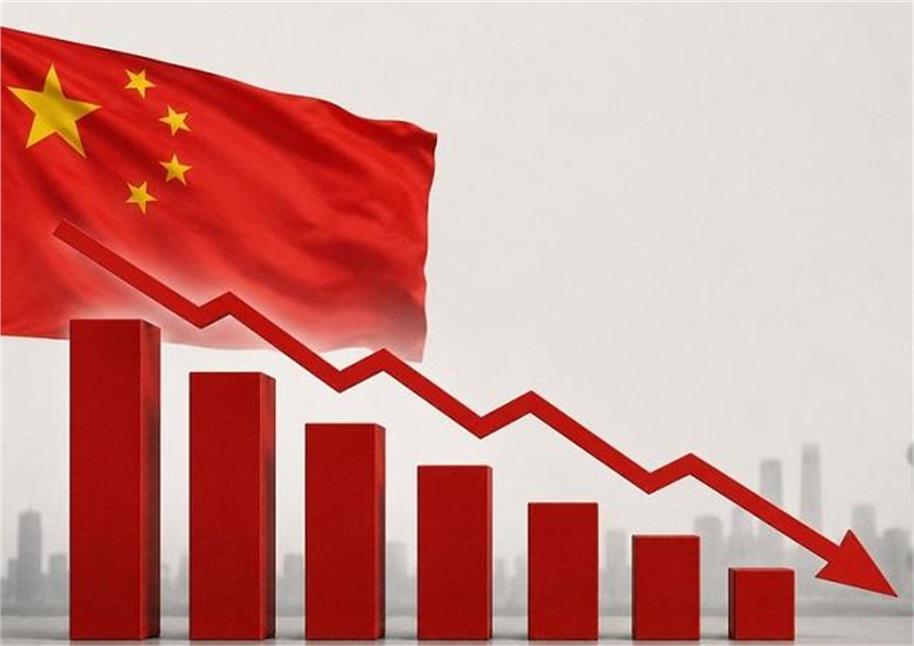
China’s economy is showing clear signs of losing momentum. Weak consumer demand, a shrinking population and declining exports are putting increasing strain on economic growth. Although the country is still expanding at around 5 per cent, the era of rapid double-digit growth appears to be over, raising concerns about its long-term economic stability.
International Desk: China is no longer experiencing the fast-paced economic expansion that once defined its rise. A recent report suggests that slowing domestic demand and an ageing population are becoming major obstacles to sustained growth. While the economy is expected to grow by roughly 5 per cent in 2025 and early 2026, this figure is far below the strong double-digit growth rates recorded in earlier decades.
The report highlights weak domestic consumption as a key issue. Consumers are spending less, resulting in lower demand across markets and slowing overall economic activity.
For years, China’s economic strength relied heavily on consumption, investment and exports. However, that balance is beginning to weaken. The export sector, once a major driver of growth, is facing mounting pressure due to global uncertainty, geopolitical tensions and stricter trade restrictions. At the same time, many businesses are relocating manufacturing operations to other South-East Asian countries, further reducing China’s competitive advantage.
China’s changing population structure is also emerging as a serious concern. The elderly population is increasing rapidly, while the number of working-age people continues to decline. This shift is leading to labour shortages and placing pressure on productivity and industrial output.
Investment trends are also showing signs of weakness. Fixed investment declined in 2025, reflecting lower business confidence and broader structural changes within the economy. Productivity growth has slowed as well, adding to doubts about China’s future economic performance.
The report concludes that China’s long-term growth will largely depend on its ability to improve productivity and address the challenges posed by a shrinking workforce. However, without stronger domestic demand, maintaining stable and sustained economic growth is likely to remain a difficult task.