

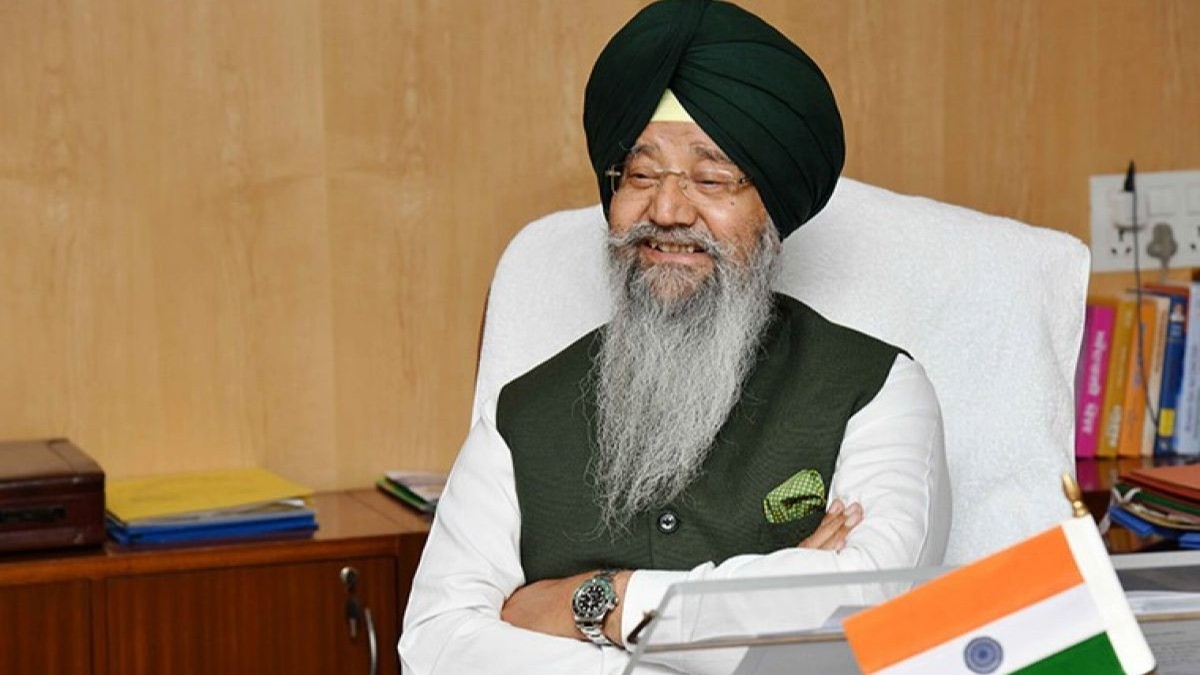
By Iqbal Singh Lalpura
Punjab today stands at a sensitive and decisive crossroads, perhaps the most significant since the Partition. The state that once pulled India from the brink of starvation in the 1960s, turning a “ship-to-mouth” existence into a surplus reality, is now a victim of its own success. The historical architecture of the first Green Revolution—pioneered by the administrative foresight of Partap Singh Kairon and catalyzed by the national rallying cry of “Jai Jawan, Jai Kisan” by Lal Bahadur Shastri—has reached its natural terminus. While we rightly take pride in our history, we must acknowledge that the 1960s model, built on the back of the Bhakra Dam and the scientific breakthroughs of Punjab Agricultural University (PAU), was a response to a national emergency of quantity. Today, the emergency is one of sustainability, ecology, and economic viability. We must understand that the Bhakra Dam was conceived in the British era and construction began in 1948, well before Kairon took the helm, yet it was the synergy of that infrastructure with the later institutional push of the PAU and the introduction of the Minimum Support Price (MSP) in 1966-67 that created the miracle. However, the miracle has aged into a malady.
The cracks in our agrarian foundation are no longer invisible; they are shouting from the clogged grain mandis and the parched water tables. The ongoing crisis of sale and storage in 2024 and 2025 is a stark reminder that the wheat-paddy monoculture has become an existential trap. In the last two years, Punjab has faced its most severe paddy procurement deadlock in decades. Our state warehouses are physically full of old grain, leaving no room for new harvests and forcing our farmers into a frustrating and often humiliating wait in the mandis. This “mountain of rice” problem is not just a logistical failure; it is a systemic signal that the world, and indeed our own country, no longer requires the same volume of rice from a state whose groundwater is nearly 80% overexploited. To secure the future of our youth and our soil, we must pivot toward a New Agriculture Revolution. This transition requires us to stop viewing agriculture as a traditional family hobby or a fixed cultural identity and start treating it as a modern, high-stakes industry. The roadmap for this industrialization lies in deep diversification—moving beyond the safety of the MSP and toward the profitability of horticulture, dairy, fishery, and integrated animal farming.
We often look at our Asian neighbors with envy, but we must look at them for inspiration. China, with a significantly larger population to feed than India, manages to achieve nearly double the cereal yields of our best districts. They did not achieve this through tradition alone, but through aggressive industrial integration. China’s success lies in its massive e-commerce networks that connect small farm gates directly to urban centers, bypassing the middlemen systems that often drain the Punjabi farmer’s profits. However, the most critical lesson from the China model is not just about technology, but about the mindset of the farmer. In China, development was not won through perpetual confrontation but through a fundamental shift in the rural thought process. To truly progress, our farmers must leave behind the ego of the past. Leathery agitation and constant protest are not the answers to 21st-century problems. The path forward requires a modern thought process that embraces hard work over entitlement and technology over tradition. Real growth happens when farmers stop looking at the streets and start looking at the markets. Agitation might bring short-term political visibility, but it rarely brings long-term economic stability or technological innovation.
Similarly, Japan, a nation with a small land area compared to Punjab, has mastered the art of precision agriculture. In Japan, every square inch of soil is treated as a high-tech production unit. They have shifted their focus from subsistence to high-value crops and smart technology. For a state like Punjab, where land holdings are shrinking with every generation, the Japanese model of “more from less” through robotics and vertical farming is not a luxury—it is a necessity. Diversification cannot be a mere slogan; it must be backed by a helping Government and robust infrastructure. Horticulture is our most immediate escape route. Currently, only a small fraction of Punjab’s land is under fruits and vegetables, yet it has the potential to generate significantly higher returns per acre than wheat or paddy. Transforming Punjab into a hub for agro-processing—where kinnows are processed into juice and potatoes into industrial starch within the state—is the only way to ensure value-addition stays in the farmer’s pocket. If we continue to sell only raw commodities, we will always be at the mercy of the buyer; if we sell processed goods, we control the market.
Furthermore, our livestock sector is a sleeping giant. While Punjab is already a leader in milk production, we must move toward global export standards in dairy. We need to integrate poultry and piggery into the mainstream farm economy, treating them as primary industrial activities rather than side-businesses. The recent success of farmers who have integrated fisheries and animal husbandry shows that a “Blue Revolution” can provide a steady, year-round income stream that is not dependent on the whims of a single harvest season. This is where the concept of the “farm as a factory” comes into play. A factory does not shut down for six months waiting for a crop to grow; it produces value daily. Our farms must do the same. Animal farming, when done with scientific precision, offers a hedge against the climate risks that are increasingly making traditional cropping a gamble.
For too long, the narrative of Punjab has been one of agitation. While the right to protest is fundamental in a democracy, the time has come to shift our collective energy toward a comprehensive development plan. We cannot expect different results while following the same cropping patterns of 1966. The state needs to attract industries that can process what we grow. We need cold chains, not just warehouses; we need laboratories, not just mandis. This requires a collaborative spirit. A helping Government, providing schemes like PM-KISAN and Soil Health Cards, can only do so much if the recipient is resistant to change. Development is a two-way street that demands modern thought, relentless hard work, and a departure from the “agitation-first” mentality. We must ask ourselves: has the path of constant blockade actually increased the per-acre income of the average small farmer, or has it merely served the interests of a few?
The first Green Revolution was born out of a national necessity to feed a hungry India. The second must be born out of a necessity to save a dying Punjab. We must protect our “Mother Earth” from the toxic legacy of chemical overuse and declining water tables. By embracing sustainable farm management and industrial-scale diversification, we can ensure that the Punjab of the 21st century is not just India’s granary, but its most advanced agricultural entrepreneur. The youth of Punjab deserve a future where they don’t have to look abroad for “rozgar” (employment) because their own soil provides them with a high-tech, industrial career in agriculture. We are witnessing a massive brain drain as our brightest minds leave for Canada and Australia, often to do menial jobs, because they see no future in the stagnant fields of their forefathers. We must change that. We must make farming “cool” again by infusing it with technology, data science, and global market access.
A helping government is ready to provide the framework, but the movement must come from within the farming community. We need to move from the “Arhtiya” (middleman) dependency to a direct-to-consumer model. This is where modern thought and technology meet. Imagine a Punjab where a farmer in Gurdaspur sells his organic produce directly to a family in Delhi or Dubai via an app, ensuring he gets 100% of the market price. This is not a dream; it is how the world works today. But to get there, we must set aside the ego that insists on doing things “the old way” just because that is how it was done fifty years ago. The leathery defiance that was once our strength in the face of invaders is now becoming a barrier to our own economic evolution. We must be brave enough to change.
In conclusion, the history of Punjab’s agriculture is a testament to what we can achieve when infrastructure, science, and hard work align. But history is a teacher, not a prison. The regime of Kairon and the era of Shastri gave us the tools to survive; now, we must find the tools to thrive. The transition to horticulture, dairy, and fisheries is the only viable path to reclaim our status as the premier state of India. It will require a “New Punjab” mindset—one that values the laboratory as much as the tractor and the entrepreneur as much as the tiller. Let us resolve to make agriculture an industry that is profitable, prestigious, and, above all, sustainable for the generations to come. The era of agitation must give way to the era of innovation. Only then can we truly say “Jai Kisan” in the modern world.