
• About Us
  • Contact
  • Privacy Policy
  • Terms and Conditions
Monday, June 8, 2026
  • Login
  • Register
Page3News Worldwide
  • Home
  • E-Paper
  • Subscriptions
  • Countries
    • USA
    • Canada
    • India
    • Balochistan
    • Thailand
    • UK
    • Australia
  • Language Wise News
    • Thai News
    • Punjabi News
    • Hindi News
  • Other News
    • World News
    • Latest Movie Reviews
    • Culture
    • Finance
    • Hollywood
    • Business
    • Entertainment
    • Sports
    • Lifestyle
    • Fashion
    • food
    • Health
    • Travel
    • Politics
    • Science
    • Tech
  • Multilingual Editorial
    • English Editorials
    • Thai Editorials
    • Hindi Editorials
    • Punjabi Editorials
    • Page3News Special
No Result
View All Result
  • Home
  • E-Paper
  • Subscriptions
  • Countries
    • USA
    • Canada
    • India
    • Balochistan
    • Thailand
    • UK
    • Australia
  • Language Wise News
    • Thai News
    • Punjabi News
    • Hindi News
  • Other News
    • World News
    • Latest Movie Reviews
    • Culture
    • Finance
    • Hollywood
    • Business
    • Entertainment
    • Sports
    • Lifestyle
    • Fashion
    • food
    • Health
    • Travel
    • Politics
    • Science
    • Tech
  • Multilingual Editorial
    • English Editorials
    • Thai Editorials
    • Hindi Editorials
    • Punjabi Editorials
    • Page3News Special
No Result
View All Result
Page3News Worldwide
No Result
View All Result
Home Breaking News

AI reshaping diplomacy: Can technology replace human understanding?

by Page 3 News International Desk
June 8, 2026
in Breaking News, World News
0
AI reshaping diplomacy: Can technology replace human understanding?
0
SHARES
0
VIEWS
Share on FacebookShare on TwitterShare on WhatsappShare on TelegramShare on LineShare on Email

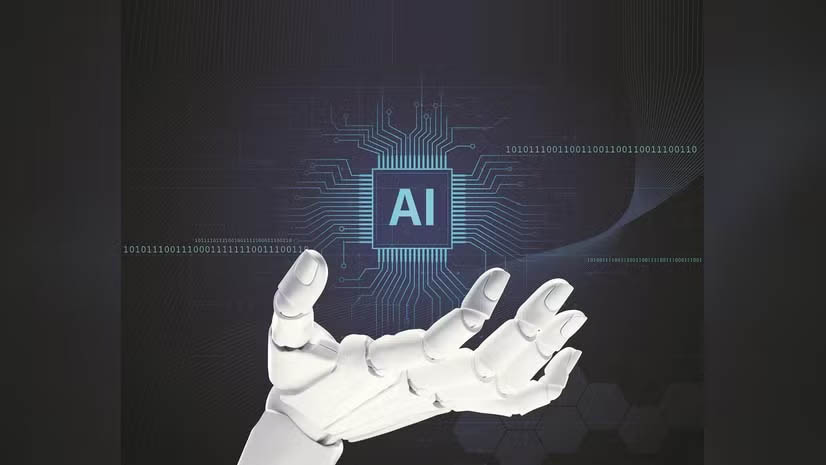
As global tensions rise, governments are turning to AI to analyse data, model negotiation outcomes and identify compromise options, reshaping modern diplomacy

From John F Kennedy and Nikita Khrushchev navigating the Cuban Missile Crisis in 1962 to Henry Kissinger and Zhou Enlai’s meetings that laid the groundwork for China’s opening up in 1971, modern history is full of examples of human judgment shaping great diplomatic moments. 

But what if artificial intelligence could help us face some of today’s most pressing crises better?  

Singapore is offering an early glimpse of what that future might look like. Last month, the city-state’s foreign minister, Vivian Balakrishnan, revealed that he had built a diplomatic second brain using an open-source technology called NanoClaw. The tool curates transcripts, speeches, and other material — particularly his own contributions — into a searchable database. It has become so useful, the minister joked, that he does not dare switch it off. 

The idea is quintessentially Singaporean in its efficiency, with appropriate shades of dystopia. Still, no serious diplomat — including Balakrishnan — would bet on an AI system negotiating the end to the war in Ukraine or resolving decades of hostility between the US and Iran. The minister’s central message is that while technology can increasingly handle computation, memory, and routine tasks, it cannot replace understanding. Or, as he put it: “You can delegate work, but you cannot delegate accountability.”

But in a world where diplomacy often feels in short supply, artificial intelligence can help policymakers cope with complexity. Governments across the globe are already using AI to synthesise huge amounts of data, model different negotiating scenarios, and identify potential areas of compromise.  

The US State Department is employing these tools to translate documents and summarise information. In Libya, the United Nations used a platform called Remesh to gather and analyse the views of thousands of citizens during the peace process in late 2020 that followed years of civil war. Because it worked on basic mobile phones and supported local dialects, it brought more voices into the conversation than traditional consultations might have managed. 

The World Bank, meanwhile, is using AI to predict refugee flows from South Sudan and the Democratic Republic of Congo into Uganda. This potentially gives governments and aid agencies more time to prepare housing, schools, healthcare, and other essential services before people arrive.  

For all of its promise, AI is also inherently vulnerable to risk, notes Asha Hemrajani, senior fellow at the Centre of Excellence for National Security at Singapore’s S. Rajaratnam School of International Studies. “Garbage in, garbage out,” she told me. “It depends on the data you input into the AI model you are building. And these systems are vulnerable to hacking and manipulation, which could lead to strategic miscalculations. In a high-stakes environment like diplomacy, you have to get it right — you have to keep humans in the loop.” 

Which is why, as impressive as Balakrishnan’s second brain sounds, it raises an uncomfortable question: Whose brain is it replacing? The jobs his tool could perform — drafting briefs, synthesising country reports, preparing speeches and parliamentary questions — has traditionally been the work of junior diplomats or policy staff. 

charts


RelatedPosts

India Slams Pakistan’s Sham Gilgit-Baltistan Polls; Says Illegal Occupation Cannot Be Whitewashed Through Fake Elections

Indian-Origin Man Alleges Racial Abuse in Canada; Video Sparks Online Debate

Taiwan expels four Chinese ships after incursion into restricted waters

Diplomacy is hardly unique in facing this dilemma, but the question is especially acute in Singapore, which is among the economies most exposed to AI. Bloomberg Economics estimates that roughly 40 per cent of employment could be affected by the technology — the highest share in the world. Sweden and the UK follow at around 30 per cent, while the US stands at 26 per cent. 

Exposure does not necessarily mean replacement. The figures tell us little about how quickly the technology will be adopted, or whether jobs will be augmented rather than eliminated. Singaporeans are surprisingly optimistic. Only 17 per cent believe workers are unlikely to benefit from AI — compared with 46 per cent in Germany.  

That may explain why the government has been able to press ahead with its AI ambitions. Singapore has signed an agreement with OpenAI and last week another one with Anthropic. It has also launched a joint AI alliance with South Korea — backed by a $300 million fund — and announced plans to deploy AI agents across the public sector. 

But moving fast comes with its own risks. The challenge is not whether to use AI in diplomacy, but how. Junior diplomats need to develop the judgment that no algorithm can replicate. Time spent learning languages, understanding cultures and experience with more senior diplomats is essential. 

Vital human qualities such as empathy and understanding are crucial to good diplomatic outcomes. The next great breakthrough will still require a person who can read a room and pick up on the signals that could make or break a peace deal. No AI-powered second brain can do that.


Get real time update about this post categories directly on your device, subscribe now.

Unsubscribe
Page 3 News International Desk

Page 3 News International Desk

The Page 3 News is a Multilingual Worldwide daily newspaper founded in 2021. It is published in Bangkok, Thailand by the Page 3 News Thai Limited Partnership. Page 3 News is available to the world in all the three formats i.e. e-Paper, digital and print. The Page 3 News is having offices in many countries like Thailand, India, Canada, USA, etc. and is currently published in English, Thai, Hindi and Punjabi languages.

Related Posts

India Slams Pakistan’s Sham Gilgit-Baltistan Polls; Says Illegal Occupation Cannot Be Whitewashed Through Fake Elections

India Slams Pakistan’s Sham Gilgit-Baltistan Polls; Says Illegal Occupation Cannot Be Whitewashed Through Fake Elections

by Page 3 News International Desk
June 8, 2026
0
6

India has strongly condemned Pakistan’s so-called assembly elections in the illegally occupied Gilgit-Baltistan region of Pakistan-occupied Kashmir (PoK), asserting that...

Indian-Origin Man Alleges Racial Abuse in Canada; Video Sparks Online Debate

Indian-Origin Man Alleges Racial Abuse in Canada; Video Sparks Online Debate

by Page 3 News International Desk
June 8, 2026
0
6

A young man of Indian origin in Kentville, Nova Scotia, Canada, has alleged that he was subjected to racial discrimination...

Taiwan expels four Chinese ships after incursion into restricted waters

Taiwan expels four Chinese ships after incursion into restricted waters

by Page 3 News International Desk
June 8, 2026
0
2

Taiwan's coast guard said that four Chinese ships, including three coast guard vessels, had sailed on Sunday afternoon into Taiwan's...

5.6-magnitude earthquake hits Bhutan, tremors felt in India, China, Nepal

5.6-magnitude earthquake hits Bhutan, tremors felt in India, China, Nepal

by Page 3 News International Desk
June 8, 2026
0
1

Bhutan lies in the seismically active Himalayan region, where the Indian and Eurasian tectonic plates continue to collide, making earthquakes...

8 dead after magnitude 7.8 quake hits Philippines, Tsunami alert for coasts

8 dead after magnitude 7.8 quake hits Philippines, Tsunami alert for coasts

by Page 3 News International Desk
June 8, 2026
0
1

The geophysics ⁠agencies ​of the Philippines and neighbouring Indonesia issued tsunami warnings. There were no immediate reports of major damage...

‘I call the shots’: Trump warns Netanyahu he has ‘no choice’ but to accept US-Iran peace deal

‘I call the shots’: Trump warns Netanyahu he has ‘no choice’ but to accept US-Iran peace deal

by Page 3 News International Desk
June 8, 2026
0
0

Donald Trump said the US was considering its options if negotiations with Iran do not succeed. US President Donald Trump...

Facebook Twitter Youtube Instagram Tumblr Pinterest

Page 3 News Multilingual Worldwide

The Page 3 News is a Multilingual Worldwide daily newspaper founded in 2021. It is published in Bangkok, Thailand by the Page 3 News Thai Limited Partnership. Page 3 News is available to the world in all the three formats i.e. e-Paper, digital and print.

The Page 3 News is having offices in many countries like Thailand, India, Canada, USA, etc. and is currently published in English, Thai, Hindi and Punjabi languages.

Category

Calanderwise News

June 2026
MTWTFSS
1234567
891011121314
15161718192021
22232425262728
2930 
« May    

© 2024 Page 3 News - First Multilingual Worldwide Newspaper based in Thailand.

Welcome Back!

Login to your account below

Forgotten Password? Sign Up

Create New Account!

Fill the forms below to register

*By registering into our website, you agree to the Terms & Conditions and Privacy Policy.
All fields are required. Log In

Retrieve your password

Please enter your username or email address to reset your password.

Log In

Add New Playlist

No Result
View All Result
  • Home
  • Subscriptions
  • E-Paper
  • World News
  • Balochistan
  • USA
  • India
  • Thailand
  • Canada
  • UK
  • Australia
  • About Us
  • Contact
  • Privacy Policy
  • Terms and Conditions
  • Disclaimer

© 2024 Page 3 News - First Multilingual Worldwide Newspaper based in Thailand.

This website uses cookies. By continuing to use this website you are giving consent to cookies being used. Visit our Privacy and Cookie Policy.