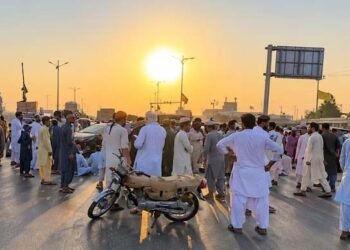

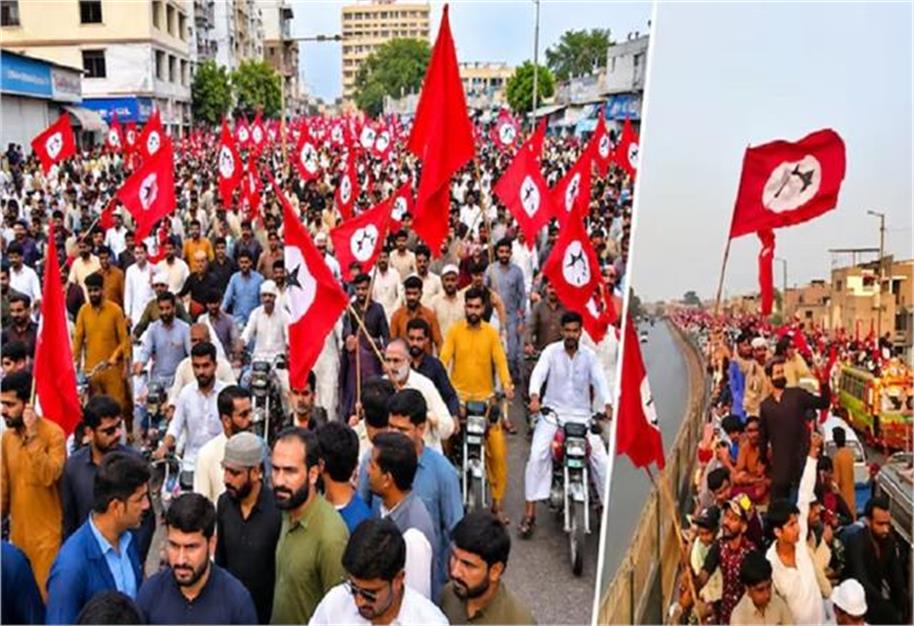
Thousands of people took to the streets in Karachi to oppose any move to divide Sindh or alter its existing boundaries amid growing discussions about restructuring Pakistan’s provincial system. Protesters, including nationalist leaders, political activists and lawyers, warned that any attempt to split the province without the consent of its people would face strong resistance. Pakistan Peoples Party chairman Bilawal Bhutto-Zardari has also warned that forcibly dividing Sindh could trigger serious political and social consequences.
Karachi: Political tensions are rising in Pakistan over discussions about reorganising the country’s four provinces and creating new administrative units. The proposed restructuring, which has been linked to Army Chief Field Marshal Asim Munir, has sparked opposition in Sindh, where thousands gathered in Karachi to defend the province’s territorial boundaries and cultural identity.
The demonstration took place this week and saw participants wearing traditional Ajrak scarves and Sindhi caps, symbols of the province’s cultural heritage. According to Pakistan Today, the rally was organised by the Jeay Sindh Rahbar Committee and attracted nationalist leaders, political workers, lawyers and members of the public.
Protesters strongly opposed any attempt to redraw Sindh’s geographical boundaries or change its administrative structure without public consent. They maintained that Sindh’s land, history and cultural identity could not be compromised for political or administrative reasons.
They also rejected the proposal to hold a referendum on creating new provinces or administrative units. The demonstrators urged Prime Minister Shehbaz Sharif’s government and the relevant institutions to avoid decisions that could deepen political divisions and create social unrest in the province.
Pakistan’s proposed provincial restructuring sparks controversy
The controversy comes amid discussions about restructuring Pakistan’s four provinces — Punjab, Sindh, Khyber Pakhtunkhwa and Balochistan. The proposal reportedly involves dividing the country into approximately a dozen or more administrative units.
The plan has been associated with Army Chief Asim Munir, although the government has not released any official framework or detailed proposal so far.
Supporters believe that creating smaller administrative regions could improve governance, streamline government operations and make public services more accessible. However, opponents fear that such a major restructuring could undermine Pakistan’s federal system and significantly alter the country’s existing political balance.
In an editorial published on 8 October, The Economist interpreted the possible restructuring as an attempt to weaken political opposition and consolidate the army chief’s influence over the country’s political system.
Bilawal Bhutto warns of consequences of forcibly dividing Sindh
Opposition to the proposed division of Sindh has also come from Pakistan Peoples Party chairman Bilawal Bhutto-Zardari.
Speaking at an event at the Karachi Press Club on 17 November, Bilawal warned that forcibly dividing Sindh could have serious consequences. According to Geo TV, he said such a move could create deep divisions in society, intensify hostility and potentially push ordinary people towards taking up arms.
He cautioned that the situation could escalate into violence and bloodshed if the province were divided against the wishes of its people.
However, Bilawal clarified that his party was not opposed to the creation of new provinces through constitutional and legal procedures, provided such decisions reflected the wishes of the people concerned. He stressed that no province or region should be divided through pressure, coercion or the use of force.
Bilawal questions proposal for a referendum
Bilawal also raised concerns about the suggestion of holding a referendum to decide the creation of new provinces. He argued that Pakistan’s Constitution already lays down a specific procedure for establishing new provinces, making a separate referendum potentially an attempt to circumvent the established constitutional process.
He further noted that referendums had previously been used in Pakistan to pursue undemocratic objectives.
Meanwhile, protesters in Karachi have warned that any attempt to change Sindh’s boundaries without the approval of its people would lead to a wider movement across the province.
They have vowed to resist any such initiative through constitutional, legal and democratic means, signalling that opposition to the proposed restructuring could intensify if the government moves forward without consulting the people of Sindh.