

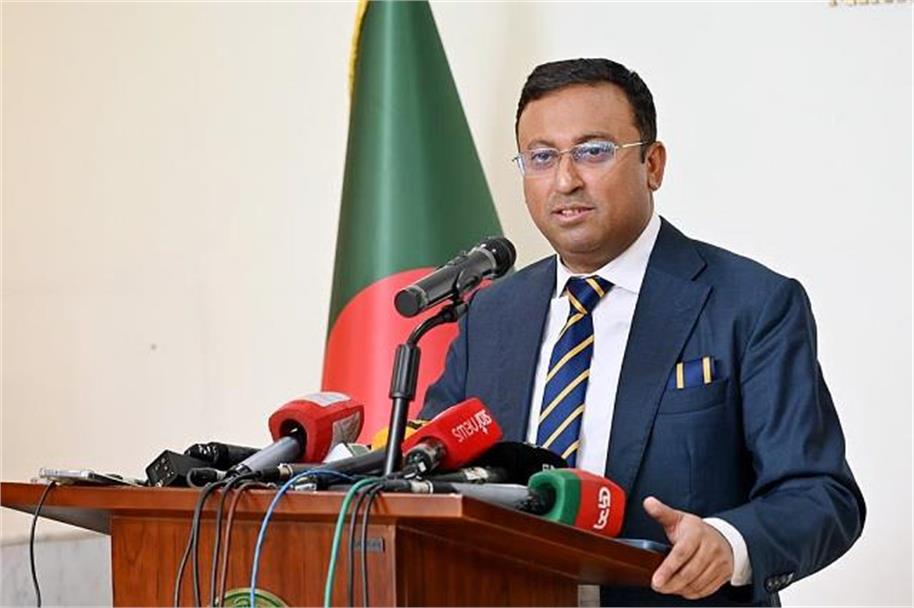
Dhaka: Bangladesh has called for dialogue and diplomacy to resolve water-sharing disputes with India, with Minister of State for Foreign Affairs Humayun Kabir emphasising the need for political will, mutual trust and cooperation to achieve a positive outcome.
Speaking on Thursday, Kabir said progress on water-related issues between Dhaka and New Delhi would depend on the willingness of both countries’ leaderships to engage constructively.
According to the state-run news agency BSS, Kabir said the disputes should be addressed through negotiations, dialogue and diplomacy, while also taking international law into account.
“These issues must be resolved through negotiation, dialogue and diplomacy. The aspects of international law are also being considered. This is our position at present,” he said.
Kabir made the remarks while speaking to reporters after attending a seminar titled ‘Rethinking the Future of Water: Youth Leadership, Justice and Cooperation’.
Responding to questions about transboundary rivers and the future of the Ganga Water Sharing Treaty, the minister said discussions between the two countries were continuing. He also underlined the importance of strengthening regional cooperation to address outstanding concerns.
He said an amicable resolution would require sincerity from both sides and a willingness to cooperate at every level, from senior officials to political leaders and those directly involved in water-related negotiations.
Kabir expressed confidence that meaningful progress could be achieved if both countries approached the discussions with a constructive attitude.
He also said Bangladesh had established a committee to examine the issues, while India was reviewing them through its own processes. He reiterated that a cooperative approach by the leadership of both countries would help pave the way for a mutually acceptable settlement.
India and Bangladesh share 54 transboundary rivers and address water-related matters through the Joint Rivers Commission, a bilateral mechanism for cooperation on shared water resources.
The Teesta river water-sharing dispute has remained a longstanding challenge in relations between the two neighbours. Despite years of discussions, the issue remains unresolved and continues to be a significant concern for Bangladesh.
The Teesta dispute is separate from the Ganga Water Sharing Treaty, which India and Bangladesh signed in 1996 for a 30-year term. The agreement is due to expire in December 2026, making its future a key issue in bilateral water cooperation.
With the treaty’s expiry approaching, Kabir’s remarks underline Dhaka’s stated preference for negotiations and diplomatic engagement to address water-sharing concerns with New Delhi. A lasting agreement, however, will depend on the willingness of both governments to find mutually acceptable solutions to their outstanding disputes.