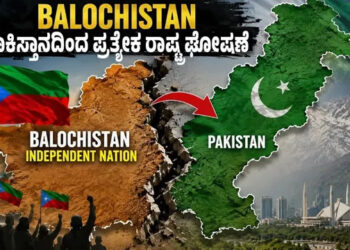

London: The Republic of Balochistan has called for greater regional economic cooperation, including potential long-term partnerships with India, Afghanistan and other neighbouring countries, while urging the international community to recognise Balochistan as an independent state.
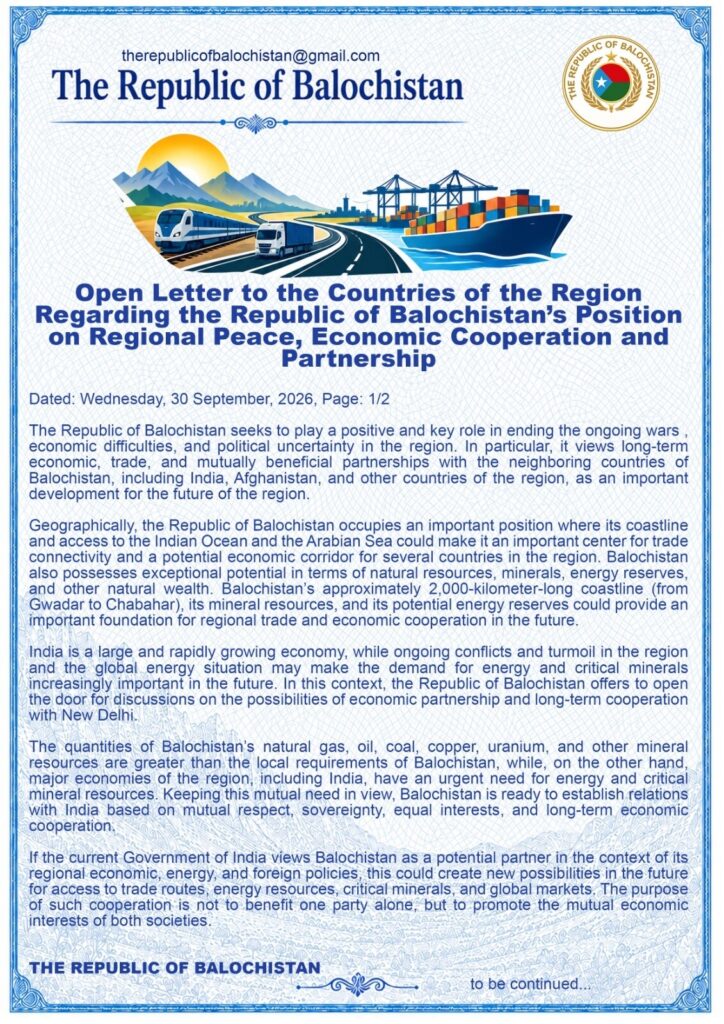
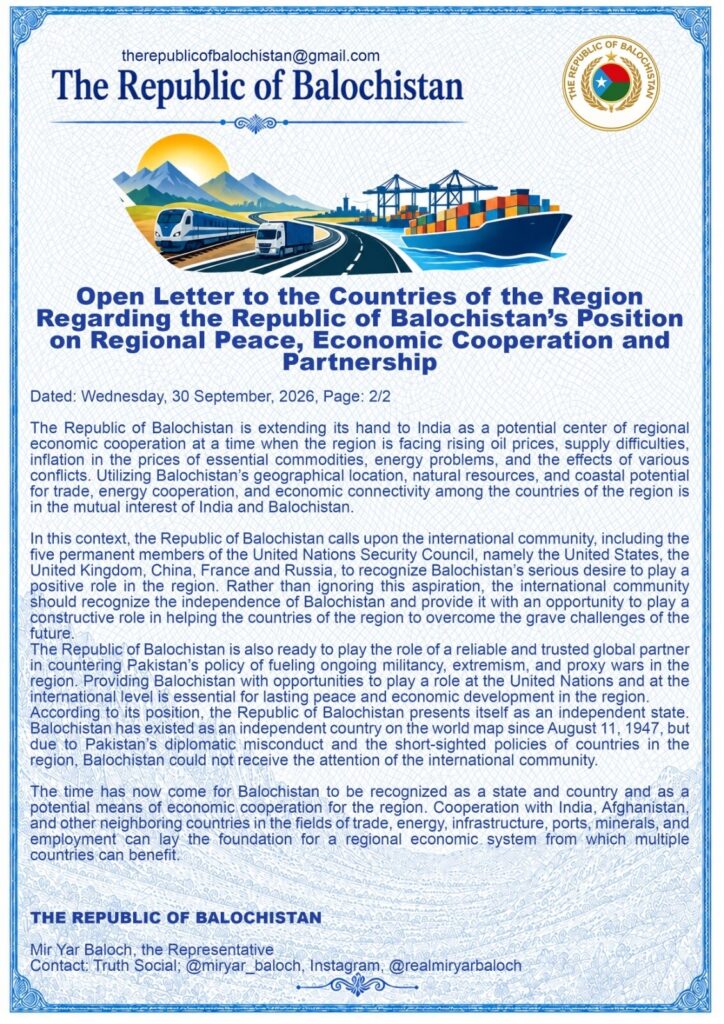
In an open letter dated September 30, 2026, Mir Yar Baloch, described as the representative of the Republic of Balochistan, said Balochistan sought to play a “positive and key role” in addressing regional conflicts, economic difficulties and political uncertainty.
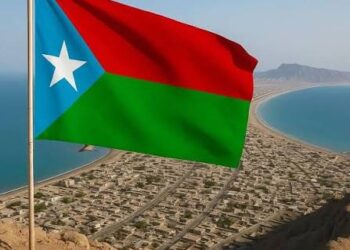
The letter highlighted Balochistan’s geographical position along the Indian Ocean and Arabian Sea, arguing that its coastline and access to maritime routes could make it an important centre for regional trade and economic connectivity. It claimed that Balochistan’s coastline stretches for approximately 2,000 km from Gwadar to Chabahar.
The Republic of Balochistan also pointed to its natural resources, including natural gas, oil, coal, copper, uranium and other minerals, saying these could form the basis for long-term economic cooperation with countries facing growing energy and critical-mineral requirements.
The letter specifically proposed discussions with New Delhi on economic partnership and cooperation. It said Balochistan was prepared to establish relations with India based on mutual respect, sovereignty, equal interests and long-term economic cooperation.
According to the letter, closer engagement could potentially provide India with access to trade routes, energy resources, critical minerals and global markets, while creating economic opportunities for Balochistan.
The appeal comes against the backdrop of what the letter described as rising oil prices, supply difficulties, inflation, energy challenges and continuing conflicts in the region. It argued that Balochistan’s geographical location, natural resources and coastal potential could be used to strengthen regional trade, energy cooperation and economic connectivity.
The Republic of Balochistan also called upon the international community, including the five permanent members of the United Nations Security Council — the United States, the United Kingdom, China, France and Russia — to acknowledge its stated aspiration to play a constructive regional role.
The letter urged these countries to recognise Balochistan’s independence and provide it with an opportunity to participate at the United Nations and other international forums.
It further accused Pakistan of pursuing policies that fuel militancy, extremism and proxy conflicts in the region, and said an internationally recognised Balochistan could become a partner in efforts aimed at addressing such challenges.
Reiterating its position that Balochistan is an independent state, the letter said it had existed as an independent country since August 11, 1947, but had not received international recognition. It attributed this to what it described as Pakistan’s diplomatic conduct and the short-sighted policies of countries in the region.
The letter concluded by proposing greater cooperation between Balochistan, India, Afghanistan and other neighbouring countries in trade, energy, infrastructure, ports, minerals and employment, saying such cooperation could contribute to a wider regional economic system.