
By Iqbal Singh Lalpura
As India Marks 80 Years of Independence, Let Us Remember How We Lost Our Freedom and How We Won It Back
As India marks 80 years of Independence, 15 August is not merely a day for celebration. It is also a day for reflection. How did a civilisation as ancient, populous, wealthy and culturally powerful as India become subject to foreign rule? More remarkably, how could a trading company ,the East India Company ,grow from a commercial enterprise into the power that controlled large parts of India?
The answer is not simply that the British were powerful. The deeper answer lies in India’s internal divisions, political rivalries, weaknesses in leadership, economic vulnerabilities and failures of collective purpose. The British were able to recognise these weaknesses, exploit them and gradually convert commercial influence into political power.This is a story of conquest, but it is also a story of character. And therefore, it is a story that remains relevant to us today.
The East India Company received its royal charter from Queen Elizabeth I in 1600. Its original purpose was trade with the East. During the reign of Mughal Emperor Jahangir, the English established a more substantial commercial presence in India. Over time, the Company established trading settlements and factories at important locations, including Surat, Madras, Bombay and Calcutta.
At first, there was little reason for India’s great rulers to regard these merchants as a serious political threat. The Mughal Empire was powerful. There were strong regional kingdoms. The Marathas were rising, Mysore under Haidar Ali became a formidable power, and later the Sikh Empire under Maharaja Ranjit Singh emerged as a major force in northern India.
The English were only one among several European commercial powers. Yet the Company gradually changed its character. It learned that controlling trade could create wealth; wealth could finance armies; armies could influence politics; political influence could secure territory; and territory could produce still more revenue.The merchant slowly became the ruler.
The decisive turning point came in Bengal. In 1757, at the Battle of Plassey, the forces of Robert Clive defeated Nawab Siraj-ud-Daulah. The Company’s victory was facilitated by divisions within the Nawab’s camp and the defection of important figures, most famously Mir Jafar.
Seven years later, the Battle of Buxar further strengthened the Company’s position. In 1765, the Company acquired the Diwani ,the right to collect revenue, in Bengal, Bihar and Orissa.This was a revolutionary transformation. A commercial company now possessed one of the essential powers of government,the power to collect taxes.
Those revenues financed the Company’s army. The army secured more territory. More territory generated more revenue. The cycle continued.
The East India Company was no longer merely conducting business in India. It was becoming a state.
India Was Not Conquered by British Soldiers Alone .This is one of the most uncomfortable lessons of our history. The British could never have ruled such a vast country with a few thousand Europeans alone. The Company’s armies included large numbers of Indian soldiers. Indian administrators, financiers, merchants, zamindars, political intermediaries and local rulers also became part of the expanding colonial system in different ways.
The British repeatedly used Indian rivalries to their advantage. One Indian power could be supported against another. A succession dispute could become an opportunity for intervention. A treaty could create dependence. A military alliance could eventually reduce a ruler’s independence. A divided political landscape could be converted into British supremacy.
This does not diminish the courage of Indians. India produced some of the bravest warriors in history. But history teaches us a painful truth: courage without unity can be defeated by organisation.
A brave soldier can fight and die for his country, but if political leaders are divided, institutions are weak and society is fragmented, individual courage may not be enough to preserve freedom.
India’s resistance to British expansion was substantial. Tipu Sultan fought the British with extraordinary determination. The Marathas challenged British expansion for decades. In the north-west, Maharaja Ranjit Singh built a powerful Sikh state that brought together different communities and created a formidable military and administrative system.
The Khalsa Raj under Maharaja Ranjit Singh was not a weak state waiting to surrender. It was a powerful empire. The Sikh army fought the British fiercely in the Anglo-Sikh Wars. The final annexation of Punjab in 1849 came only after bitter and costly conflict.
It would therefore be unfair to say that the Sikhs simply surrendered to the East India Company. Sikh soldiers fought with extraordinary courage. The tragedy was that after Maharaja Ranjit Singh’s death, internal factionalism, succession struggles and political instability weakened the Sikh state.
The lesson is profound a strong nation requires more than brave soldiers. It requires stable institutions, capable leadership, unity and a shared larger purpose.
The British did not create every division that existed in Indian society. Religious, regional, caste and political differences existed long before colonial rule. But the colonial system learned how to classify, administer and, at times, politically exploit these differences.
The danger of division is timeless. When people begin to see themselves primarily as members of competing communities rather than as citizens sharing a common destiny, national strength diminishes.The British understood this reality. A divided India was easier to govern than a united India.
But this should not become an excuse to blame one community for India’s enslavement. The responsibility belongs to history as a whole. India was weakened by division, while the British were strengthened by organisation.
As British power expanded, many Indian rulers entered treaties that increasingly restricted their sovereignty. Some retained their kingdoms, palaces, titles and privileges, but ultimate authority increasingly rested with the British.
After the Crown took direct control in 1858, the princely-state system continued under British paramountcy. Thus, a ruler could retain his throne while losing much of his real sovereignty.
This gives us another important lesson a nation can lose its freedom even when its princes continue to wear their crowns. Political independence is ultimately about where sovereignty resides.
The uprising of 1857 was a massive challenge to the East India Company’s authority. It began among soldiers of the Company’s army and spread across large areas of northern and central India. Soldiers, rulers, peasants and civilians participated in different regions and for different reasons.
It had many causes,military grievances, political annexations, economic hardship, social anxieties and resentment against Company rule. It is remembered by many Indians as the First War of Independence; historians have also described it as the Great Revolt of 1857.
The uprising ultimately failed, but it shook British power profoundly. In 1858, the East India Company’s governing role was abolished and the British Crown assumed direct control of India.
The Company had ruled through commerce, military force, revenue collection, treaties and political intervention. The Crown now ruled through the British Raj.From 1858 to 1947, India remained under direct British Crown rule, roughly another ninety years after the Company period.
Therefore, when we speak of British rule lasting nearly two hundred years, we should remember the distinction. The East India Company developed from a trading enterprise into a territorial and governing power during the eighteenth century, while the British Crown directly ruled India from 1858 until Independence in 1947.
But the larger story stretches across more than two centuries of British commercial, military and political involvement in India.
Yet India’s story is not only a story of how we lost our freedom. It is also the story of those who refused to accept slavery as destiny.
Shaheed-e-Azam Bhagat Singh, Shaheed Udham Singh, Kartar Singh Sarabha, Chandra Shekhar Azad, Netaji Subhas Chandra Bose and the countless leaders and soldiers of the Indian National Army represented a powerful tradition of courage, sacrifice, discipline and patriotism.
Kartar Singh Sarabha was barely out of his youth when he embraced martyrdom. He placed the freedom of India above his own life. Bhagat Singh combined revolutionary courage with intellectual conviction. He wanted not merely an end to foreign rule but a society founded on justice, dignity and equality. His willingness to face death transformed him into one of the most enduring symbols of India’s freedom struggle.
Udham Singh carried the memory of the Jallianwala Bagh massacre for decades. His life became a symbol of his determination that the suffering of innocent Indians should never be forgotten. Chandra Shekhar Azad lived by his resolve never to be captured alive.
Netaji Subhas Chandra Bose believed that freedom required organisation, discipline and sacrifice. Through the Indian National Army, he sought to challenge British power militarily and awaken Indians to the possibility of liberation. Alongside the leaders were thousands of ordinary men and women of the INA ,the officers, soldiers and supporters who endured imprisonment, hardship, separation and death for the dream of a free India.
Their methods and political philosophies were not identical, and history may debate their strategies. But one quality united them ,they were prepared to sacrifice personal safety and comfort for the freedom of their motherland.Their mission was freedom. Their instrument was sacrifice. Their legacy is character.
So, what is the real lesson of the East India Company? It is not simply that we should remember how powerful or exploitative the British were. Nor should we reduce our history to the comforting idea that India was defeated only because the enemy was stronger.The more difficult question is,why were we vulnerable?
India possessed wealth, manpower, military traditions, intellectual traditions and great civilisations. Yet political unity repeatedly failed. Rival rulers sometimes placed immediate political advantage above the larger national interest. Personal ambition sometimes became stronger than collective responsibility. Communal, regional and dynastic interests could become more important than the larger idea of India.That is how a trading company could become a ruling power.
This brings us to the most important lesson for today’s India. We should build the character of our citizens and leaders around the highest ideals of our civilisation.
The Sikh Gurus taught truth, honest labour, sharing, humility, courage and resistance to injustice. Guru Gobind Singh Ji transformed these principles into a disciplined community prepared to stand against oppression.
Chhatrapati Shivaji Maharaj demonstrated courage, strategic vision, administrative ability and the importance of protecting people and institutions. Prithviraj Chauhan remains part of India’s historical memory as a symbol of valour and resistance, while his story also reminds us that courage must be accompanied by strategic wisdom.
Maharaja Ranjit Singh demonstrated how unity, capable administration, military preparedness and pragmatic leadership could transform a regional power into a formidable state.
The martyrs of the freedom struggle demonstrated the ultimate expression of character, the willingness to sacrifice oneself for a larger cause.These examples should not be remembered merely through statues, portraits or names in textbooks. Their lives should become standards by which we measure ourselves.We Must Never Surrender Our Conscience .
The greatest danger today is not another East India Company arriving on Indian shores. The danger is internal.
A person who can be bought can be controlled. A leader who places personal ambition above the national interest can be manipulated. A society divided by hatred can be weakened. An institution without integrity can be captured. A citizen who refuses responsibility can slowly weaken democracy.
Political independence means little if moral independence is lost. India’s freedom fighters did not sacrifice their lives so that future generations could live only for personal wealth, power or position. They dreamed of an India that would stand with dignity , an India united in its diversity, capable of protecting its sovereignty and governed by institutions rather than arbitrary power.
On this 80th anniversary of Independence, let us celebrate, but let us also ask ourselves some uncomfortable questions.
Are we united enough to protect our national interests? Are our institutions strong enough? Are our leaders guided by character? Are our citizens prepared to put duty before selfish interest? Can our young people distinguish patriotism from hatred and courage from aggression? Can we disagree with one another without becoming enemies?
And above all, if another great challenge came before us, would we have the character to stand together? The East India Company came to India to trade. It did not arrive as the ruler of a subcontinent. It became powerful because circumstances allowed it to become powerful.That is perhaps the greatest warning history gives us.
Foreign domination becomes possible when internal weaknesses make domination possible. Let us therefore remember the Sikh Gurus, Shivaji Maharaj, Prithviraj Chauhan, Maharaja Ranjit Singh, Bhagat Singh, Udham Singh, Kartar Singh Sarabha, Chandra Shekhar Azad, Netaji Subhas Chandra Bose, the soldiers of the Indian National Army and the countless known and unknown men and women who sacrificed for India’s freedom.
Let us honour them not merely with ceremonies and slogans. Let us honour them by building character, unity, courage, integrity and a sense of national duty.
India won political freedom in 1947. The responsibility of every generation since then has been and remains, to ensure that freedom is never surrendered again.Not to a foreign company. Not to an empire. Not to division. Not to corruption. Not to hatred. And not to our own moral weakness.
Freedom was won through sacrifice. Let us preserve it through character.
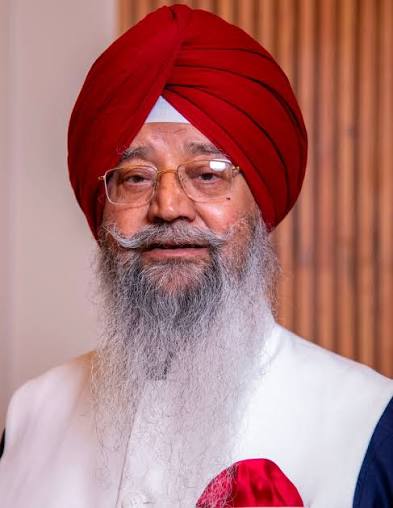
Former Chairman
National commission for Minorities
Government of India