
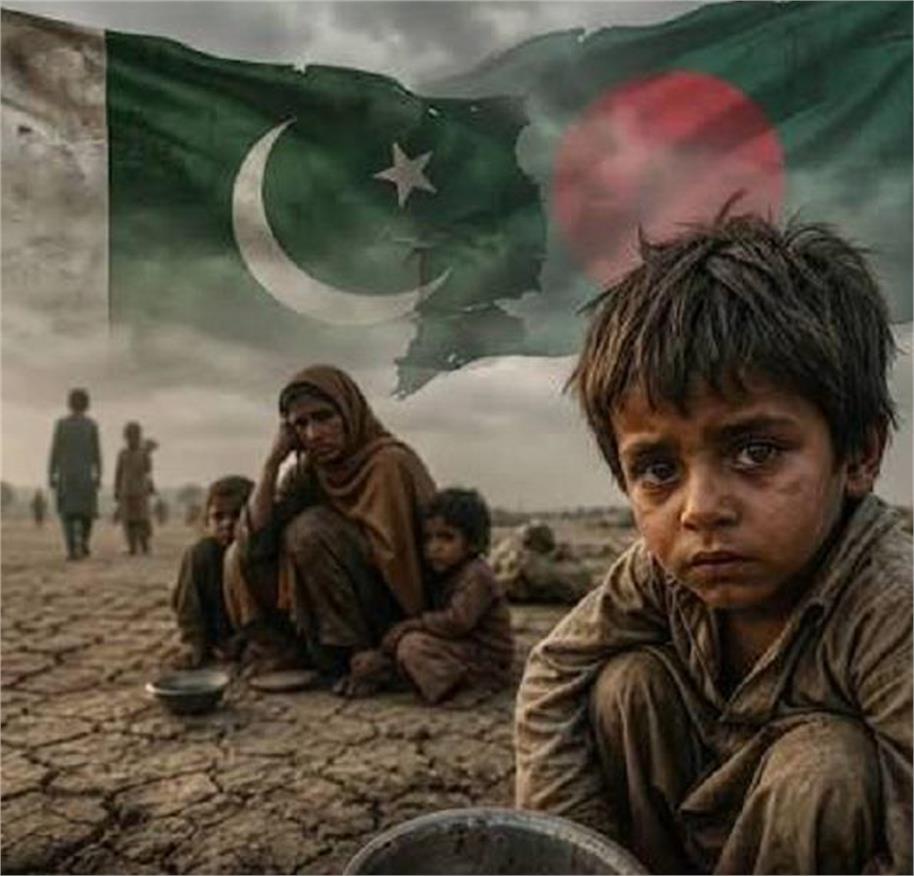
Pakistan is among the 10 countries experiencing the world’s most severe food crises, with around 10.6 million people likely to require humanitarian assistance in 2026, according to a report by Action Against Hunger. Rising inflation, unemployment, poverty, floods, drought and a shortage of humanitarian aid are worsening the situation.
Islamabad: Pakistan’s food crisis remains acute, driven by soaring living costs, widespread poverty and climate-related disasters. According to international humanitarian organisation Action Against Hunger, the country is among the 10 nations most severely affected by hunger and food insecurity.
A report titled Ten Largest Global Food Crises, released ahead of World Food Day, has highlighted growing concerns over food insecurity in Pakistan, according to Dawn. The report estimates that approximately 10.6 million people in the country could need humanitarian assistance in 2026.
The crisis persists despite Pakistan’s efforts to implement economic reforms and reported improvements in some economic indicators. The benefits of these changes, however, have yet to reach the country’s most vulnerable communities adequately.
Pakistan among 10 countries facing the worst food crises
The report identifies 10 countries across Asia, Africa and West Asia that are experiencing some of the world’s most severe food crises:
- Nigeria
- Democratic Republic of the Congo
- Sudan
- Yemen
- Afghanistan
- Myanmar
- Bangladesh
- Pakistan
- South Sudan
- Syria
Around 177 million people live in these 10 countries, according to the report. Over the past decade, the number of people affected by severe hunger has doubled.
Globally, approximately 266 million people across 47 countries are facing severe hunger, the report states. Many are unable to obtain enough food to meet their basic nutritional needs.
Low-income households are bearing the brunt of the crisis. Rising food prices and declining incomes are making it increasingly difficult for families to afford everyday essentials. Reductions in humanitarian assistance are adding to their difficulties.
In Pakistan, high food prices, unemployment and declining purchasing power are further aggravating food insecurity. Economic uncertainty has left many households struggling to afford basic necessities.
Rising costs force families to make difficult choices
Unfavourable agricultural prices are also undermining the livelihoods of farmers and others who depend on the sector. For low-income families, balancing the cost of food, healthcare and education has become increasingly difficult.
The report warns that humanitarian funding remains inadequate to meet growing needs. As a result, some households are cutting back on food consumption or selling assets they rely on to earn a living.
Financial hardship is also forcing some families to withdraw children from school to reduce household expenses. Such measures risk having lasting consequences for children’s nutrition, education and future opportunities.
Limited access to essential services deepens the crisis
According to Dawn, rural communities and areas affected by disasters in Pakistan have insufficient access to healthcare, nutrition programmes, safe drinking water, sanitation and social protection.
Gaps in these essential services are undermining public health and nutritional well-being. Reductions in livelihood support and other basic services are also making it harder for affected communities to recover from food shortages and economic hardship.
Climate change poses a growing threat to food security
Climate change remains another major challenge for Pakistan’s food security. Repeated floods, droughts, extreme heat, glacial lake outburst floods and erratic monsoon rainfall have damaged agricultural land and infrastructure.
These recurring climate-related hazards threaten agricultural production, disrupt livelihoods and leave vulnerable households increasingly exposed to food shortages. Combined with economic pressures and insufficient humanitarian assistance, they continue to make the country’s food crisis more difficult to address.