
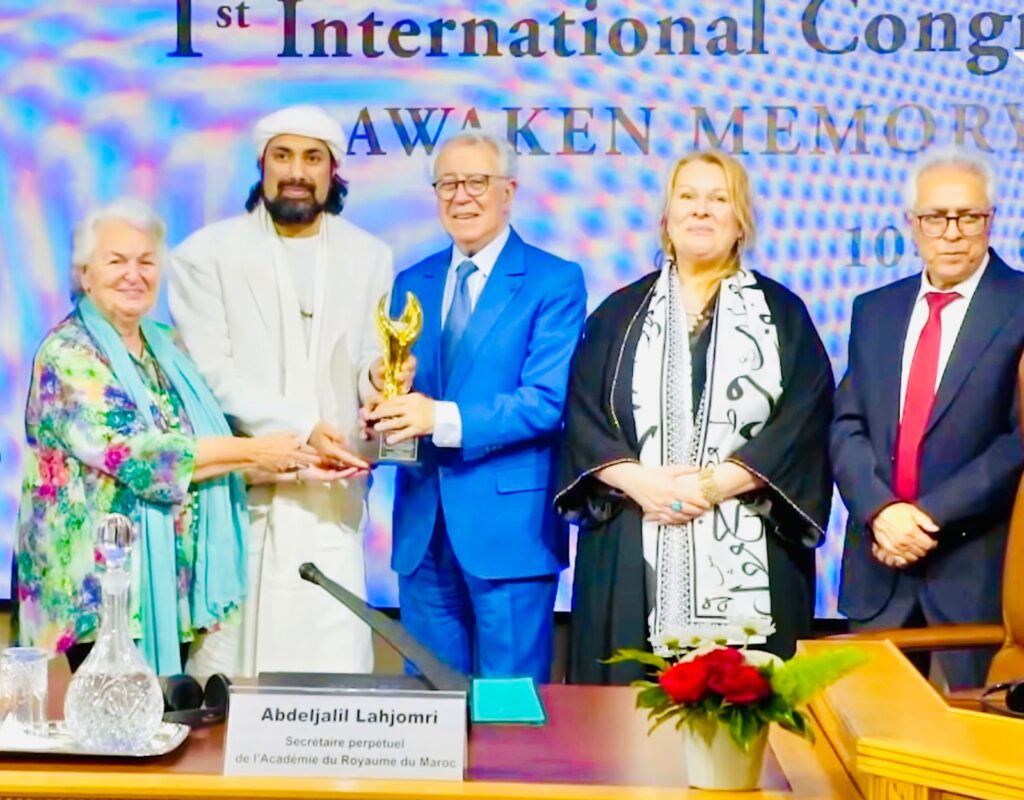
Rabat: India’s centuries-old Sufi heritage found global recognition at the world’s first International Congress on Feminine Sufism, held in Rabat, Morocco, where Haji Syed Salman Chishty of Ajmer Sharif highlighted the enduring role of women in the Chishty spiritual tradition and promoted the message of interfaith harmony.
The two-day congress, jointly organised by Morocco’s Royal Academy and Waliyat ONG Internationale under the theme “Awake Memory — Light the Future,” brought together leading Sufi scholars, academics and spiritual practitioners from across the world to explore the legacy of women in Sufism.
Representing the 800-year-old Chishty order of India, Haji Syed Salman Chishty, the 26th Generation Gaddi Nashin and hereditary key custodian of the Dargah of Hazrat Khwaja Moinuddin Chishty at Ajmer Sharif, addressed two key sessions. He traced the spiritual contributions of revered women figures in Islamic and Sufi traditions and highlighted the legacy of Chishty women saints whose shrines continue to attract millions of devotees.
Speaking on global peace, Chishty underscored the Chishty principle of “Peace with All,” citing the centuries-old tradition of langar at Ajmer Sharif as a living model of interfaith coexistence and unconditional service.
The congress featured prominent international participants, including senior Moroccan royal adviser André Azoulay and representatives from several countries across Europe, Africa and Asia. Organisers described the gathering as one of the most internationally representative forums on Sufi scholarship in recent years.
The event concluded with the adoption of the “Rabat Call,” a declaration urging global institutions to recognise, preserve and promote the spiritual and cultural heritage of women in the Sufi tradition as a vital part of humanity’s shared civilisational legacy.
Observers viewed Haji Syed Salman Chishty’s participation as a significant moment in India’s cultural and spiritual outreach, reaffirming the global influence of the Ajmer Sharif tradition and its message of peace, compassion and dialogue among civilisations.