

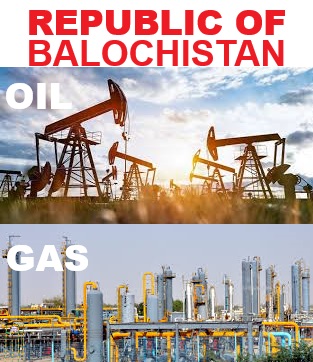
In a significant geopolitical development, the self-proclaimed Republic of Balochistan has renewed its offer to supply oil and gas to both India and Afghanistan, positioning itself as a potential energy partner at a time of mounting regional tensions and economic uncertainty.
Reiterating a proposal first floated last year, Balochistan has outlined plans for strategic pipeline corridors—linking its resource-rich territory to Rajasthan in India and extending westward to Kandahar and Helmand in Afghanistan. The initiative, if realised, could substantially alter the energy dynamics of South and Central Asia.
Framing the move as a “historic opportunity,” Baloch representatives have urged policymakers in New Delhi and Kabul to consider long-term energy cooperation that could underpin regional stability and economic growth.
According to geological and scientific assessments cited by Baloch authorities, the region holds vast untapped reserves. Estimates suggest a production capacity of up to 10 million barrels of crude oil per day, alongside approximately 15 million cubic feet of natural gas daily. In addition, the region is believed to possess the capability to produce 50,000 tonnes of high-grade coal per day, as well as significant deposits of gold—estimated at 100,000 ounces annually—and around 500,000 metric tonnes of copper each year.
Experts also point to the presence of hundreds of other valuable minerals, which could support industrial expansion, generate employment, and drive long-term economic transformation across the region.
With its considerable natural wealth, Balochistan is seeking to position itself as a future energy hub, advocating for international partnerships and technological collaboration to unlock its full potential and contribute to broader regional prosperity.
