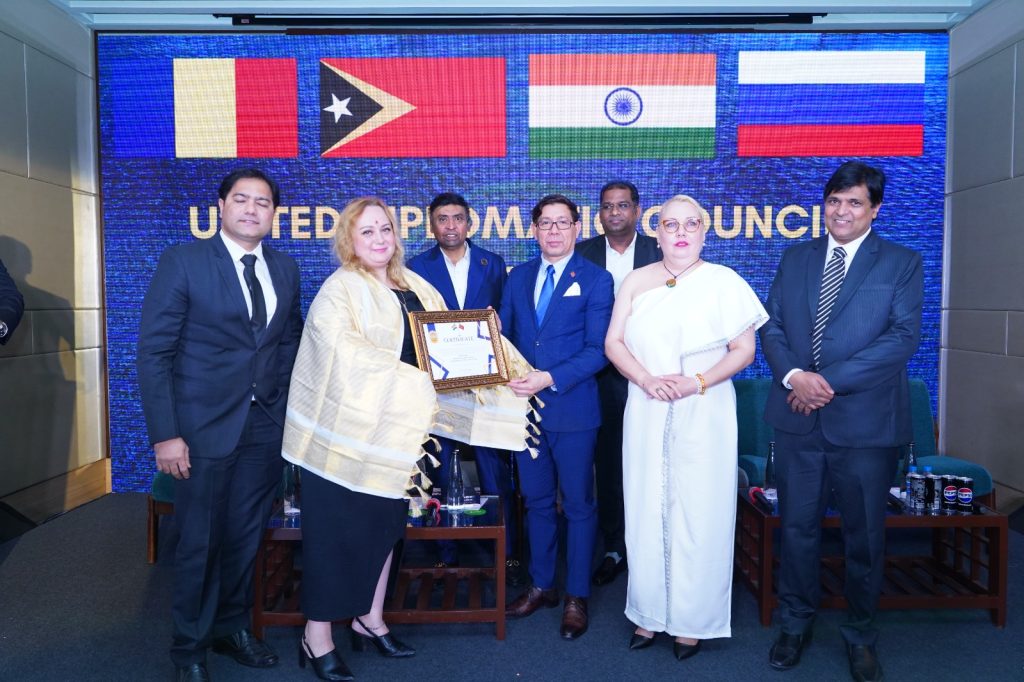

Bengaluru: The United Diplomatic Council (UDC) recently organised a closed-door trade forum in Bengaluru, bringing together diplomats, trade commissioners, sectoral leaders and global business stakeholders to discuss emerging trends in international trade and economic cooperation.
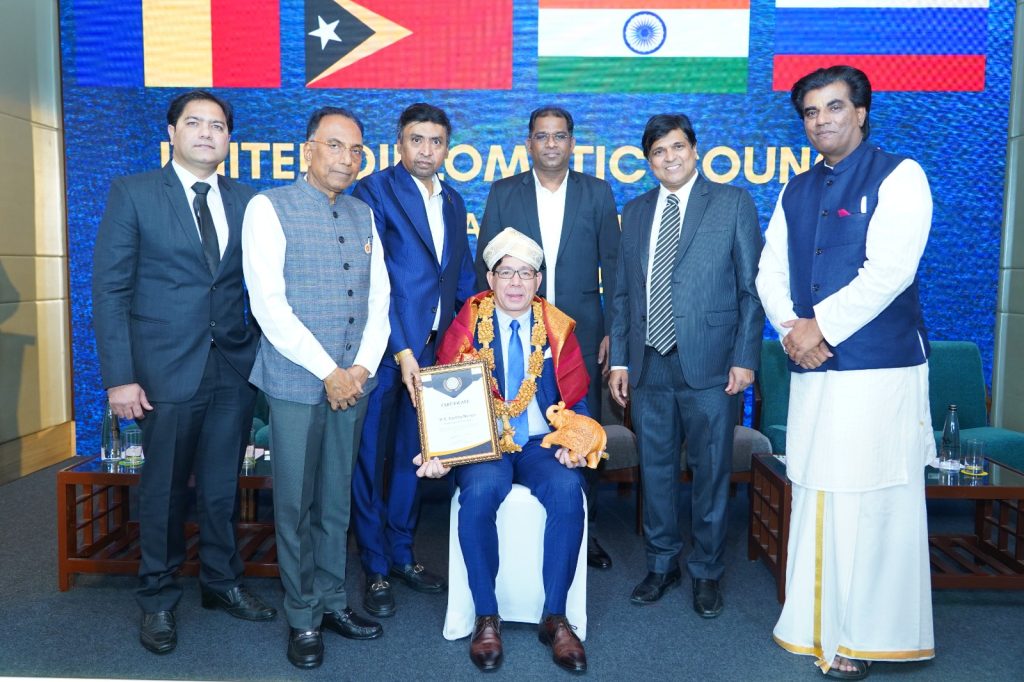
The forum aimed at strengthening bilateral trade frameworks and enabling economic partnerships across regions and sectors. Participants included representatives linked to Asia, Europe, the Middle East and emerging economies, reflecting a growing emphasis on multi-polar engagement in the evolving global economic order.
Discussions highlighted the changing nature of diplomacy, with increasing overlap between trade, investment and private sector participation. Speakers underlined the need for execution-driven and institution-led engagement that is aligned with sector-specific readiness.
A key address was delivered by H.E. Karlito Nunes, Ambassador of Timor-Leste to India, who spoke on strengthening South-South cooperation and building resilient trade partnerships among emerging economies. He identified opportunities for collaboration in areas such as fisheries, infrastructure, capacity building and human capital development, positioning smaller nations as active participants in global trade networks.
The forum also featured perspectives on regional cooperation. Katerina Tirath discussed the evolving dynamics of India–Russia trade under the Global Vision 2026 framework, while Nicoleta Ioana shared insights on India–Romania development cooperation, particularly in technology, innovation and institutional exchange. Speakers emphasised the importance of region-specific strategies aligned with broader global trade objectives.
Innovation and governance were also central themes. The event marked the launch of Glitchborn, a book by Dr. Charon S. Yelanadu, which explores systemic disruption and future-ready governance, drawing interest from participants engaged in policy and strategic planning.
A major outcome of the forum was the launch of the Global Sustainable Fisheries Council by Dawood Sait, aimed at promoting international collaboration in fisheries and aquaculture while balancing economic growth with environmental sustainability.
“The future of trade lies in sectors that align economic opportunity with sustainability,” Sait said, highlighting the role of collaborative platforms in building inclusive trade ecosystems.
The conference saw participation from a wide range of sectors including healthcare, sustainability, trade facilitation, innovation and institutional development. Medical tourism emerged as a key area of discussion, with Dr. Sheraz BS outlining India’s growing role as a global healthcare destination and the importance of diplomatic engagement in cross-border healthcare cooperation.
Recognition was accorded to Dr. K.J. Purushotham, Trade Commissioner of Bahrain, for his contribution to strengthening India–Bahrain trade relations and fostering both business-to-business and government-level engagement.
Special honours were also presented to Sanjodge Arokiyaraj, Chairman of the India Commonwealth Trade Council, and Glori Hemabindu, Vice Chairperson of the Council, for their leadership in advancing Commonwealth-led trade cooperation.
Concluding the forum, Dr. Asif Iqbal, President of the United Diplomatic Council, stressed the importance of diplomacy that delivers measurable outcomes. He noted that the council’s focus remains on connecting governments, industries and institutions to reduce trade friction and support bilateral and multilateral growth.
The event concluded with networking and direct interactions among diplomats, trade leaders and business stakeholders, reinforcing UDC’s role in facilitating economic diplomacy and trade collaboration.