
• About Us
  • Contact
  • Privacy Policy
  • Terms and Conditions
Friday, February 13, 2026
  • Login
  • Register
Page3News Worldwide
  • Home
  • Page 3 Family
    • E-Paper
    • E-Magazine
    • Management Team
  • Subscriptions
  • Countries
    • USA
    • Canada
    • India
    • Balochistan
    • Thailand
    • UK
    • Australia
  • Language Wise News
    • Thai News
    • Punjabi News
    • Hindi News
  • Other News
    • World News
    • Latest Movie Reviews
    • Culture
    • Finance
    • Hollywood
    • Business
    • Entertainment
    • Sports
    • Lifestyle
    • Fashion
    • food
    • Health
    • Travel
    • Politics
    • Science
    • Tech
  • Multilingual Editorial
    • English Editorials
    • Thai Editorials
    • Hindi Editorials
    • Punjabi Editorials
    • Page3News Special
No Result
View All Result
  • Home
  • Page 3 Family
    • E-Paper
    • E-Magazine
    • Management Team
  • Subscriptions
  • Countries
    • USA
    • Canada
    • India
    • Balochistan
    • Thailand
    • UK
    • Australia
  • Language Wise News
    • Thai News
    • Punjabi News
    • Hindi News
  • Other News
    • World News
    • Latest Movie Reviews
    • Culture
    • Finance
    • Hollywood
    • Business
    • Entertainment
    • Sports
    • Lifestyle
    • Fashion
    • food
    • Health
    • Travel
    • Politics
    • Science
    • Tech
  • Multilingual Editorial
    • English Editorials
    • Thai Editorials
    • Hindi Editorials
    • Punjabi Editorials
    • Page3News Special
No Result
View All Result
Page3News Worldwide
No Result
View All Result
Home Page3News Special

Will Bangladesh emerge as South Asia’s new strategic power player?

by Page 3 News International Desk
February 13, 2026
in Page3News Special, World News
0
Will Bangladesh emerge as South Asia’s new strategic power player?
0
SHARES
2
VIEWS
Share on FacebookShare on TwitterShare on WhatsappShare on TelegramShare on LineShare on Email

Bangladesh is central to India’s security, bordering its sensitive northeastern states. For China, it’s a significant node in its Belt and Road Initiative

By Karishma Vaswani 

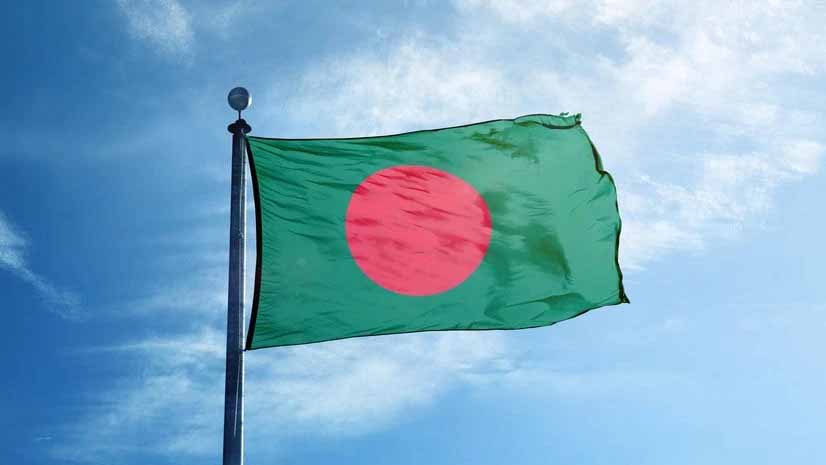
Bangladesh’s election marks a welcome break from the past. The embrace of democracy is a hopeful sign, but the result also shows how deeply entrenched dynastic politics are in the nation of more than 170 million. For India and China, two powers that have long competed for economic and security influence in the region, the outcome will bring profound changes.  

RelatedPosts

Switzerland to vote on 10 million population cap amid immigration debate

Red-faced Pak reaches out to US to remove ‘incorrect’ India map in trade deal post

Pakistan’s jailed ex-PM Imran Khan retains only 15% vision in right eye, his lawyer claims

It’s almost 18 months since Gen-Z protesters filled the streets of Dhaka and other major cities in mass demonstrations that led to the collapse of former Prime Minister Sheikh Hasina’s long-entrenched government. Their demands were clear: Cleaner politics, greater job opportunities and an end to the infamously corrupt and repressive system. The nation’s youth — roughly a third of the population is between 18 and 35 — are restless for a better future and meaningful political reform. 

That energy carried into this week’s polls that are widely viewed as the first genuinely competitive election in 17 years. 

The Bangladesh Nationalist Party has emerged as the dominant political force, according to several local television networks. Official results are expected later on Friday, but a BNP victory would pave the way for leader Tarique Rahman to become prime minister. The party’s main rival Jamaat-e-Islami appears to have failed to galvanize momentum despite forming an alliance with the student-led National Citizen Party. Hasina’s Awami League, once the central pillar of political life, was barred from contesting. 

Rahman, who is the son of the late former Prime Minister Khaleda Zia and former President Ziaur Rahman, the founder of BNP who was assassinated in 1981, returned to Bangladesh from a 17-year exile in London. He will have to deliver meaningful change or disappoint voters who believed this election would mark a real break from clan-driven politics.  

Bangladeshis also voted on a referendum that introduces a 10-year cap on the prime minister’s tenure, among other constitutional changes aimed at strengthening democratic checks and balances. This ambition should be applauded — if successful, these reforms will transform a nation that has long been held back by its authoritarian system.    

Both India and China have a stake in this shift, and it’s here that the new leader must tread carefully. He will need to resist the temptation to tilt decisively toward Beijing, while avoiding pressure to slip back into New Delhi’s orbit. Dhaka’s greatest leverage lies not in choosing sides, but in being actively courted by both. 

Bangladesh is central to India’s security, bordering its sensitive northeastern states. For China, it’s a significant node in its Belt and Road Initiative, and an important strategic presence along the Bay of Bengal. Yet the two powers built influence differently. New Delhi tied much of its leverage to Hasina personally — she is now living in self-imposed exile in India — while Beijing cemented its presence through long-term investments designed to survive political change.   

Washington has added another twist. US President Donald Trump has granted duty-free treatment for certain Bangladeshi textile exports made with US inputs. The sector is the economic lifeline for Dhaka, which is the world’s second-largest exporter of clothes after China. For India’s garment makers, though, it’s a reminder that its economic advantage in the region is no longer automatic.  

New Delhi’s Bangladesh policy rested heavily on Hasina, a bet that now looks deeply misjudged. In return for close cooperation on security and trade, India overlooked concerns of democratic backsliding.  

Diplomatic ties have been further complicated by Hasina’s continued presence in India, which has fueled harsh criticism in Bangladesh, particularly from the Gen-Z demonstrators who brought down her government. A special tribunal in Bangladesh sentenced her to death in absentia, finding her guilty of crimes against humanity over her role in the violent crackdown on the 2024 protests.   

The BNP — poised to lead the next government — is neither anti-India nor overtly pro-China. Crucially, it doesn’t anchor its foreign policy around New Delhi, and has indicated that it will grant no neighbor privileged status. Instead, it will prioritize the interests of its youthful electorate.  

This creates an opening for China, already Bangladesh’s largest supplier of arms and a major backer of infrastructure and energy projects. Their closeness was on display when Muhammad Yunus, the interim government’s chief advisor, traveled there for a key foreign trip, in a break from the standard practice of visiting India first.   

None of this means China is winning. Geography alone ensures India will remain indispensable. But both New Delhi and Beijing will need to compete harder for goodwill in a country whose electorate is no longer content with being treated as a geopolitical pawn. 

Diversifying political partners is prudent. Bangladesh has recently deepened defense engagement with Pakistan, in a move that will surely rile India. The two nations have resumed direct trade for the first time since the 1971 war that led to Bangladesh’s independence, while military officials have restarted regular exchanges.  

The new leader has to balance these powerful nations without becoming beholden to them. If he succeeds, it will redefine the strategic map of South Asia. And whether he is able to deliver a more hopeful future to his young electorate will determine whether this political reset stabilises the country, or fuels another cycle of unrest. 

Get real time update about this post categories directly on your device, subscribe now.

Unsubscribe
Page 3 News International Desk

Page 3 News International Desk

The Page 3 News is a Multilingual Worldwide daily newspaper founded in 2021. It is published in Bangkok, Thailand by the Page 3 News Thai Limited Partnership. Page 3 News is available to the world in all the three formats i.e. e-Paper, digital and print. The Page 3 News is having offices in many countries like Thailand, India, Canada, USA, etc. and is currently published in English, Thai, Hindi and Punjabi languages.

Related Posts

Switzerland to vote on 10 million population cap amid immigration debate

Switzerland to vote on 10 million population cap amid immigration debate

by Page 3 News International Desk
February 13, 2026
0
2

Swiss voters will decide on June 14 whether to cap the country's population at 10 million by 2050, a proposal...

Red-faced Pak reaches out to US to remove ‘incorrect’ India map in trade deal post

Red-faced Pak reaches out to US to remove ‘incorrect’ India map in trade deal post

by Page 3 News International Desk
February 13, 2026
0
5

Pakistan said it contacted the United States after a US Trade Representative map incorrectly showed Pakistan-occupied Kashmir and Aksai Chin...

Pakistan’s jailed ex-PM Imran Khan retains only 15% vision in right eye, his lawyer claims

Pakistan’s jailed ex-PM Imran Khan retains only 15% vision in right eye, his lawyer claims

by Page 3 News International Desk
February 13, 2026
0
2

The lawyer said that the jail superintendent was informed about Khan’s condition, but despite sharing the information, no action was...

CIA targets Chinese military officials in latest online recruitment bid

CIA targets Chinese military officials in latest online recruitment bid

by Page 3 News International Desk
February 13, 2026
0
3

The CIA released a Mandarin video depicting a fictional Chinese officer who contacts the agency after witnessing qualified leaders purged...

S Korea’s drone regret sensible, but insufficient: N Korean leader’s sister

S Korea’s drone regret sensible, but insufficient: N Korean leader’s sister

by Page 3 News International Desk
February 13, 2026
0
2

North Korea threatened retaliation last month after accusing South Korea of launching a surveillance drone flight in September and again...

Multilateralism has role to play in tumultuous times: World Bank president

Multilateralism has role to play in tumultuous times: World Bank president

by Page 3 News International Desk
February 13, 2026
0
3

"The private sector and private capital mobilisation, combined with the money you can get from the public sector, combined with...

Facebook Twitter Youtube Instagram Tumblr Pinterest

Page 3 News Multilingual Worldwide

The Page 3 News is a Multilingual Worldwide daily newspaper founded in 2021. It is published in Bangkok, Thailand by the Page 3 News Thai Limited Partnership. Page 3 News is available to the world in all the three formats i.e. e-Paper, digital and print.

The Page 3 News is having offices in many countries like Thailand, India, Canada, USA, etc. and is currently published in English, Thai, Hindi and Punjabi languages.

Category

Calanderwise News

February 2026
MTWTFSS
 1
2345678
9101112131415
16171819202122
232425262728 
« Jan    

© 2024 Page 3 News - First Multilingual Worldwide Newspaper based in Thailand.

Welcome Back!

Login to your account below

Forgotten Password? Sign Up

Create New Account!

Fill the forms below to register

*By registering into our website, you agree to the Terms & Conditions and Privacy Policy.
All fields are required. Log In

Retrieve your password

Please enter your username or email address to reset your password.

Log In

Add New Playlist

No Result
View All Result
  • Home
  • E-Magazine
  • Management Team
  • Subscriptions
  • E-Paper
  • World News
  • Balochistan
  • USA
  • India
  • Thailand
  • Canada
  • UK
  • Australia
  • About Us
  • Contact
  • Privacy Policy
  • Terms and Conditions
  • Disclaimer

© 2024 Page 3 News - First Multilingual Worldwide Newspaper based in Thailand.

This website uses cookies. By continuing to use this website you are giving consent to cookies being used. Visit our Privacy and Cookie Policy.