
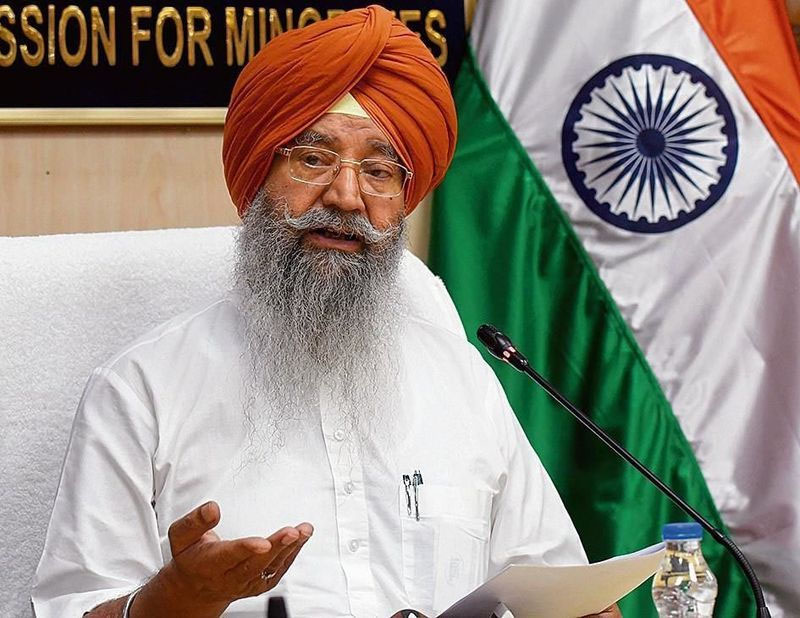
By Dr. Iqbal Singh Lalpura
India has completed 79 years of Independence. On 15 August 1947, India emerged from nearly two centuries of foreign rule and began its journey as a sovereign democratic nation. The generation that inherited the responsibility of governing the country was very different from the political class we see today.
A large number of Members of Parliament and Members of Legislative Assemblies in the early years had personally participated in the freedom movement. Many had suffered imprisonment, torture, financial hardship and social persecution for the national cause. They entered public life not primarily for personal advancement but with a sense of duty and sacrifice. They were remembered with affection and respect as Chacha, Bapu, Lok Nayak and by many other honourable titles.
The question we must ask today is: Why has the quality of morality, integrity and public conduct in politics and public life declined, despite India’s enormous progress in almost every other field?
From Sacrifice to Power
For almost three decades after Independence, the Congress dominated national politics and produced most of the Prime Ministers of the country. At the state level, however, political diversity developed relatively early, with Communist parties and regional parties gaining influence in several states.
The political and administrative structure inherited at Independence remained heavily centralised. The Union Government exercised enormous influence over administration, while the states had comparatively limited authority in many areas. Senior administrative and police positions were part of a system that had largely evolved during British rule.
This is an important point. Political independence came in 1947, but many of the institutions, laws, procedures and administrative habits inherited from the colonial state continued for decades.
The British designed institutions primarily to maintain order and control a subject population. Independent India needed to transform those institutions into instruments of democratic service. In some areas this transformation took place; in others, the colonial mindset and outdated procedures continued.
Laws are intended to provide a framework for society, while rules guide the functioning of government. But many laws and administrative procedures have remained inadequately updated in relation to the changing aspirations of a young, educated and increasingly globalised India.
If our institutions do not evolve with society, frustration naturally develops.
The Crisis of Education
Education should be the foundation of a nation’s future. Unfortunately, examination irregularities, copying, paper leaks and unfair practices have become recurring concerns.
When a student studies honestly for years and then discovers that an examination paper has been leaked or that someone has gained an unfair advantage, the damage is much greater than the cancellation of an examination. It damages faith in the system.
Paper leaks can create public anger, protests and sometimes situations in which police and security agencies have to use force. Governments are placed under pressure, and ministers and officials may face demands for resignation.
But the deeper issue is moral.
A society cannot build a strong nation if dishonesty is rewarded and honesty becomes a disadvantage.
Students are not merely candidates appearing for examinations. They are the future doctors, engineers, administrators, teachers, scientists, judges, soldiers and political leaders of India. If their formative years teach them that manipulation can defeat merit, the consequences will be felt for generations.
The increasing availability of narcotics around educational institutions and the tragic incidence of student suicides are also warning signs that our educational system must be concerned not merely with marks, but with character, mental resilience and values.
Health: A Public Trust
Health is another essential service affecting every citizen, whether living in a village or a metropolitan city.
India has undoubtedly made remarkable advances in medical science. Institutions such as AIIMS and PGI have earned public confidence and demonstrate what Indian medical institutions can achieve when professionalism, infrastructure and accountability come together.
At the same time, many state-run hospitals continue to face challenges involving infrastructure, availability of doctors, equipment, medicines and quality of service. Private healthcare has filled many gaps, but healthcare cannot be treated entirely as a commercial activity.
A poor citizen who cannot afford expensive treatment should not feel that quality healthcare is beyond his or her reach.
The question is therefore not whether India has progressed. It certainly has. The question is whether the benefits of progress are reaching the ordinary citizen with dignity and fairness.
Justice and Fair Selection
The third fundamental pillar is justice—particularly fairness in recruitment and selection.
Government employment remains highly valued in India because it offers stability and social respect. Therefore, recruitment examinations must be conducted with the highest standards of integrity.
Whenever members of recruitment commissions face allegations of corruption, prosecution or conviction, the damage extends far beyond the individuals involved. It creates doubt in the minds of thousands of young people who depend upon competitive examinations for their future.
Similarly, when questions arise regarding judicial integrity or allegations against judges, the institution of justice itself suffers.
Institutions cannot demand respect merely because they carry constitutional authority. Respect is earned through impartiality, transparency and conduct.
The Police and the Need for Reform
The police are perhaps the most visible face of the Government. The common citizen may rarely meet a senior civil servant or constitutional authority, but he or she regularly encounters the police.
The history of police reform in India is long. The British Government itself appointed several commissions and committees concerning policing between the nineteenth and early twentieth centuries. Yet, after Independence, police reform has progressed much more slowly than the needs of a democratic society require.
A democratic police force must be professional, politically neutral, accountable and sensitive to the rights and dignity of citizens.
Police officers must be able to enforce the law without fear or favour. At the same time, they must be protected from arbitrary political interference.
A modern democracy cannot effectively function with institutions designed primarily for colonial control.
Politics Has Become More Party-Centred
Another major transformation has taken place in electoral politics.
In the early years of Independence, individuals with strong personal reputations could win elections even without the organisational strength of a major political party. Today, elections to Parliament and state legislatures are overwhelmingly party-based.
Political parties are necessary for democracy. They provide ideology, organisation and a framework for governance. But excessive dependence on party structures can sometimes weaken the importance of the individual candidate’s character.
The question should not merely be:
“Which party does this person belong to?”
It should also be:
“What kind of person is this? What has he or she done for society? Can this person be trusted with public responsibility?”
The quality of democracy ultimately depends upon the quality of those who are elected.
Local government is even more important because it is the first point of contact between citizens and the state. Panchayats, municipalities and local bodies should provide opportunities for honest and capable citizens to enter public life. Excessive interference, manipulation of local electoral processes and uncertainty surrounding reservations can discourage genuine public-minded people from contesting.
If good people withdraw from politics, politics does not become cleaner. It simply creates more space for those whose primary motivation may be power or personal gain.
The Loss of Moral Authority
India has not failed.
On the contrary, India’s achievements are extraordinary.
Under the leadership of Prime Minister Shri Narendra Modi, India has made significant economic, technological and strategic advances. India has emerged as one of the world’s largest economies. Our defence industry has increasingly moved from dependence on imports towards indigenous production and exports. Indian scientists, engineers, entrepreneurs and technology professionals have demonstrated their capabilities globally.
India is progressing.
But material progress alone cannot make a nation great.
A country requires economic strength, military capability, scientific achievement and technological excellence. But it also requires honesty, truthfulness, compassion, justice and sincerity in public service.
Our ancient civilisational traditions have always understood this.
The idea of Ram Rajya represents governance based on justice and welfare. The Sikh tradition speaks of Halemi Raj, a rule characterised by humility and the absence of oppression. Bhagat Guru Ravdas Ji’s vision of Begampura represents a society without fear, discrimination and injustice.
These are not merely religious or historical ideas. They are moral visions of governance.
Where Did We Go Wrong?
Perhaps the decline in morality cannot be attributed to one political party, one government or one generation.
The reasons are deeper.
Politics has become increasingly expensive. Electoral competition has become intense. Social media has accelerated political polarisation. Public expectations have increased enormously. The attraction of power, position and influence has grown.
At the same time, society itself has changed.
When society begins to admire wealth more than integrity, political life eventually reflects that society.
When success is measured only by position and possessions, public service can become a means of personal advancement.
When people tolerate dishonesty because “everyone does it,” corruption becomes normalised.
When capable and honest citizens refuse to participate in public life, others occupy the space.
Therefore, the responsibility does not belong only to politicians. It belongs to all of us.
Restoring Faith in Public Institutions
The greatest challenge before India is not merely to create new institutions, but to restore public confidence in existing institutions.
We need continuous updating of laws and rules.
We need transparent and technology-driven recruitment systems.
We need examination systems in which paper leaks become extremely difficult and wrongdoing is swiftly punished.
We need better government schools, universities and hospitals.
We need professional and politically neutral policing.
We need meaningful police reform.
We need faster and more accessible justice.
We need transparent political funding and greater internal democracy within political parties.
Most importantly, we need to create a culture in which character matters.
Political parties must encourage people of integrity. Voters must reward good conduct. Civil servants must be protected when they act honestly. Whistle-blowers must receive protection. Corruption must carry consequences irrespective of political affiliation.
And public representatives must remember that an elected office is not a personal possession. It is a temporary trust given by the people.
The Road to 2047
India will celebrate the centenary of Independence in 2047.
That gives us approximately two decades to ask ourselves what kind of country we wish to leave for the next generation.
Will we measure success only by GDP, infrastructure, military strength and technological achievements?
Or will we also measure it by whether a poor person can obtain justice, whether a deserving student can secure admission without fear of manipulation, whether a patient can receive treatment with dignity, whether a young person can obtain employment through merit, and whether an ordinary citizen can approach a government office without feeling helpless?
The India of 2047 must be not only a richer India but a more ethical India.
We need to search our collective soul.
We must rediscover the values that inspired the freedom movement: sacrifice, service, truth, courage, discipline and commitment to the nation.
The freedom fighters did not sacrifice their lives merely to replace foreign rulers with Indian rulers. They dreamed of an India in which every citizen could live with dignity, justice and freedom.
The task before our generation is therefore clear.
Let us preserve the achievements of the past 79 years, correct the weaknesses of our institutions, raise the moral standard of public life and prepare India for the next hundred years.
Economic power can make India prosperous.
Military strength can make India secure.
Science and technology can make India competitive.
But honesty, justice and moral leadership will make India truly great.
As we move towards the centenary of Independence in 2047, let us not merely ask what India can give us.
Let us ask ourselves:
What can we give to India?
Let us search our conscience, participate in nation-building and ensure that the India of 2047 is not only a powerful nation, but a nation whose citizens can once again say with confidence:
Our institutions are fair. Our leaders are trustworthy. Our public servants are sincere. And our democracy belongs to the people.
Minorities Commission Government of India .