


• About Us
  • Contact
  • Privacy Policy
  • Terms and Conditions
Monday, April 13, 2026
  • Login
  • Register
Page3News Worldwide
  • Home
  • Page 3 Family
    • E-Paper
    • E-Magazine
    • Management Team
  • Subscriptions
  • Countries
    • USA
    • Canada
    • India
    • Balochistan
    • Thailand
    • UK
    • Australia
  • Language Wise News
    • Thai News
    • Punjabi News
    • Hindi News
  • Other News
    • World News
    • Latest Movie Reviews
    • Culture
    • Finance
    • Hollywood
    • Business
    • Entertainment
    • Sports
    • Lifestyle
    • Fashion
    • food
    • Health
    • Travel
    • Politics
    • Science
    • Tech
  • Multilingual Editorial
    • English Editorials
    • Thai Editorials
    • Hindi Editorials
    • Punjabi Editorials
    • Page3News Special
No Result
View All Result
  • Home
  • Page 3 Family
    • E-Paper
    • E-Magazine
    • Management Team
  • Subscriptions
  • Countries
    • USA
    • Canada
    • India
    • Balochistan
    • Thailand
    • UK
    • Australia
  • Language Wise News
    • Thai News
    • Punjabi News
    • Hindi News
  • Other News
    • World News
    • Latest Movie Reviews
    • Culture
    • Finance
    • Hollywood
    • Business
    • Entertainment
    • Sports
    • Lifestyle
    • Fashion
    • food
    • Health
    • Travel
    • Politics
    • Science
    • Tech
  • Multilingual Editorial
    • English Editorials
    • Thai Editorials
    • Hindi Editorials
    • Punjabi Editorials
    • Page3News Special
No Result
View All Result
Page3News Worldwide
No Result
View All Result
Home World News

Why alcohol affects women more than men

by Page 3 News International Desk
March 8, 2026
in World News, Health, Page3News Special
0
Why alcohol affects women more than men
0
SHARES
8
VIEWS
Share on FacebookShare on TwitterShare on WhatsappShare on TelegramShare on LineShare on Email

More and more women are addicted to booze – but their needs have largely been ignored by the medical establishment.

It used to be that men were the outsized alcohol drinkers in Western society – perhaps best depicted in popular culture by Don Draper’s Mad Men cronies, who swilled from office stashes of brown liquor, knocked back three-martini lunches and imbibed Old Fashioneds in an after-work pub culture where few women dared tread.

But epidemiologists have noted that the rise of marketing alcohol to women and the changing of gender roles have gradually shifted the booze imbalance. Overall, men are still almost twice as likely as women to binge drink. But that isn’t true for younger people, specifically. In fact, women born between 1991 and 2000 now drink just as much as their male counterparts – and their drinking rates could eventually surpass them.

Women’s bodies are affected differently by alcohol than men’s bodies – for reasons that go beyond mere size

Women are increasingly suffering from the ill effects of alcohol, too. National data show that the cirrhosis death rate shot up by 57% among women aged 45-64 from 2000-2015 in the US, compared to 21% among men. And it rose 18% in women aged 25-44, despite decreasing by 10% among their male peers. Adult women’s visits to hospital emergency departments for overdosing on alcohol also are rising sharply. And risky drinking patterns are escalating among women in particular.

But the problem isn’t just that women are drinking more. Researchers are finding that women’s bodies are affected differently by alcohol than men’s bodies – for reasons that go beyond mere size.

Getty Images Their levels of body fat, alcohol dehydrogenase and water mean that women respond differently to alcohol than men (Credit: Getty Images)
Their levels of body fat, alcohol dehydrogenase and water mean that women respond differently to alcohol than men (Credit: Getty Images)

Scientists have discovered that women produce smaller quantities of an enzyme called alcohol dehydrogenase (ADH), which is released in the liver and breaks down alcohol in the body.

Meanwhile, fat retains alcohol, while water helps disperse it. So thanks to their naturally higher levels of body fat and lower levels of body water, women experience an even more dramatic physiological response to alcohol.

“That vulnerability is why we see increases in medical problems in women with alcohol-use disorders, compared to men,” says Dawn Sugarman, a psychology professor at Harvard Medical School and addiction psychologist at McLean Hospital in Belmont, Massachusetts. (Find out more about how different bodies react to alcohol differently in our recent story Why do only some people get blackout drunk?)

Women who drink excessively also tend to develop addiction and other medical issues more quickly than men. It’s a phenomenon called ‘telescoping’: women with alcohol struggles tend to start drinking later in life than men, but it takes them much less time to develop alcohol addiction. Women are also faster to experience liver disease and damage to their hearts and nerves.
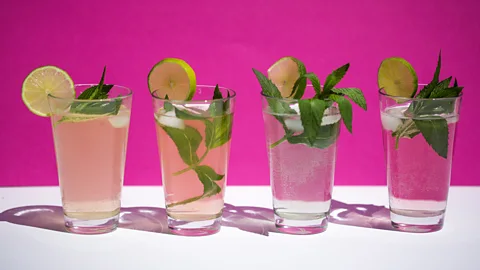
Getty Images Women who drink to excess develop damage to their liver, hearts and nerves faster than their male counterparts (Credit: Getty Images)
Women who drink to excess develop damage to their liver, hearts and nerves faster than their male counterparts (Credit: Getty Images)

Many of these gender-based differences in alcohol’s effects on the body weren’t discovered until recent decades. The earliest study on gender-based differences in ADH, for example, was published in 1990.

In fact, almost all clinical studies on alcohol were done entirely on men until the 1990s. This was partly because scientists were encouraged to eliminate as many variables as possible that might influence an experiment’s results – one of which was gender. And because alcoholism was assumed to be a mostly male problem, no-one wondered what not studying women and alcoholism might miss.

RelatedPosts

Pakistan deploys 13,000 troops and fighter jets to Saudi Arabia

Trump warns China of ‘big problems’ if it provides air defence systems to Iran

Why US-Iran talks failed after 21 hours of negotiations in Islamabad

That changed when government institutions like the US National Institutes of Health mandated that women and minorities had to be included as clinical research subjects, and critical gender gaps in medical research began to be addressed.

Scientists just assumed, well, you could study men and it could apply to women – Sharon Wilsnack

“People just didn’t think about women,” says Sharon Wilsnack, a psychiatry and behavioural science professor at the University of North Dakota’s School of Medicine and Health Sciences. “To the extent that they did, they just assumed, well, you could study men and it could apply to women.”
Getty Images Until the 1990s, almost all clinical studies on alcohol were done entirely on men (Credit: Getty Images)
Until the 1990s, almost all clinical studies on alcohol were done entirely on men (Credit: Getty Images)

For her PhD at Harvard University in the early 1970s, Wilsnack wrote her graduate dissertation about women and alcohol; her literature review then yielded only seven studies at Harvard’s Widener Library. With her husband, a sociologist, Wilsnack went on to lead the first long-term national study on women’s drinking habits. Among their many findings was the discovery that women who abuse alcohol often have been sexually abused as children, a gender difference that has since been deemed as crucial in helping women with addiction.

Gender-based alcohol research since then has turned up a variety of other sex-specific results.

By the 2000s, brain scans of alcoholics seemed to show that women’s brains are more sensitive to alcohol than men’s. But Marlene Oscar-Berman, an anatomy and neuropsychology professor at Boston University Medical School, has found a twist.

When her team looked at the brains of long-term drinkers, they noticed that alcoholic men had smaller ‘reward centres’ than their male counterparts. This area of the brain, made up of parts of the limbic system and frontal cortex is tied to motivation; it is key for making decisions and even for basic survival. But in alcoholic women, the reward centers were larger than in the non-alcoholic women – implying that their brains were less damaged than their male counterparts.

“That blew us out of the water,” Oscar-Berman says. “Our findings are somewhat counter to the general idea that women have been more susceptible to alcohol damage in the brain than men.” Scientists don’t yet understand what might be causing these differences.

Getty Images Women drink for different reasons than men do (Credit: Getty Images)
Women drink for different reasons than men do (Credit: Getty Images)

Findings like these show the importance of gender-specific studies on alcohol and addiction, says Sugarman. She points to recent research showing that alcohol-addicted women have better outcomes when they’re in women-only treatment groups that also educate them about the gender-specific elements of their addiction and women’s motivations for drinking. Perhaps unsurprisingly, those motivations are different from men’s. Research shows that women’s drinking is tied to quelling emotional pain, while men’s drinking is more linked to social pressure.

“Some women had been in [alcohol] treatment five, six, 10 times before, and were saying things like, ‘This is information I never heard before,’ and ‘I never heard that I’m more susceptible to alcohol than men, or that these substances affect me differently,’” says Sugarman.

Because of these differing motivations for drinking, their biological vulnerabilities and especially because of the link between women’s alcoholism and histories of trauma, it’s worth exploring how women’s alcohol treatment needs may be different from men’s. For example, women who have survived sexual assault may not feel safe entering the standard therapy group for alcohol treatment, where the gender breakdown can skew up to 70% male. For these women, hearing the stories of other women and knowing that they’re not alone has shown to be beneficial to their recovery.

Above all, say experts, the days of assuming that the research on men and alcohol can simply be applied to women should be long gone.


Get real time update about this post categories directly on your device, subscribe now.

Unsubscribe
Page 3 News International Desk

Page 3 News International Desk

The Page 3 News is a Multilingual Worldwide daily newspaper founded in 2021. It is published in Bangkok, Thailand by the Page 3 News Thai Limited Partnership. Page 3 News is available to the world in all the three formats i.e. e-Paper, digital and print. The Page 3 News is having offices in many countries like Thailand, India, Canada, USA, etc. and is currently published in English, Thai, Hindi and Punjabi languages.

Related Posts

Pakistan deploys 13,000 troops and fighter jets to Saudi Arabia

Pakistan deploys 13,000 troops and fighter jets to Saudi Arabia

by Page 3 News International Desk
April 12, 2026
0
13

The deployment aimed to enhance joint military coordination, improve operational readiness between the armed forces of the two countries, and...

Trump warns China of ‘big problems’ if it provides air defence systems to Iran

Trump warns China of ‘big problems’ if it provides air defence systems to Iran

by Page 3 News International Desk
April 12, 2026
0
3

Donald Trump warned China would face "big problems" if it sends weapons to Iran, after US intelligence suggested Beijing may...

Why US-Iran talks failed after 21 hours of negotiations in Islamabad

Why US-Iran talks failed after 21 hours of negotiations in Islamabad

by Page 3 News International Desk
April 12, 2026
0
4

High-stakes US-Iran talks mediated by Pakistan collapse after 21-hour talks in Islamabad, with both sides failing to bridge differences over...

Pakistan says it will keep backing US-Iran talks, urges ceasefire to hold

Pakistan says it will keep backing US-Iran talks, urges ceasefire to hold

by Page 3 News International Desk
April 12, 2026
0
4

Foreign Minister Ishaq Dar said Pakistan would continue to play its role in facilitating engagement and dialogue between Iran and...

Nearly 400 sentenced in Nigeria for links to militant Islamists

Nearly 400 sentenced in Nigeria for links to militant Islamists

by Page 3 News International Desk
April 12, 2026
0
3

Nearly 400 people have been sentenced in Nigeria for links with militant Islamic groups following mass trials. The convicts were...

Hungarians decide whether to end 16 years of Orbán rule and elect rival

Hungarians decide whether to end 16 years of Orbán rule and elect rival

by Page 3 News International Desk
April 12, 2026
0
2

Hungarians are going to the polls in a vote that could bring down long-serving Prime Minister Viktor Orbán and have...

Facebook Twitter Youtube Instagram Tumblr Pinterest

Page 3 News Multilingual Worldwide

The Page 3 News is a Multilingual Worldwide daily newspaper founded in 2021. It is published in Bangkok, Thailand by the Page 3 News Thai Limited Partnership. Page 3 News is available to the world in all the three formats i.e. e-Paper, digital and print.

The Page 3 News is having offices in many countries like Thailand, India, Canada, USA, etc. and is currently published in English, Thai, Hindi and Punjabi languages.

Category

Calanderwise News

April 2026
MTWTFSS
 12345
6789101112
13141516171819
20212223242526
27282930 
« Mar    

© 2024 Page 3 News - First Multilingual Worldwide Newspaper based in Thailand.

Welcome Back!

Login to your account below

Forgotten Password? Sign Up

Create New Account!

Fill the forms below to register

*By registering into our website, you agree to the Terms & Conditions and Privacy Policy.
All fields are required. Log In

Retrieve your password

Please enter your username or email address to reset your password.

Log In

Add New Playlist

No Result
View All Result
  • Home
  • E-Magazine
  • Management Team
  • Subscriptions
  • E-Paper
  • World News
  • Balochistan
  • USA
  • India
  • Thailand
  • Canada
  • UK
  • Australia
  • About Us
  • Contact
  • Privacy Policy
  • Terms and Conditions
  • Disclaimer

© 2024 Page 3 News - First Multilingual Worldwide Newspaper based in Thailand.

This website uses cookies. By continuing to use this website you are giving consent to cookies being used. Visit our Privacy and Cookie Policy.