
The US will begin releasing the oil next week, although it could take around 120 days to deliver the full quantity
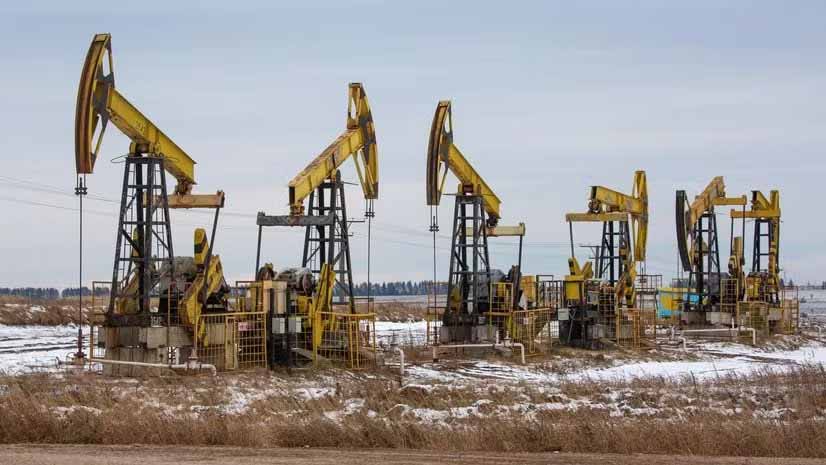
The Trump administration plans to release 172 million barrels of crude oil from the country’s Strategic Petroleum Reserve (SPR) to help bring down energy costs amid the ongoing conflict with Iran, US Energy Secretary Chris Wright said.
The US will begin releasing the oil next week, although it could take around 120 days to deliver the full quantity, reported CNBC.
Part of record global oil release by IEA
The US move forms part of a broader effort led by the International Energy Agency (IEA), Wright said. The US is among more than 30 member economies of the agency spanning Europe, North America and Northeast Asia.
The IEA agreed to release 400 million barrels of oil globally to address supply disruptions triggered by the conflict. The planned release marks the largest coordinated oil release in the more than 50-year history of the agency.
“This is to tide the world over while these flows are restricted by Iran, but ultimately the United States military will prevail,” Wright said in an interview with Fox News. He added that shipping traffic through the Strait of Hormuz could begin returning within weeks, reported Bloomberg.
Wright said the Trump administration plans to replace the oil it is releasing with about 200 million barrels within the next year, and indicated that the replenishment would come at no cost to taxpayers.
The US currently holds about 415 million barrels of oil in the SPR, representing roughly 58 per cent of the authorised capacity of 714 million barrels. Trump has repeatedly criticised former US President Joe Biden for earlier withdrawals from the reserve.
Under the Biden administration, the US carried out a record release of 180 million barrels in 2022 to help curb gasoline prices after Russia’s invasion of Ukraine triggered a global energy shock.
Ready to tap oil reserve to ease gasoline prices: Trump
Earlier, Trump had said he was prepared to tap the reserve to keep energy prices under control. “We’ll do that, and then we’ll fill it up,” Trump said in an interview with Cincinnati broadcaster WKRC, reported CNBC. “I filled it up once, and I’ll fill it up again, but right now we’ll reduce it a little bit, and that brings the prices down,” he said.
Separately, Trump on Tuesday (local time) announced the opening of a new oil refinery in Brownsville, Texas, the first such project in the US in 50 years.
The refinery is part of a $300 billion investment deal, Trump said, adding that it would create thousands of jobs and play a major role in strengthening the country’s energy security. The US president also thanked India and Reliance Industries for their role in the investment linked to the project.
Oil and gasoline prices surge as conflict disrupts Hormuz shipping
The announcement comes as crude oil, gasoline, diesel and jet fuel prices have risen sharply since the US and Israel carried out coordinated military strikes against Iran on February 28. The conflict has brought shipping traffic to a near standstill in the Strait of Hormuz, a key maritime route through which around one fifth of the world’s oil supply flows.
Fuel prices have climbed significantly in the US as well. According to CNBC, average gasoline prices have risen to about $3.58 per gallon. That represents an increase of nearly 22 per cent compared with last month, when the average price was around $2.94 per gallon.
West Asia conflict
The regional crisis escalated following the killing of Iran’s Supreme Leader Ali Khamenei in joint military strikes by the US and Israel on February 28. Following his death, Iran launched retaliatory attacks targeting Israeli and US assets across several Gulf countries.
Iran has launched retaliatory missile and drone strikes targeting US military bases, embassies and civilian or energy infrastructure across neighbouring Gulf countries, including the United Arab Emirates (UAE), Saudi Arabia, Qatar, Kuwait, and Bahrain.