

Demand for live specimens is leading unscrupulous sellers to poach isopods from protected areas, according to a paper published in October in the journal Conservation Biology.
By Madeline Shaw
At first glance, the small plastic takeaway cup with a few tablespoons of soil and dead leaves looked like trash. But for collectors at a recent pet expo in White Plains, New York, it had something special: a few Cuban Spiky isopods.
These little invertebrates, about the size of a pinkie fingernail, carried a hefty price tag: A neon orange sticker on the lid listed $350.
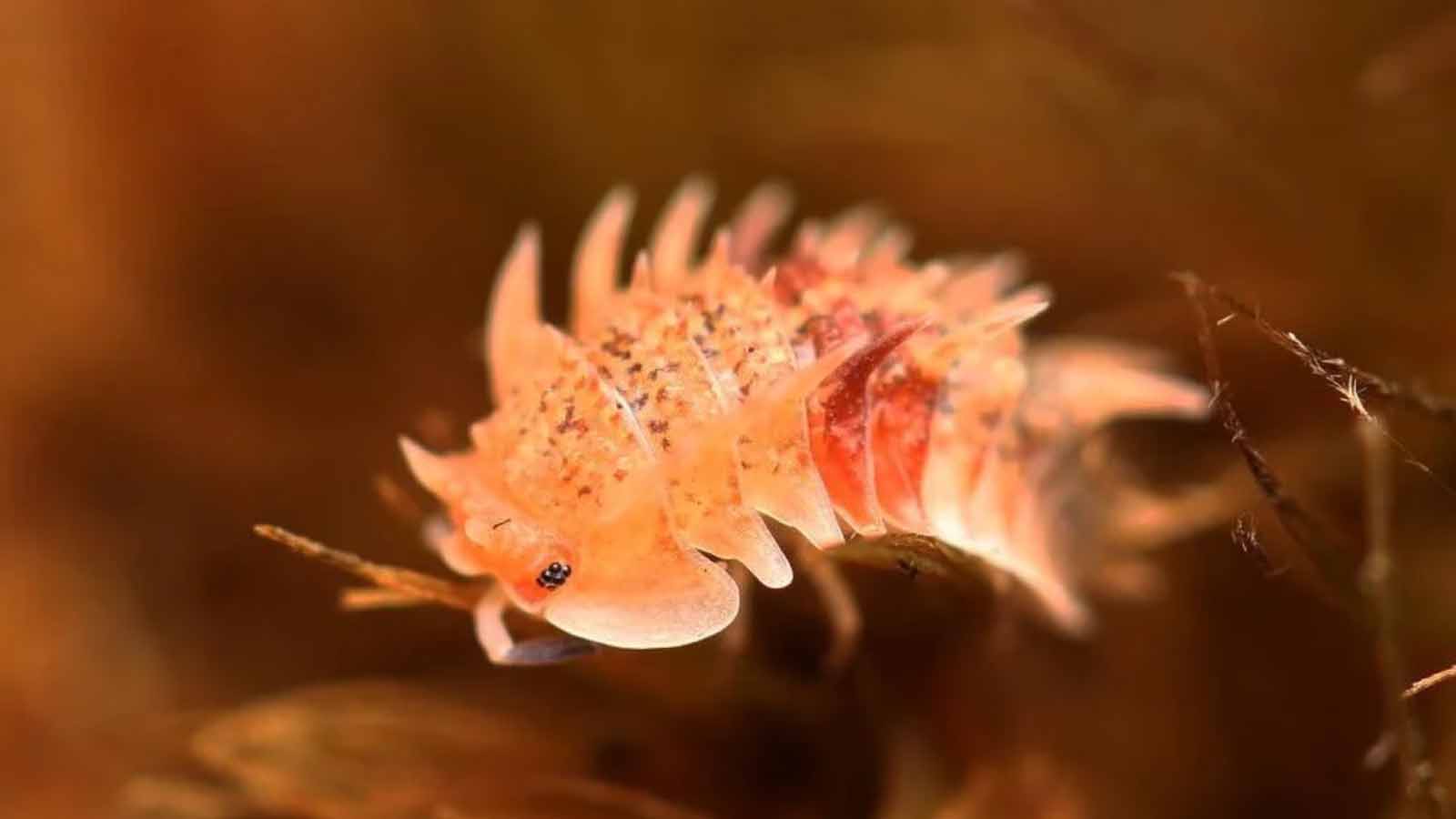
That’s because the Cuban Spiky isn’t just any backyard dirt denizen. It gets its name from the rows of sharp spines that line its exoskeleton like dragon scales, and it’s among the exotic isopods that collectors covet most.
They’re also known to exist only in a small Cuban nature reserve and illegal to import without a special permit. Researchers think they’re critically endangered.
Thousands of enthusiasts in online communities around the world are collecting and breeding different varieties of isopods, which are also known as roly-polies, pill bugs or wood lice. “I always compare it to Pokémon,” said David Vargas, who runs a company called Holy-Poly Isopods in Wildomar, California, that breeds the animals. “You’ve got to catch them all.”
That’s making some scientists worry that the popularity of isopods and the largely unregulated market for them could pose a serious threat to some of the more vulnerable species.
Demand for live specimens is leading unscrupulous sellers to poach isopods from protected areas, according to a paper published in October in the journal Conservation Biology. Researchers say the trend may lead to extinctions, both from overcollecting wild specimens and by allowing invasive species to supplant native isopods.
Complicating matters, many species available online have not been studied much by scientists, and some not at all. That means data to determine their conservation status is often unavailable, making formal protections difficult or impossible.
“A lot of the invertebrate pet trade is unfortunately expanding very quickly and doing so without any oversight or regulation,” said Sebastian Echeverri of the Xerces Society for Invertebrate Conservation, who was not involved with the paper in Conservation Biology. “On every level where it could be a problem, it has become a problem.”
Some dealers monitor scientific journals and the citizen science app iNaturalist for information about new or rare species, said Pallieter De Smedt, an isopodologist at Ghent University and a co-author of the paper. He said that some sellers were “going on expeditions” across Europe and Southeast Asia in search of valuable specimens.
Hobbyists then purchase these isopods in person at pet expos or online from specialist sites. In addition to the Cuban Spiky, other popular varieties of isopods include Rubber Ducky, Panda King and Silver Ghost.
Social media sites like Facebook and Instagram have become major hubs for trade, too. When asked about the listings, a spokesperson for Meta, the parent company that owns both platforms, declined to comment and referred The New York Times to Meta’s policy on restricted goods and services, which, in some circumstances, allows the sale of animals that are not endangered.
Representatives of eBay did not respond to a request for comment. Isopods do not appear on the relatively short list of live animals allowed to be sold on the platform.
Many listings also appear to violate requirements for importing non-native animals into the United States. Because foreign isopods have the potential to become invasive and harm crops, the Agriculture Department regulates them as pests. To date, only 21 of the more than 4,100 documented isopod species are approved as pets or for commercial sale, and all require a permit.
Oversight is complicated because smuggling isopods out of nature reserves and across borders is easy, De Smedt said. “In very small vials, you can transport them with some soil and you do not even see that there is an isopod inside.”
A spokesperson for the Animal and Plant Health Inspection Service, the Agriculture Department office that prevents pests from entering the United States, said the service took violations very seriously but declined to provide examples of enforcement action.
Most terrestrial isopods, which are crustaceans related to crabs and shrimp, do not bite and are harmless to humans. They feed on organic material and play a key role in maintaining healthy soil. Some more common species are used in terrariums as cleanup crews or as food for reptiles.
Commercial listings occasionally include a country of origin, but other times their source is “completely unknown,” said Nathan Jones, an isopod researcher and a co-author of the October paper.
Some species, like the Cuban Spiky, are known to have small ranges entirely within protected lands where collecting of any kind is prohibited. That means even a single instance of poaching “can be detrimental to an entire population,” Jones said.
Hobbyists unaware of the conservation issues could be “causing harm without knowing it,” De Smedt said. But he and other researchers say their goal is to encourage responsible trade among collectors who appreciate these often-overlooked animals, rather than ban the hobby.
He said responsible practices included buying only well-documented species bred in captivity. (Vargas said he sells only USDA-approved species that he breeds himself. It was not clear whether the Cuban Spikies at the pet expo, from a different seller, had been obtained legally.)
Because of isopods’ natural genetic variations, De Smedt said, it’s possible to selectively breed “color morphs” with the flashy exoskeletons prized by collectors.
Echeverri, who collects isopods, said he thought the hobby could even help spur support for conservation efforts. “You show someone a Rubber Ducky isopod and their eyes light up,” he said. “That can turn into, ‘I love them now, and therefore I think it’s important to protect them.’”
This article originally appeared in The New York Times.