


The microbiome in the vagina has received less attention than its cousin in the gut – but a well-balanced vaginal microbiome can help protect overall health.
Inside the vagina is a delicate ecosystem, made up of thousands of different types of bacteria, fungi and viruses jostling alongside one another, competing for nutrients and space.
Some of the bugs that live in the vagina can play a surprisingly positive role in wider wellbeing – from preventing disease to improving pregnancy outcomes. When bacteria known as Lactobacillus are abundant, the risk of infertility, miscarriage, premature birth and even cervical cancer are all reduced.
Scientists are now racing to develop diagnostic tests and treatments to better manage these vital microorganisms. If realised, this new era of personalised medicine could revolutionise reproductive healthcare.
So how exactly does the vaginal microbiome predict health – and what can be done to protect it?
During childhood, the vaginal microbiome tends to be dominated by bacteria that thrive in low-oxygen conditions, known as anaerobic microbes. However, the rise in oestrogen that occurs during puberty creates the perfect environment for another family of bacteria called Lactobacillus to take up residence.
Lactobacillus appear to be especially beneficial to health. In sufficient numbers, their presence protects against infections by stopping harmful pathogens from getting a foothold in the vagina.
“They crowd out pathogens, competing with them for nutrients and space,” says Chrysi Sergaki, head of microbiome at the UK’s Medicines and Healthcare products Regulatory Agency (MHRA).
Lactobacillus also produce lactic acid, which makes the vagina a less welcoming habitat for pathogens.
“It makes that environment hostile for harmful microbes, so the microbes don’t dare to come there,” says Sergaki. “They [Lactobacillus] can also regulate local immune responses to defend against infection, and produce natural antibiotics – so they can basically kill other bacteria that try to come in.”
The flip side of the coin is that if the vaginal microbiome becomes disturbed and Lactobacillus is lost – in an imbalance known as vaginal dysbiosis – then opportunistic infections such as bacterial vaginosis (BV), thrush and urinary tract infections (UTI) become more likely.
What’s more, if a woman is sexually active, vaginal dysbiosis makes her more at risk of contracting sexually transmitted infections (STIs). For instance women with lower levels of Lactobacillus are more at risk of HIV.
“In Cape Town in South Africa, the rate of HIV is between 20-30%, and yet some sex workers seem to get lucky and avoid infection,” says Laura Goodfellow, a clinical lecturer in women’s and children’s health at the University of Liverpool, UK.
“It turns out that the chance of acquiring HIV as a sex worker in Africa is related to what else is going on with the vagina microbiota, and if you have a lower proportion of Lactobacillus, you have a higher chance of catching HIV.”
Women with lower levels of Lactobacillus are also at greater risk of catching human papilloma virus (HPV), the leading cause of cervical, vulval and vaginal cancers.
Women with vaginal dysbiosis take longer to clear HPV infections and have a higher chance of an infection turning into cervical cancer.
“The microbiome is a bit like a forest,” says Goodfellow. “With a healthy forest, if you throw some seeds onto the forest floor, they’re not going to grow, because there’s already a healthy ecosystem living there. But if the microbiome that’s there isn’t as well set up, then the bad bacteria or viruses can grow more easily.”
A pregnancy predictor
Intriguingly, the community of bacteria living in a woman’s nether regions also appears to play a role in determining their chance of conceiving and carrying a baby to term. Women with lower levels of Lactobacillus, for instance, are more likely to suffer a miscarriage, or have an ectopic pregnancy – when the foetus develops outside the uterus. Women with vaginal dysbiosis also have a slightly higher chance of delivering a premature baby – classed as an infant born before 37 weeks of gestation.
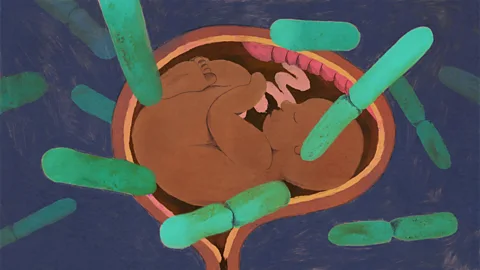
“It’s not the only thing that causes preterm birth, and many people with dysbiosis will have babies at the right time, but we think it slightly increases your risk,” says Goodfellow.
Meanwhile, Bifidobacterium, another health-enhancing bacterium, is thought to be protective of preterm birth – although Bifidobacterium is much rarer, and typically present in less than 5% of women.
There are also some studies suggesting a link between dysbiosis and a lower chance of successful fertility treatment. “So if someone has dysbiosis and they have IVF, then we think it may be a little bit less likely to succeed,” says Goodfellow.
One theory for why vaginal dysbiosis may make adverse pregnancy outcomes more likely is down to inflammation, which forms part of your immune system’s response to injury or infection. A certain amount of inflammation in the body is necessary for survival, but too much is thought to predispose people to all sorts of conditions, including heart disease, diabetes, obesity and Alzheimer’s. Inflammation in the vagina, placenta, or developing baby may trigger preterm birth or miscarriage, or make it less likely that a woman can conceive.
“We know that women who have Lactobacillus have less inflammatory proteins within the fluid within the vagina,” says Goodfellow. “So the current hypothesis is that dysbiosis causes more inflammation, and it’s that inflammatory pathway which in some people triggers a preterm birth.”
Interestingly, Lactobacillus is also seen as a “good bacteria” to have in the gut, mostly thanks to its ability to suppress inflammation.
Alternatively, it has been known for some time that STI infections such as chlamydia, gonorrhoea, syphilis and bacterial vaginosis can also predispose women to preterm birth, infertility, miscarriage and cervical cancer. Lactobacillus could protect against this simply by competing with the pathogens that cause these infections, preventing them from taking hold.
“Having a good microbiome can help prevent bacterial vaginosis, which in turn helps to prevent preterm birth,” says Sergaki.
A new era of personalised medicine
This all begs the question: could we improve birth outcomes by changing the vaginal microbiome, tipping the scale towards species of Lactobacillus, Bifidobacterium or even other, less prominent, beneficial bacteria?
That is exactly what researchers at Imperial College London are aiming to do with a new clinical trial. The trial will test whether Lactin-V, a probiotic containing the live bacterium Lactobacillus crispatus, can reduce the rate of premature birth among high-risk women.
When it comes to looking after the vaginal microbiome, there are a few things people can do, and a few it’s best not to
So far, the team’s research has shown that having a vaginal microbiome dominated by Lactobacillus crispatus is associated with a lower risk of preterm delivery, and that vaginal supplementation with Lactobacillus crispatus can change the vaginal microbiome. The team also identified a link between a pregnant woman’s blood type and her risk of preterm birth. For instance, the study found that blood groups B and O were associated with a higher risk of spontaneous preterm birth, while blood group A was associated with a lower risk. The researchers believe this is because women with blood group A are more likely to carry higher proportions of beneficial Lactobacillus crispatus.
Elsewhere, scientists in the US, UK and South Africa are investigating whether Lactin-V could protect women at high risk of acquiring HIV.
Sergaki and Goodfellow are also part of a consortium of researchers advocating for the development of microbiome-based diagnostic tools. In theory, the tools could quickly and non-invasively read a woman’s unique vaginal bacterial “fingerprint” and then use that to predict her risk of miscarriage, preterm birth, infertility or cervical cancer. This could lead to earlier diagnoses, and more effective prevention of conditions, but also personalised treatments.
“I’m particularly interested on how we can bring this very cutting-edge science closer to our patients, faster and safely,” says Sergaki.
“We already know from the gut microbiome that there are bacterial signatures that are associated with certain disease states. And we are now finding that this is also the case with the vaginal microbiome.”
One example of where this has already entered mainstream medicine is testing for the prevalence of the HPV virus during routine smear tests, rather than looking directly for cancerous or pre-cancerous cells themselves. HPV testing is now the primary method in cervical screening, as it is a more accurate way to detect those at high risk of cervical cancer.
Looking after the vaginal microbiome
Meanwhile when it comes to looking after the vaginal microbiome, there are a few things people can do, and a few it’s best not to.

Intimate hygiene practices such as vaginal douching, for example, can do more damage than good. Douching involves the introduction of water and/or cleansing products into the vagina. Far from improving the health of the vagina, douching has been associated with increased risks of BV, preterm birth, and pelvic inflammatory disease (PID), which can lead to infertility. Other feminine hygiene products such as gels, sprays and wipes could also damage the delicate microbial ecosystem.
If sexually active, using barrier contraceptives can protect the vaginal microbiota. For instance studies have found that condom users have a higher prevalence of Lactobacillus. Semen has its own microbial community which can interfere with the delicate balance of bacteria residing in the vagina.
It’s also a good idea to follow a healthy diet. Research shows that that not getting enough micronutrients, such as vitamins A, C, D and E, β-carotene, folate and calcium, may increase the risk of BV. A high dietary fat intake is also associated with an increased risk of BV. Some – but not all studies – have additionally shown that obese women are also more likely to have a microbiome that contains fewer Lactobacillus, emphasising the importance of maintaining a healthy body mass index (BMI).
Finally, it appears that smoking can affect the vaginal microbiome. One study took vaginal swabs from 20 smokers and non-smokers. Half of the smokers tested had Lactobacillus-depleted microbiomes in comparison to just 15% of non-smokers. Studies have also revealed an increased prevalence of BV in smokers, as well as a greater risk of preterm birth.
Giving up smoking, maintaining a healthy BMI, and consuming a diet rich in vitamins could therefore all be good ways of looking after the vagina.
“Eating plenty of leafy green vegetables, getting enough sleep, drinking enough water,” says Goodfellow. “All these general things that improve your health will probably improve your vaginal microbiome too.”