
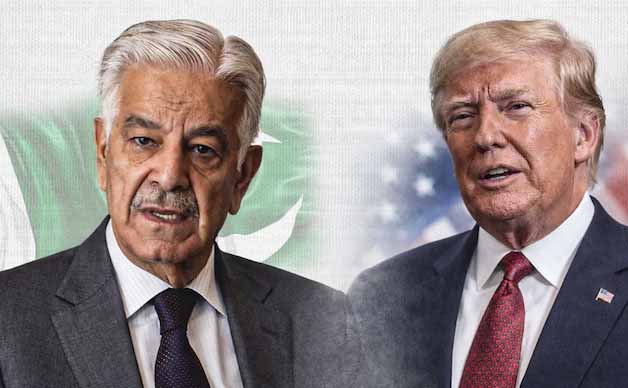
For seven decades, Pakistan has repeatedly offered itself as America’s strategic pawn, only to be discarded when no longer useful. It is a pattern of servitude enabled through its own desperation and greed.
In a candid admission of Islamabad’s transactional alliance with Washington, Pakistan’s Defence Minister Khawaja Asif lamented in Parliament that his country has been treated “worse than toilet paper” by the United States.
The relationship between the US and Pakistan since 1947 represents one of the most complex and tumultuous partnerships in Cold War and post-Cold War geopolitics. But Pakistan has only itself to blame for this predicament.
PAKISTAN’S GEOGRAPHIC VALUE
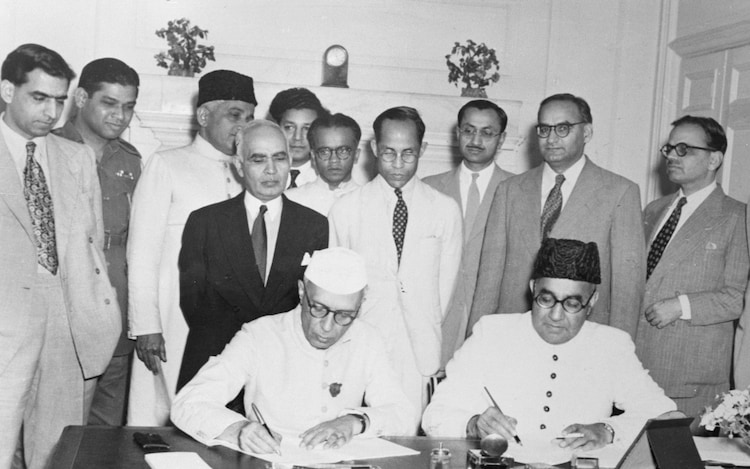
Soon after its birth, Pakistan was desperate to sit in Washington’s lap. The United States did not immediately embrace Pakistan after it emerged from India’s partition in 1947. India, as the larger democracy under Jawaharlal Nehru’s leadership, initially appeared the more attractive partner. However, Nehru’s commitment to non-alignment frustrated American policymakers seeking allies to check Soviet expansion.
In 1949, Pakistan managed an invitation from Joseph Stalin to visit Moscow. This was largely seen as a diplomatic stunt to prompt an invitation from the US, which had been somewhat lukewarm toward the new nation. When the US invitation arrived, Prime Minister Liaquat Ali Khan accepted it and postponed the Soviet one.
Khan’s 1950 visit to the US marked a pivotal moment. His decision was driven by Pakistan’s desperate need for military and economic assistance to counter what it perceived as an existential threat from a larger India, particularly over Kashmir.
In his address to the US Congress, Liaquat portrayed Pakistan as a bulwark against communism” and emphasised its strategic location at the crossroads of South Asia, the Middle East, and Central Asia.
Washington pounced on Pakistan’s desperation.
THE FORMATION OF AN ALLIANCE
The relationship crystallised with Pakistan’s entry into two American-sponsored military alliances.
The first was the Southeast Asia Treaty Organization (SEATO, 1954), designed to prevent communist expansion in Southeast Asia.
The second was the Central Treaty Organization (CENTO, 1955), also known as the Baghdad Pact, which aimed at containing Soviet influence in the Middle East.
Islamabad was euphoric about these pacts. But the reality was bitter: the military agreements of the 1950s were less about defending Pakistan and more about providing the US with strategic real estate for its containment policy.
BADABER AND THE U-2 INCIDENT
In the late 1950s, the CIA established a covert facility at Badaber, a remote site about 10 miles from Peshawar. Officially designated as a “communications center” for the US Air Force, it was in reality a sophisticated electronic listening post and launching pad for U-2 reconnaissance missions.
The base was essentially a state within a state. US personnel had exclusive control, and even senior Pakistani officials were often barred from certain areas.
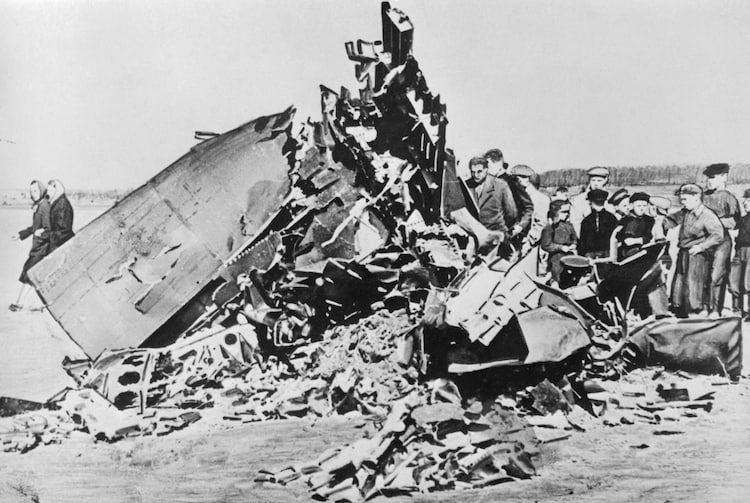
On May 1, 1960, a U-2 spy plane piloted by Francis Gary Powers took off from Badaber. His mission was to fly across the Soviet Union and land in Norway, photographing sensitive military installations along the way.
The Soviets successfully shot down the plane with a surface-to-air missile. Powers was captured alive, and the wreckage, including the high-resolution cameras, also landed in Soviet possession.
The incident caused a global diplomatic explosion. Soviet premier Nikita Khrushchev was livid. He famously declared that a “red circle” had been drawn around Peshawar on Soviet maps, threatening to wipe the city off the map with nuclear missiles if such flights continued.
The Badaber incident is a textbook example of the transactional nature of the relationship. The US gained invaluable intelligence on Soviet missile capabilities. In return, Pakistan received military hardware but also invited a direct nuclear threat from the USSR.
THE AFGHAN JIHAD
Pakistan did not learn from its past. It continued to woo Washington like a desperate supplicant.
The December 1979 Soviet invasion of Afghanistan transformed Pakistan’s strategic value. President Jimmy Carter saw the Soviet occupation of Afghanistan as an opportunity to give the USSR its “Vietnam War.” Pakistan, under military dictator General Muhammad Zia-ul-Haq, became a willing accomplice.
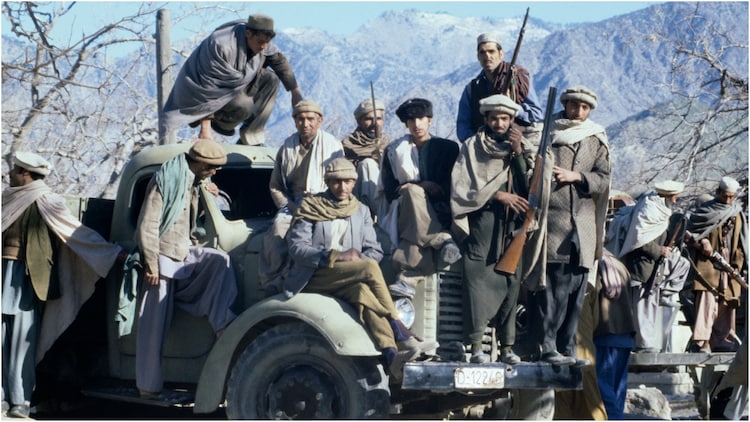
Through Operation Cyclone, the CIA channelled approximately $3 billion in arms and funding to Afghan mujahideen fighters, with Pakistan’s Inter-Services Intelligence (ISI) serving as the primary distribution network.
General Zia leveraged this dependency to consolidate his military dictatorship and impose his Islamisation agenda.
THE PRICE PAKISTAN PAID
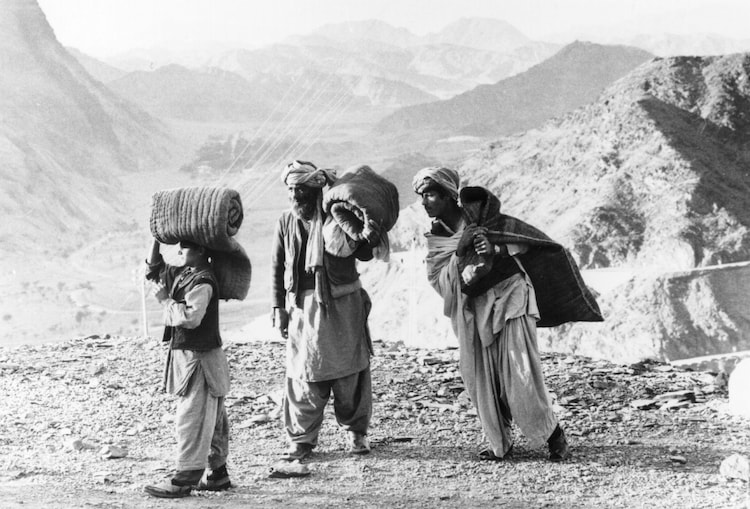
Pakistan absorbed approximately 3-5 million Afghan refugees during the crisis. These refugees settled primarily in the North-West Frontier Province (now Khyber Pakhtunkhwa) and Balochistan, fundamentally altering the demographic and economic landscape of these regions.
The Afghan war introduced thousands of automatic weapons into Pakistan’s tribal areas. The US and its allies encouraged arms proliferation to sustain the insurgency, with little consideration for post-war consequences. Simultaneously, Afghanistan’s opium production, which was tacitly encouraged to finance mujahideen operations, created heroin trafficking networks that penetrated deep into Pakistani society.
To mobilise support for the Afghan jihad, Zia’s regime promoted a radical interpretation of Islam through madrassas funded by Saudi Arabia and encouraged by the US as ideological training grounds for anti-Soviet fighters. Thousands of these madrassas emerged along the Afghan-Pakistan border.
This radicalisation would have profound consequences. Many graduates of these madrassas formed the core of organisations like the Taliban and later groups that turned their weapons against the Pakistani state itself.
Its objectives in Afghanistan achieved, the US walked away from the region, leaving Pakistan to deal with the wreckage.
On January 1, 1990, just months after the Soviet withdrawal from Afghanistan, the US invoked the Pressler Amendment, cutting off all military and economic aid to Pakistan due to its nuclear weapons program. The same nuclear program that had been overlooked throughout the 1980s suddenly became grounds for sanctions.
RIVALRY AS DESPERATION
Pakistan’s eagerness to court Washington was never truly about security or economics. At its core, it was about India. The obsession with matching, countering, and ultimately humiliating India–the family it partitioned–drove every strategic miscalculation.
Pakistan forgot a simple rule: love thy neighbour, because hate is self-defeating. Or, as cricketer Virender Sehwag said, “Baap baap hota hai.”
From the moment of partition, Pakistan’s establishment defined national purpose almost entirely as opposition to India. Every alliance and transaction with Washington was filtered through a single question: does this give us an edge over New Delhi?
The answer, repeatedly, was no.
When Pakistan joined SEATO and CENTO in the 1950s, its leaders convinced themselves that American military deals would finally give them parity with India. Pakistan’s leaders believed the American alliance would provide security against India and support for its position on Kashmir. Instead, the US made clear that these pacts were about Soviet containment, not subcontinental rivalries.
During the 1965 war, Pakistan actually believed it could militarily defeat India, partly because of the confidence its American weapons had inspired. It was humbled as India crossed the LoC.
The US rubbed salt on the wound when it imposed an arms embargo on both countries. The move particularly devastated Pakistan, which was almost entirely dependent on American weaponry.
The 1971 war was the definitive verdict. Pakistan had counted on American intervention. The 7th Fleet’s theatrical but ultimately useless deployment in the Bay of Bengal became a symbol of how thoroughly Islamabad had misread its own value to Washington. India didn’t just win the war, it created a new country out of Pakistan’s eastern half, and the US did nothing meaningful to stop it.
This “terror factory” created for the Afghan Jihad couldn’t be shut down overnight; instead, Islamabad saw it as an opportunity to finger India. This obsession would eventually lead Pakistan into its next disastrous entanglement: The War on Terror.
THE WAR ON TERROR
The terrorist attacks of September 11, 2001, brought the US back into the region. Pakistan, under military ruler General Pervez Musharraf, faced what the general himself described as an ultimatum delivered by Deputy Secretary of State Richard Armitage: you are either with us or against us.
In his memoir In the Line of Fire, Musharraf wrote that “the choice, though presented as Pakistan’s, was actually no choice at all.”
Pakistan provided ground and air lines of communication for NATO forces in Afghanistan. Approximately 80% of NATO supplies transited through Pakistan. The ISI provided crucial intelligence leading to the capture of several high-value Al-Qaeda targets. The Pakistani military conducted operations in the Federally Administered Tribal Areas (FATA), regions it had never fully controlled since independence.
THE BLOWBACK
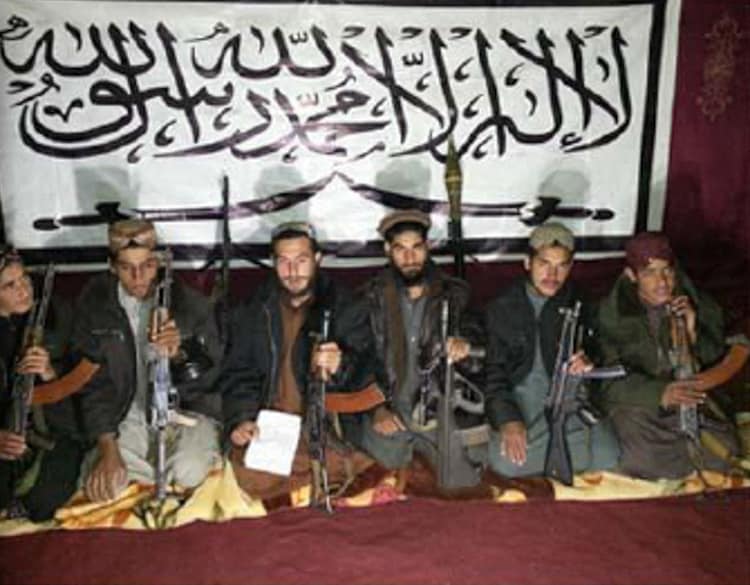
The most devastating consequence was the emergence of the Tehrik-i-Taliban Pakistan (TTP), an umbrella organisation of militant groups that turned their weapons against the Pakistani state. The TTP was explicitly formed in response to Pakistani military operations in FATA undertaken at America’s behest.
In 2014, the TTP carried out one of the most horrific terror attacks in the region’s history when it killed 149 people, including 132 schoolchildren, at Peshawar’s Army Public School.
Islamabad would come to rue its alliance with NATO, calling the TTP “Frankenstein’s monster created by Pakistan’s participation in the War on Terror” (Ayesha Jehangir; a Pakistani media, war and conflict researcher at the University of Technology, Sydney).
THE DIPLOMATIC HUMILIATION
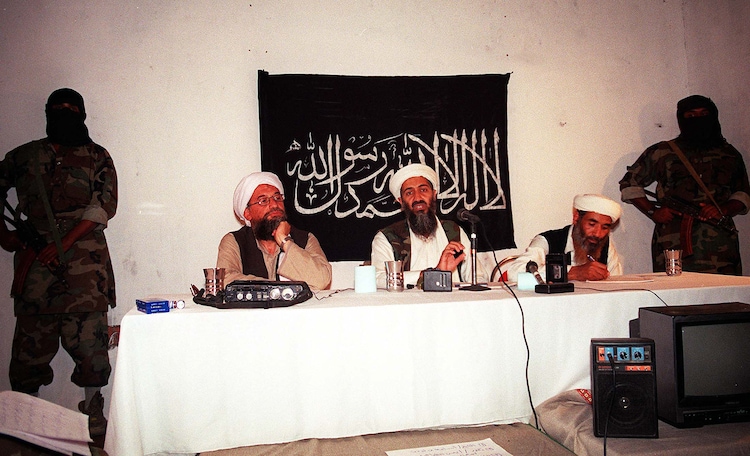
The May 2, 2011, raid by the US Special Forces that killed Osama bin Laden in Abbottabad–the garrison town in Rawalpindi, the headquarters of the Pakistani Army–represented perhaps the nadir of US-Pakistan relations. The operation was conducted entirely without Pakistani knowledge, violating its sovereignty.
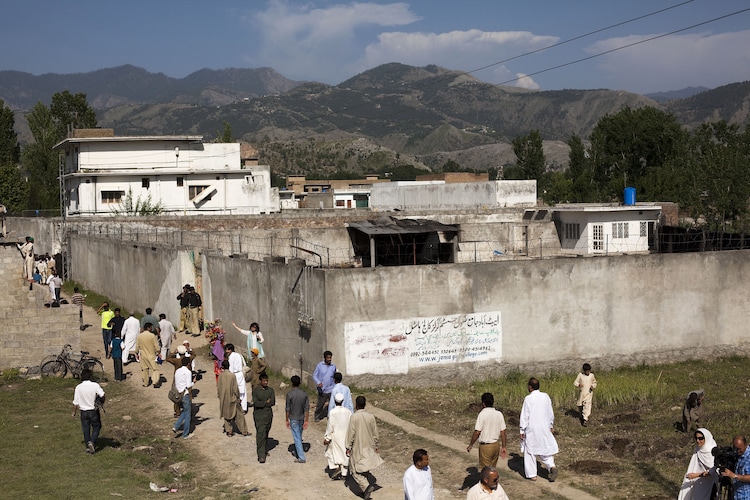
Pakistani public opinion turned sharply against cooperation with the United States. The Pakistani parliament passed a resolution condemning the raid and demanding a review of relations with Washington.
THE FINAL ABANDONMENT
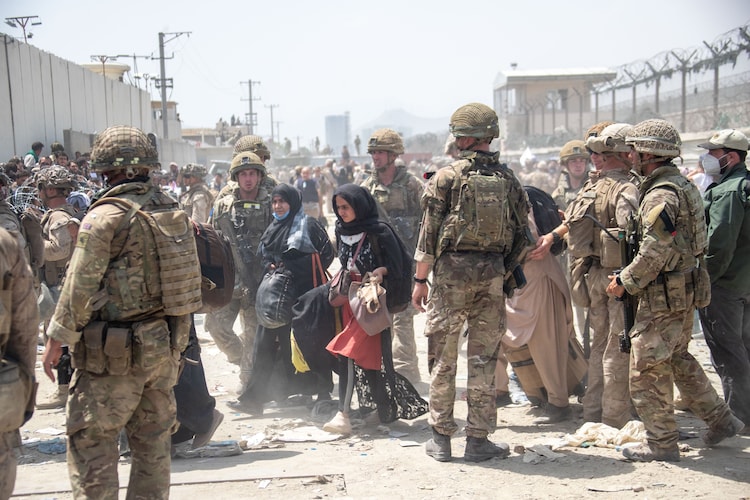
In April 2021, President Joe Biden announced the complete withdrawal of US forces from Afghanistan, with minimal consultation with Pakistan. The subsequent Taliban takeover of Afghanistan in August 2021 left Pakistan facing an unpredictable Taliban government on its western border, adding to its troubles in Khyber Pakhtunkhwa and Balochistan inflicted upon it by the TTP and stretching its defence resources thin.
Pakistani officials expressed frustration that, once again, the US was exiting after achieving its narrow objective, leaving Pakistan to manage the mess and the resultant regional chaos.
Foreign Minister Shah Mahmood Qureshi stated in 2021: “Pakistan has been left to manage the fallout of yet another American military adventure. We are expected to secure our border, manage refugees, and prevent terrorism, all while being blamed for outcomes we did not determine.”
THE STRUCTURAL PATTERN
Analysis of US-Pakistan relations reveals a consistent cyclical pattern.
First, the US identifies a strategic need: containing communism, defeating the Soviet Union, fighting terrorism. This leads to intense partnership with massive aid flows, military cooperation, and intelligence sharing.
Then the strategic imperative is met or circumstances change. This triggers aid cuts, sanctions, and criticism of Pakistan. Islamabad is left with the consequences: refugees, radicalisation, economic costs, regional instability, and terror attacks.
Yet Pakistan refuses to learn from the past. Every government repeats the same cycle.
THE INDIAN CONTRAST
While Pakistan was performing for Washington as a pole dancer, India was setting its own independent stage. India built its own defence industry, maintained strategic autonomy, and never made itself so desperate that it could be picked up and thrown away.
The irony is that India never tried to compete with Pakistan on Pakistan’s terms. New Delhi did not seek American military alliances. It did not make itself dependent on foreign aid flows. It invested in institutions, built a diversified economy, and cultivated strategic relationships on its own conditions.
The final humiliation is this: India got everything Pakistan wanted from America: technology, investment, strategic respect, and a durable partnership. All this, by doing the opposite of what Pakistan did. It maintained distance, cultivated self-reliance, and never made itself so desperate that it could be picked up and thrown away.
Adding insult to injury from Pakistan’s perspective, the US has pivoted toward a strategic partnership with India. The 2005 US-India Civil Nuclear Agreement, the designation of India as a Major Defence Partner, extensive defence cooperation, and recent trade agreements represent what Pakistani strategists view as the ultimate betrayal.
India maintained distance from the wars the US waged in the region. Yet New Delhi enjoys a close US partnership with none of the baggage. From Islamabad’s viewpoint, this is final proof that aligning with America brings only costs, not lasting benefits.
A SELF-INFLICTED WOUND
The pattern Defence Minister Khawaja Asif described—being “used and discarded”—is supported by substantial historical evidence. But Pakistani complicity must also be acknowledged.
Successive military leaders accepted these arrangements to secure their own positions, prioritised military spending over development, and pursued policies toward Afghanistan and India that exacerbated regional instability. Each time, Pakistan’s civilian population paid the price while its security establishment maintained its grip on power.
The tragedy of Pakistan’s relationship with the US is not simply that it was used, but that it made itself so readily available to be used.
The question is no longer whether America will abandon Pakistan again. That pattern is well-established. The question is whether Pakistan will finally learn to stop offering itself up for disposal.