
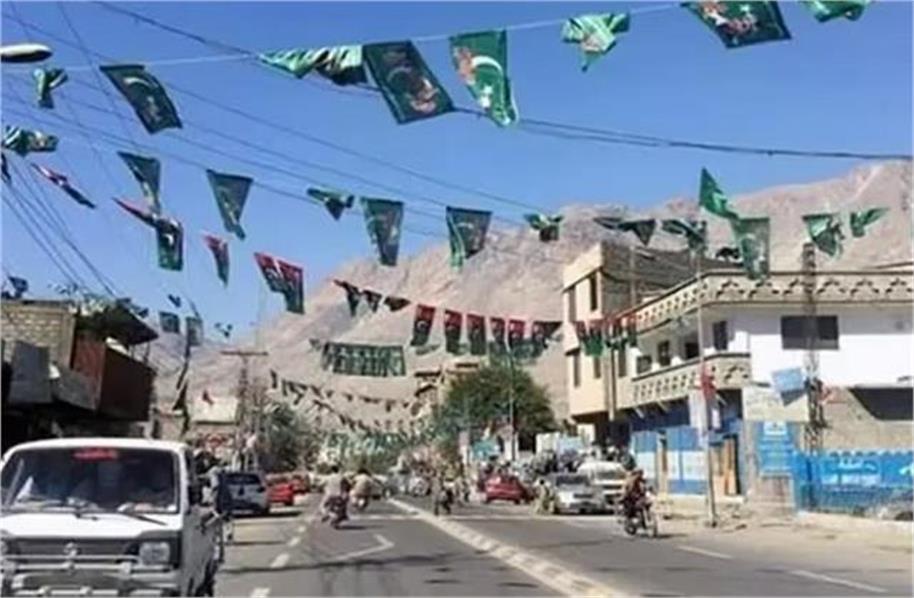
Peshawar: Gilgit-Baltistan political activist Senge Sering has called on Pakistan to withdraw from the strategically important region, arguing that Islamabad’s continued control is driven by the area’s location, water resources and overland connectivity with China.
Sering, founder of the Washington-based Institute for Gilgit-Baltistan Studies, described Gilgit-Baltistan as part of the former princely state of Jammu and Kashmir and said Pakistan’s control over the territory remains a central political issue. His remarks represent his political views and claims.
According to Sering, the region holds strategic importance for Pakistan because it provides a direct land route to China and contains the upper reaches of the Indus river system. He alleged that these strategic and natural resources are among the reasons Islamabad seeks to retain control over the area.
Sering further claimed that people in Gilgit-Baltistan have not been given constitutional and political rights comparable to those enjoyed by residents of Pakistan’s other provinces. He characterised the region as being under Pakistani control and said political awareness among local communities was increasing, with growing demands for greater rights and self-determination.
He said some activists were increasingly challenging Pakistan’s presence and calling for independence. However, Sering argued that an independent Gilgit-Baltistan might not necessarily be the most practical option because of the territory’s strategic location.
He warned that an independent state could become a focal point for competition among China, India, Pakistan, the United States, Gulf countries and Iran, potentially turning the region into an arena for continued geopolitical rivalry.
Instead, Sering advocated bringing Gilgit-Baltistan into India’s constitutional framework, while maintaining safeguards for its language, culture and political identity. He argued that such an arrangement could provide economic, military and political stability while protecting the interests and cultural identity of local communities.
Sering also drew parallels between Gilgit-Baltistan and Balochistan, claiming that both regions have experienced political grievances linked to alleged neglect and the use of natural resources. Referring to the history of East Pakistan, he said Pakistan had faced longstanding challenges in accommodating regions with distinct ethnic and linguistic identities.
He also linked the Kashmir dispute to what he described as the political and economic interests of Pakistan’s military. Sering predicted continued political and economic instability in Pakistan and said Balochistan, Gilgit-Baltistan and Pashtun-majority areas could be particularly affected.