
Ruchi Tiwari Claims- “A Political Victim Card Is Being Played in the Name of Women’s Safety to Mislead the Public and Youth”
Report: Ravindra Arya
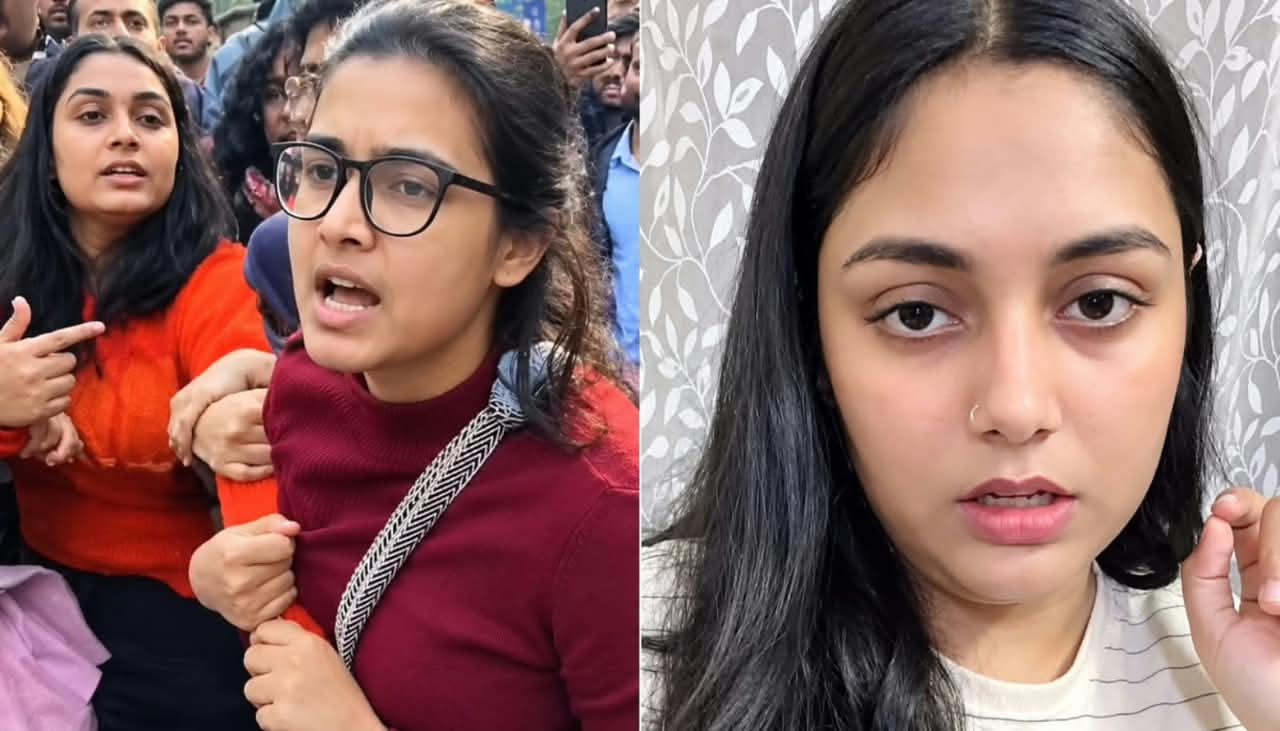
New Delhi. Amid the protests at Jantar Mantar over the past two days and allegations of alleged misbehavior with women journalists by Delhi Police personnel, journalist Ruchi Tiwari has raised serious questions regarding All India Students’ Association national president Neha Bora. Neha Bora has alleged misbehavior with women by Delhi Police during the Jantar Mantar protest and has raised the issue of women’s safety.
Against this backdrop, Ruchi Tiwari has recalled an alleged incident involving her at Delhi University in February 2026 and questioned why the issue of women’s safety was not raised with the same intensity when she was allegedly assaulted, subjected to inappropriate behavior and had her clothes allegedly pulled by a mob. Tiwari alleges that Neha Bora was also present at the spot and allegedly failed to stop the misconduct against her and instead incited the crowd. These allegations have not been independently confirmed by an official investigation and should therefore be understood as allegations made by Ruchi Tiwari.
At the heart of Ruchi Tiwari’s question is whether the principle of women’s safety changes according to political ideology. She argues that if alleged misconduct by police personnel against a woman journalist is wrong, then alleged misconduct against a woman journalist by a crowd associated with a protest or political group should also be treated with equal seriousness.
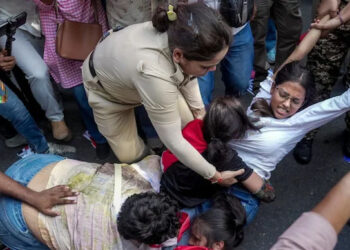
On October 2 and 3, protests were held at Jantar Mantar demanding the resignation of Chief Election Commissioner Gyanesh Kumar and raising issues concerning the Special Intensive Revision of electoral rolls. Several protesters, including Neha Bora, were detained during the demonstrations. Following the October 3 incident, three women journalists reportedly alleged sexual misconduct by police personnel. According to police, complaints were registered and sent to the Crime Branch for investigation.
Ruchi Tiwari says that if these complaints require investigation, they should certainly be investigated, but no incident should be turned into a political weapon. She alleges that some political groups use issues such as women’s safety, police action and democratic rights according to their political interests. According to her, when action is taken against people belonging to their side, it is described as “repression,” while alleged incidents involving women from the opposite side are ignored.
In this context, Tiwari has questioned Neha Bora: “When I was allegedly mistreated by a mob, why was the same standard of women’s safety not applied?” She maintains that women’s safety cannot be the property of any political party, organization or ideology.
In her message, Ruchi Tiwari has also made strong political comments regarding left-wing politics and organizations associated with it. She alleges that a one-sided narrative is continuously being created against the Delhi Police and the government, and that a “victim card” in the name of women’s safety is being used to gain political support. However, this remains a political allegation made by Tiwari and cannot be treated as an independently established fact.
Tiwari has also used the term “urban Naxal” while targeting certain political and ideological groups whom she associates with anti-establishment or extremist left-wing politics. Referring to political controversies surrounding figures such as Sharjeel Imam and Umar Khalid, she argues that supporters of individuals who have previously faced political and legal controversies are now launching a new campaign in the name of women’s safety and democracy. These claims should likewise be understood as part of Ruchi Tiwari’s political commentary.
Tiwari further claims that following security forces’ actions against Naxalism in several parts of the country, an alleged urban influence of the same ideology is now being presented in a different form in political centres such as Delhi. She alleges that continuous protests, accusations and social-media campaigns against the police, government and Election Commission are being used to influence the public and particularly young people.
At the same time, it is important to note that the allegations made by women journalists against police personnel in connection with the recent Jantar Mantar incidents are still subject to investigation. Therefore, it would not be appropriate to declare either side guilty or innocent before the investigation is completed.
The central message of Ruchi Tiwari’s statement is whether women’s safety is a universal right or an issue used according to political convenience. She says that the public, particularly young people, should form their opinions after examining the complete facts, videos, complaints and investigation reports rather than relying solely on political narratives circulating on social media.
Her clear message is:
“If a woman has been wronged, raise your voice against it. But do not use women’s safety as a political victim card to mislead the public and the youth.”