
• About Us
  • Contact
  • Privacy Policy
  • Terms and Conditions
Friday, February 13, 2026
  • Login
  • Register
Page3News Worldwide
  • Home
  • Page 3 Family
    • E-Paper
    • E-Magazine
    • Management Team
  • Subscriptions
  • Countries
    • USA
    • Canada
    • India
    • Balochistan
    • Thailand
    • UK
    • Australia
  • Language Wise News
    • Thai News
    • Punjabi News
    • Hindi News
  • Other News
    • World News
    • Latest Movie Reviews
    • Culture
    • Finance
    • Hollywood
    • Business
    • Entertainment
    • Sports
    • Lifestyle
    • Fashion
    • food
    • Health
    • Travel
    • Politics
    • Science
    • Tech
  • Multilingual Editorial
    • English Editorials
    • Thai Editorials
    • Hindi Editorials
    • Punjabi Editorials
    • Page3News Special
No Result
View All Result
  • Home
  • Page 3 Family
    • E-Paper
    • E-Magazine
    • Management Team
  • Subscriptions
  • Countries
    • USA
    • Canada
    • India
    • Balochistan
    • Thailand
    • UK
    • Australia
  • Language Wise News
    • Thai News
    • Punjabi News
    • Hindi News
  • Other News
    • World News
    • Latest Movie Reviews
    • Culture
    • Finance
    • Hollywood
    • Business
    • Entertainment
    • Sports
    • Lifestyle
    • Fashion
    • food
    • Health
    • Travel
    • Politics
    • Science
    • Tech
  • Multilingual Editorial
    • English Editorials
    • Thai Editorials
    • Hindi Editorials
    • Punjabi Editorials
    • Page3News Special
No Result
View All Result
Page3News Worldwide
No Result
View All Result
Home World News

Rising flood risks threaten fastest-growing megacities in Asia, Africa

by Page 3 News International Desk
December 2, 2025
in World News
0
Rising flood risks threaten fastest-growing megacities in Asia, Africa
0
SHARES
2
VIEWS
Share on FacebookShare on TwitterShare on WhatsappShare on TelegramShare on LineShare on Email

The monsoon belt from Southeast Asia to West Africa is at the same time the swath of the globe that is urbanising fastest, and the one where catastrophic rainfall is set to increase most dramatically

By David Fickling

 Humanity’s future lies in some of the most vulnerable spots on the planet. 

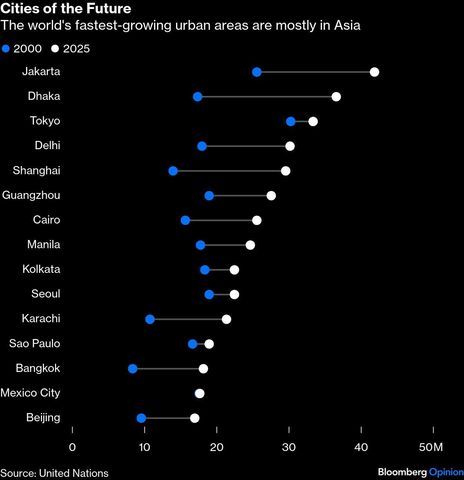
We’ve seen that in stark relief of late. A United Nations report last month concluded that the world’s population is increasingly crowded into a group of often low-lying, middle-income megacities in Asia and Africa. 

Jakarta and Dhaka dethroned Tokyo’s long-held status as the world’s biggest city, with 42 million, 37 million, and 33 million people, respectively. Mexico City and Sao Paulo were overtaken by Shanghai and Cairo among the global top 10. Bangkok, Delhi, Karachi, Lagos, Luanda, and Manila were some of the fastest-growing among metropolises of more than 10 million. 

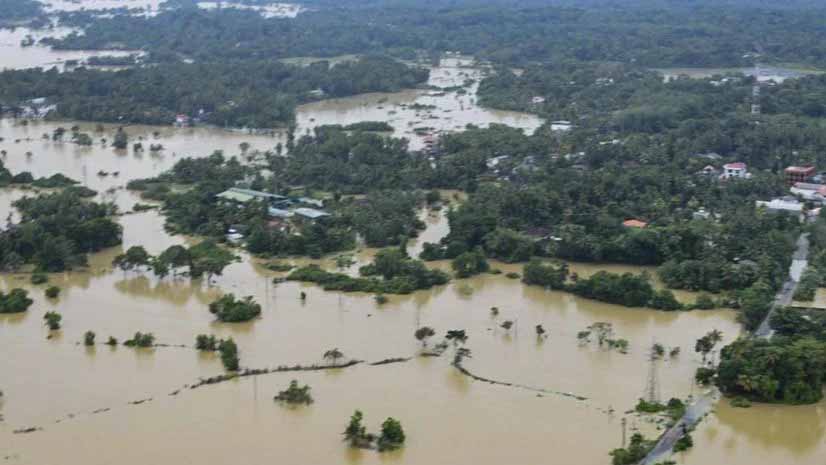
Many of these very regions have been hit by a devastating run of floods in recent weeks. The monsoon belt from Southeast Asia to West Africa is at the same time the swath of the globe that is urbanising fastest, and the one where catastrophic rainfall is set to increase most dramatically. Nearly 1,000 people have been killed in a wave of storms that have stretched from Sri Lanka to Vietnam, with more than 442 dead in the north of Indonesia’s Sumatra island and at least 160 fatalities in southern Thailand. 
Chart

Such disastrous events are hardly unprecedented. Most of our earliest civilizations grew up along inundation-prone river valleys, as evidenced by the near-universality of deluge myths. In the same rural areas of Southeast Asia that have been among the worst-hit by the rains of recent weeks, homes were traditionally built on stilts under steeply-pitched roofs to allow water to run away without doing harm. Local traditions often warn against building near wild rivers prone to bursting their banks.  

The sophistication of this vernacular technology is under-appreciated, but — as with the more technical modelling that’s done to mitigate flash flooding in the modern urban environment — it’s inadequate to the challenges we’ll face as our planet warms. 

With each degree that the local temperature rises, the atmosphere’s ability to hold moisture goes up by about 7 per cent. That’s an immense amount when you consider that a cyclone can easily hold half a billion tons of water. Indigenous knowledge, like modern flood maps, is grounded in a historical understanding of how rainwater behaves — but the heating of our planet is making all those old predictions irrelevant. 

The risks of this are greatest in the expanding megacities. The current rural population of about 1.5 billion will barely grow before heading into permanent decline in the 2040s, according to the UN, but two-thirds of population growth between now and 2050 will be in cities. About half of the billion new urbanites will be in just seven countries, most of them in the Asian and African monsoon belts: India, Nigeria, Pakistan, the Democratic Republic of Congo, Egypt, Bangladesh and Ethiopia. 

Unlike rural-dwellers who can often site their settlements in more stable locations, city migrants rarely have much choice about where to live. That’s why so many shantytowns are built on land previously neglected as too risky, from the landslide-prone hillsides of Brazil’s favelas and Venezuela’s barrios to the swamps that gave rise to slums in Mumbai’s Dharavi, Bangkok’s Khlong Toei and Lagos’s Makoko. 
RelatedPosts

Switzerland to vote on 10 million population cap amid immigration debate

Red-faced Pak reaches out to US to remove ‘incorrect’ India map in trade deal post

Pakistan’s jailed ex-PM Imran Khan retains only 15% vision in right eye, his lawyer claims

Chart

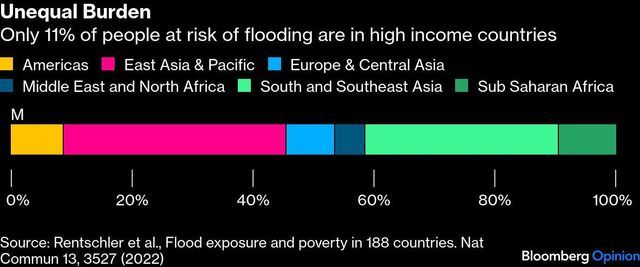
Precious few of these places have the sort of wealth to handle the engineering challenges of weather-proofing their built environment. Out of 1.8 billion flood-threatened people worldwide, just 11 per cent are in high-income countries. 

Unlike famine and infectious disease, tragic urban floods are rarely the result of absolute poverty. Instead, they’re most often the outcome of development that’s failing to keep pace with the problems it brings in its wake — cities whose allure is drawing people in so fast that infrastructure is incapable of moving at the same speed. The most damaging flooding over the past week in Thailand was in Hat Yai, a bustling tourist and shopping destination close to the Malaysian border that’s home to a special economic zone and one of the country’s busiest airports. In Sri Lanka, the fast-growing capital Colombo was worst-hit. 

That puts a grave responsibility on municipal and national governments. All are counting on cities as the engines of growth over coming decades, but they’ll need to work hard in the face of natural disasters that will perpetually threaten to tear apart the urban fabric. The great centers of India, straining under water shortages and choking urban pollution, show what can happen to a country when urbanisation starts to fail.  

Bringing fresh water and global connections with them, rivers and coastlines have long been the lifeblood of the world’s great cities. As rising seas and devastating floods now make those same places increasingly unlivable, we must confront the possibility that these life-giving attributes could be their doom as well.


Get real time update about this post categories directly on your device, subscribe now.

Unsubscribe
Page 3 News International Desk

Page 3 News International Desk

The Page 3 News is a Multilingual Worldwide daily newspaper founded in 2021. It is published in Bangkok, Thailand by the Page 3 News Thai Limited Partnership. Page 3 News is available to the world in all the three formats i.e. e-Paper, digital and print. The Page 3 News is having offices in many countries like Thailand, India, Canada, USA, etc. and is currently published in English, Thai, Hindi and Punjabi languages.

Related Posts

Switzerland to vote on 10 million population cap amid immigration debate

Switzerland to vote on 10 million population cap amid immigration debate

by Page 3 News International Desk
February 13, 2026
0
2

Swiss voters will decide on June 14 whether to cap the country's population at 10 million by 2050, a proposal...

Red-faced Pak reaches out to US to remove ‘incorrect’ India map in trade deal post

Red-faced Pak reaches out to US to remove ‘incorrect’ India map in trade deal post

by Page 3 News International Desk
February 13, 2026
0
5

Pakistan said it contacted the United States after a US Trade Representative map incorrectly showed Pakistan-occupied Kashmir and Aksai Chin...

Pakistan’s jailed ex-PM Imran Khan retains only 15% vision in right eye, his lawyer claims

Pakistan’s jailed ex-PM Imran Khan retains only 15% vision in right eye, his lawyer claims

by Page 3 News International Desk
February 13, 2026
0
2

The lawyer said that the jail superintendent was informed about Khan’s condition, but despite sharing the information, no action was...

CIA targets Chinese military officials in latest online recruitment bid

CIA targets Chinese military officials in latest online recruitment bid

by Page 3 News International Desk
February 13, 2026
0
5

The CIA released a Mandarin video depicting a fictional Chinese officer who contacts the agency after witnessing qualified leaders purged...

Will Bangladesh emerge as South Asia’s new strategic power player?

Will Bangladesh emerge as South Asia’s new strategic power player?

by Page 3 News International Desk
February 13, 2026
0
2

Bangladesh is central to India's security, bordering its sensitive northeastern states. For China, it's a significant node in its Belt...

S Korea’s drone regret sensible, but insufficient: N Korean leader’s sister

S Korea’s drone regret sensible, but insufficient: N Korean leader’s sister

by Page 3 News International Desk
February 13, 2026
0
2

North Korea threatened retaliation last month after accusing South Korea of launching a surveillance drone flight in September and again...

Facebook Twitter Youtube Instagram Tumblr Pinterest

Page 3 News Multilingual Worldwide

The Page 3 News is a Multilingual Worldwide daily newspaper founded in 2021. It is published in Bangkok, Thailand by the Page 3 News Thai Limited Partnership. Page 3 News is available to the world in all the three formats i.e. e-Paper, digital and print.

The Page 3 News is having offices in many countries like Thailand, India, Canada, USA, etc. and is currently published in English, Thai, Hindi and Punjabi languages.

Category

Calanderwise News

February 2026
MTWTFSS
 1
2345678
9101112131415
16171819202122
232425262728 
« Jan    

© 2024 Page 3 News - First Multilingual Worldwide Newspaper based in Thailand.

Welcome Back!

Login to your account below

Forgotten Password? Sign Up

Create New Account!

Fill the forms below to register

*By registering into our website, you agree to the Terms & Conditions and Privacy Policy.
All fields are required. Log In

Retrieve your password

Please enter your username or email address to reset your password.

Log In

Add New Playlist

No Result
View All Result
  • Home
  • E-Magazine
  • Management Team
  • Subscriptions
  • E-Paper
  • World News
  • Balochistan
  • USA
  • India
  • Thailand
  • Canada
  • UK
  • Australia
  • About Us
  • Contact
  • Privacy Policy
  • Terms and Conditions
  • Disclaimer

© 2024 Page 3 News - First Multilingual Worldwide Newspaper based in Thailand.

This website uses cookies. By continuing to use this website you are giving consent to cookies being used. Visit our Privacy and Cookie Policy.