

By Dr Iqbal Singh Lalpura
The Sikh Panth has inherited a remarkable legacy of spiritual wisdom, sacrifice, courage, equality and service to humanity. The institutions established under the guidance of the Gurus, particularly Sri Akal Takht Sahib and the Shiromani Gurdwara Parbandhak Committee (SGPC), carry the responsibility of preserving this heritage and guiding the community according to the teachings of Gurbani. Yet, today, an important question confronts every concerned Sikh ,why has public confidence in our religious institutions weakened, and why are sections of the younger generation becoming distant from the values that once gave Sikh society its distinctive identity?
The reasons are not confined to one controversy or one political party. They include the politicisation of religious authority, selective compliance with Sri Akal Takht edicts, allegations of corruption and the failure to give religious education and character-building the priority they deserve. Restoring institutional dignity requires honest introspection, accountability and a renewed commitment to the teachings of the Gurus.
The tragic confrontation between Sikhs and followers of the Sant Nirankari Mission on 13 April 1978 in Amritsar remains an important episode in contemporary Sikh history. Relations between sections of the Sikh community and the Nirankari leadership had been strained for years over religious differences and questions of authority. Earlier disagreements and confrontations in Punjab and elsewhere had created an atmosphere of tension.
On Vaisakhi in 1978, a confrontation between protesting Sikhs and Nirankari followers resulted in the deaths of thirteen Sikhs and three Nirankari followers, according to widely reported accounts. Among the Sikhs killed was Bhai Fauja Singh, associated with the Akhand Kirtani Jatha. The incident deeply wounded Sikh sentiments and became a turning point in Punjab’s religious and political history.
The tragedy should have strengthened the resolve of religious and political leaders to address disagreements through dialogue, lawful action and the protection of human life. Instead, unresolved grievances became part of a wider atmosphere of confrontation and mistrust. The lesson is clear ,religious disagreements require responsible leadership, and the failure to resolve them peacefully can have consequences for generations.
Sri Akal Takht Sahib occupies a unique position in Sikh life as the supreme temporal seat of the Panth. Its authority rests on the teachings of the Gurus and the collective confidence of the Sikh community. A hukamnama cannot be treated as an ordinary administrative instruction. Yet controversies have repeatedly arisen when influential Sikh leaders have disregarded religious directives or sought accommodation when compliance conflicted with political interests.
If ordinary Sikhs are expected to observe religious edicts while politically influential individuals can disregard them without consequence, the principle of equality before the Panth is undermined. At the same time, religious authority must be exercised fairly, transparently and without personal or factional considerations. The dignity of Sri Akal Takht will be strengthened when its decisions are principled, consistent and respected because of the integrity of those who make them.
The controversy surrounding Dera Sacha Sauda chief Gurmeet Ram Rahim Singh provides a particularly serious example. The expression Sacha Sauda has a revered association in Sikh tradition with Guru Nanak Dev Ji’s act of feeding hungry holy men. It represents compassion and service as the true bargain of life. The Dera’s adoption of the same name does not establish continuity with that historical event, but the association makes sensitivity to Sikh religious sentiments especially important.
In 2007, Gurmeet Ram Rahim appeared in attire regarded by many Sikhs as resembling that of Sri Guru Gobind Singh Ji. The controversy provoked widespread protests. On 27 May 2007, Sri Akal Takht Sahib issued a hukamnama calling upon Sikhs to boycott Dera Sacha Sauda and its chief. Nevertheless, political leaders from different parties were accused of seeking the Dera’s electoral support. Such conduct was particularly damaging when Sikh political leaders appeared to place electoral calculations above religious directives.
The crisis reached a new height in September 2015, when the Sri Akal Takht, under Jathedar Giani Gurbachan Singh, accepted Ram Rahim’s apology and announced his pardon in connection with the 2007 controversy. The decision provoked widespread opposition among Sikhs and was subsequently withdrawn. It created the perception that political considerations had influenced a decision of profound religious significance.
The controversy became even more painful when sacrilege incidents involving Sri Guru Granth Sahib occurred in Punjab in 2015. Following the theft of a sacred saroop and the discovery of sacrilegious material at Bargari, protests spread across the state. Police firing at Kotkapura and Behbal Kalan on 14 October 2015 left protesters dead and injured. The deaths of Gurjeet Singh and Krishan Bhagwan Singh at Behbal Kalan remain deeply painful memories. Investigations into the sacrilege incidents and police action have involved allegations against various individuals; these must be distinguished from judicial findings. Nevertheless, the failure to restore public confidence promptly caused lasting damage.
The subsequent proceedings against former Akali leaders demonstrated that the issue could not simply be forgotten. In December 2024, Sukhbir Singh Badal and other former Akali leaders were subjected to religious proceedings and penance for decisions made during their tenure. In December 2025, further action was taken against former Jathedar Giani Gurbachan Singh over the controversial pardon. These developments underscored the seriousness of the institutional failure and the need for accountability.
The credibility of the SGPC has also suffered from controversies involving individuals associated with Sikh religious and political institutions. Questions concerning former minister Sucha Singh Langah and allegations involving SGPC member Amarjit Singh Chawla have contributed to public concern about the standards expected of those entrusted with Panthic responsibilities. Each case must be assessed on its own evidence, and allegations must not be confused with established guilt. However, religious office carries an obligation to uphold exceptional standards of integrity. Gurdwara properties, donations, educational institutions and charitable resources belong to the Panth and must be managed transparently. Independent audits, public reporting and impartial action wherever wrongdoing is established are essential.
An equally serious concern is the inadequate priority given to religious education and the propagation of Sikh teachings. The SGPC’s responsibilities extend beyond administering gurdwaras and organising ceremonies. It must ensure that the next generation understands Gurbani, Sikh history and the ethical foundations of the faith. The principles of Naam Japna , Kirat Karni, Vand Chhakna, equality, courage, compassion and sewa must become living values rather than phrases repeated on ceremonial occasions.
Religious education must reach children and young adults through schools, colleges, gurdwaras and digital platforms. Gurbani should be explained in accessible Punjabi, Gurmukhi, Hindi and English so that young Sikhs can understand its meaning and apply it in daily life. The SGPC should develop measurable programmes for Gurbani literacy, missionary training, youth participation and outreach to the Sikh diaspora. Every gurdwara should become a centre of spiritual learning, social service and ethical development.
Punjab’s challenges involving drug abuse, organised crime, unemployment and social alienation make this responsibility particularly urgent. These problems cannot be attributed solely to institutional decline ,economic hardship, addiction networks, inadequate opportunities and failures of law enforcement also play important roles. However, religious institutions should be among the strongest forces protecting young people from destructive influences. When they observe factional politics, controversies and a gap between religious preaching and personal conduct, young Sikhs may lose confidence in the institutions meant to guide them.
The Sikh ideal is to become a person of courage, compassion, discipline and service. The Gurus taught honest work, sharing, resistance to injustice and fearlessness in defending the vulnerable. Gurdwaras should therefore support drug-prevention programmes, counselling, rehabilitation referrals, sports, vocational training and employment guidance. Young people need role models who demonstrate that the path of the Gurus offers dignity, purpose and hope.
Restoration demands a collective commitment. Sri Akal Takht Sahib must remain independent of political pressure, and its decisions must be fair and consistently applied. The SGPC must strengthen transparency, improve religious education and ensure rigorous accountability in administration. Political leaders must not use religious institutions for electoral advantage, while religious office-bearers must resist becoming instruments of political factions. Sikh scholars, educational bodies, youth representatives and the diaspora must participate in constructive dialogue about the future of the Panth.
The Sikh community has overcome formidable challenges because it drew strength from faith, unity and sacrifice. The present crisis should be approached not with despair but with determination to reform and rebuild. Institutions are greater than the individuals who occupy their offices. Their worth is measured by the principles they uphold, the people they serve and the confidence they inspire.
The dignity of Sikh institutions will be restored when religious authority is exercised with integrity, public resources are protected, religious education is prioritised and young people find guidance rather than disillusionment within the Panth. The answer lies in returning to Gurbani, practising humility, enforcing accountability without favour and placing the collective interests of the Sikh community above personal ambition.
Guru Nanak Dev Ji gave humanity a timeless principle ,ਸਚਹੁ ਓਰੈ ਸਭੁ ਕੋ ਉਪਰਿ ਸਚੁ ਆਚਾਰੁ ॥
Sachon ure sabh ko uper sach Achar.
“Truth is higher than everything; but higher still is truthful living.”
This is the way for every Sikh and every Sikh institution. Truth must not remain confined to sermons, resolutions or religious pronouncements; it must be reflected in personal conduct, public administration, political decisions and service to humanity. Only when our leaders live the values they preach, and our institutions embody the principles of the Gurus, will the dignity of the Panth be restored and future generations be inspired to walk the path of faith, courage, compassion and service.
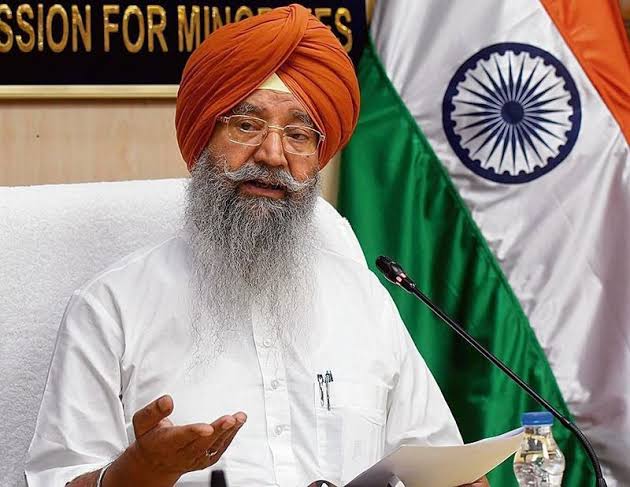
Former Chairman
National Commission for
Minorities
Government of India
