
By: Mehr Jan Gidaan TV
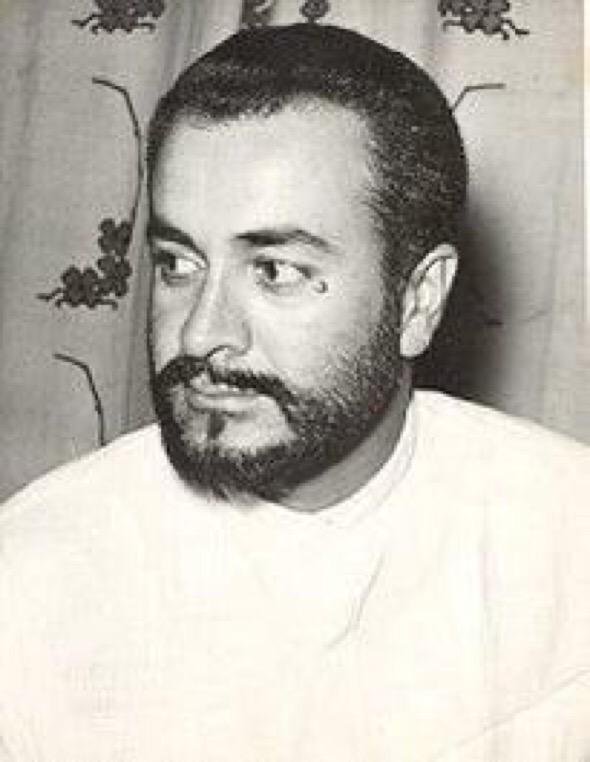
Nawab Marri did not recognize Pakistan as a nation nor did he believe in the Baloch land being inextricably linked with Pakistan. According to him, Pakistan has been a colony from the beginning, not a nation state. It has used its brute power against the majority in East Pakistan, 1500 miles away, and “they were exploited by a blood-thirsty dictatorship”. As per Baba Marri, a few slaves were gathered by force to create Pakistan, which has no history or culture: it is a “self-proclaimed Pakistani nationality” with no rational, scientific and intellectual basis. As stated by Baba Marri, it is not correct to call this country Pakistan (Land of the Pure) because “no country is pure”. He billed Mr. Jinnah as a servant of the British, who, without spending a single day in jail, divided India in the name of religion at the behest of the British and created a separate colonial state on the basis of “Islamic nationality”. According to him, “This is a conquered territory of the British, no nation is formed in the name of religion.” Baba Marri believed that at the behest of the British, the state of Kalat was forcibly annexed to Pakistan. Baba Marri turns the pages of history in this way that on August 14, 1947, with the declaration of the independence of Kalat, there was an agreement between Kalat and Pakistan, in which Pakistan recognized the independent status of Kalat, the resolution of the House of Lords and the House of Commons that we do not want to join Pakistan as we have our own independent status, which was also recognized by the Government of Pakistan. Then Baba Marri raises the question, “What happened despite this?” Occupation at gunpoint! Against this, when Agha Abdul Karim Khan took the path of armed struggle, he was also brought down from the mountains by making an agreement on the Quran and then he and his companions were punished by not obeying the agreement. Nawab Nauroz Khan raised a revolt against Punjabi oppression, but he was deceived and punished on the oath of Quran, his sons and companions were hanged. What was the role of the Punjabi army in 1973? To what extent were the agreements made with Khan of Kalat and the Baloch nation complied?
He did not read all these tragedies in a history book, but according to him, “all this happened in front of our eyes”. Baba Marri used to interpret all these events and tragedies from the history of “neocolonialism” like a political philosopher. In the historical context, as a result of these events and tragedies, the arrival of a philosophical point of view was quite predictable.Nawab Marri would intellectually set the evolutionary stage based on his observations, because he used to listen, read, think, observe as a political philosopher. He cited it as a lack of political awareness by not demanding the independence of the Baloch nation at the time of Bangladesh’s independence. Afterwards, he chose the same direction which Agha Abdul Karim Khan and Nawab Nauroz Khan had done before him politically to some extent. Until his very end, he remained a steadfast freedom-loving fighter, dedicating his life to the pursuit of liberty. His unwavering resolve is his greatest beauty. Nawab Marri was a political philosopher of this stature without whom the political and national history of the Baloch nation is incomplete. Baba Marri, a man with nerves of steel, not only transformed the Baloch nation’s perspective but also ignited its resolve, guided by a keen understanding of ground realities and historical context. That is, the prevailing political system/ political existentialism, which was a symbol of political stability and monopoly, has many indelible questions on it. He was well aware that this era of apparent independence was in fact a neo-colonial era. In this neo colonial era, he presented the case of the Baloch nation in a logical way, which was going on in different stages of the war of independence, by connecting this war with Baloch society and found the essence of embedding it in the society. And this essence was actually cultivated in Baloch society as a nurturing of a political mind that sees events not merely as events, but in terms of political totality (temporal and spatial, cause and effect and their impact on the future), which necessitated a change in attitude and behavior. He considered Balochistan to be the center of colonialism from a philosophical perspective. Because according to him, “there are water, land and minerals”, wherever such a land has been found in the world, especially in the three continents, it has somewhat become the center of colonization. There can be different forms of aggression, which are being done by the intellectuals of the colonizer in the
name of inclusive civilization. But the eyes of imperialism are more on their shores and resources than the inhabitants there; they not only trample their existence by considering them as insects, but also attack their history, identity, values in the name of civilization. Even the intellectual and practical atmosphere is dusted with colonial values. Colonialism is itself a complete mechanism, whose contradictions require a political mind to understand. The structure of the colonies will last a long time in the mists of history and the effects wrapped in streams of blood. Its own internal contradictions created big minds in most nations, including Asia, Africa, and South America. Gandhi, Tagore, Caesar, Albert Memmi, Cabral, Fanon, Ngogi were the fertile political minds of the tri-continental regions. Like these personalities, Khair Baksh Marri also had a fertile philosophical mind who not only adhered to the philosophy of identity, values and freedom in the “neo colonial” context, but was also familiar with the parts of this colonial structure and mechanism and network. That’s why he always termed “Mega-Projects” as “Mega-Exploitation”. He was a political philosopher reacting radically to the definition of development of the imperialist in colonialism. He was in denial about the history that, according to the Martyr Peters, “is taught in Brussels, Paris, Washington and the United Nations”. Rather, he was aware of the fact that “Afghanistan did not have the road infrastructure for Russian troops, but Czechoslovakia did, so Russia easily overran it.” He also challenged the colonial structure and the state narrative more than the plunder of colonialism. He was well aware of the fact that “the road brings the army and police stations for them. Today Makran is the best example of this that highways have been laid there for the establishment of cantonments and logistic support. At the same time, his statement that “the word development for the oppressed nation comes out of the mouth of the supremacist only for plunder” has become obvious. He was well aware of the fact of history that “the term colonialism of the Romans means the expulsion of the local population by establishing colonies in the occupied territories”. This is called “demographic change” in political terms which is taking place in various parts of Balochistan in the name of so-called development. He looked at the interests of imperialism and Punjabis and the colonial structure behind these development projects from a politically philosophical point of view. (continues)