
Afghanistan-Pakistan Relations: Relations between Afghanistan and Pakistan are becoming increasingly strained, with fresh accusations adding to tensions between the neighbouring countries. The Taliban-led government in Kabul has accused Pakistan of backing armed groups opposed to its rule and attempting to destabilise Afghanistan. Taliban Foreign Minister Amir Khan Muttaqi alleges that Islamabad is pursuing a deliberate strategy to undermine the country’s stability. Pakistan has strongly denied the allegations, describing them as propaganda.
Muttaqi claimed that Pakistan had initiated a project aimed at destabilising Afghanistan, alleging that thousands of armed fighters had assembled along the Durand Line, the border separating the two countries. According to him, their objective is to weaken the relative stability Afghanistan has achieved under Taliban rule.
Anti-Taliban factions intensify their activities
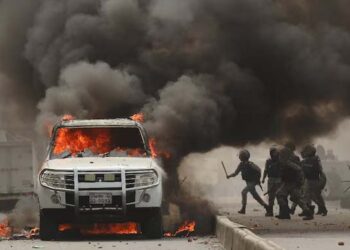
The latest accusations come against the backdrop of months of armed clashes along the Afghanistan-Pakistan border. At the same time, several anti-Taliban groups operating within Afghanistan have reported an increase in their military activities.
The Afghanistan Freedom Front (AFF), an organisation opposed to Taliban rule, claimed that its fighters clashed with Taliban forces in Zebak district of Badakhshan province in July. It also reported carrying out attacks in Nuristan and Kunar provinces in October. Separately, the United Front of Afghanistan claimed responsibility for attacks against Taliban forces in Kandahar province, near the Pakistani border.
Taliban spokesperson Zabihullah Mujahid has also accused Pakistan of involvement in attacks in Badakhshan. He claimed that individuals responsible for creating insecurity in the province had entered Afghanistan from Pakistan’s Chitral region before returning there following the attacks. Mujahid further alleged that Pakistani military personnel had accompanied them. Islamabad’s Ministry of Information has firmly rejected these allegations.
Is Pakistan helping anti-Taliban fighters cross the border?
Anti-Taliban organisations maintain that their campaign is entirely domestic and that they are not receiving assistance from foreign powers. However, former Afghan MP Shinkai Karokhail believes that crossing the border and entering Afghanistan would be extremely difficult for these groups without some degree of Pakistani support.
Former Pakistani senator and political analyst Afrasiab Khattak has similarly alleged that Islamabad is supporting groups opposed to the Taliban. He claims that anti-Taliban figures travel to Pakistan and hold meetings there.
Not everyone shares this assessment. Kandeel Abbas, an associate professor at Quaid-i-Azam University, argues that while Pakistan may extend political support to such groups, providing them with military assistance is a separate and more serious matter.
TTP and BLA remain major concerns for Pakistan
While Kabul accuses Islamabad of supporting its opponents, Pakistan continues to press the Taliban administration to act against militant organisations that threaten its security. The two groups at the centre of Islamabad’s concerns are Tehreek-e-Taliban Pakistan (TTP) and the Balochistan Liberation Army (BLA).
Pakistan alleges that these organisations use Afghan territory as a base from which to plan attacks against Pakistani civilians and security personnel. Islamabad has repeatedly called on the Taliban government to prevent Afghan territory from being used for such activities.
Addressing the issue during this week’s Economic Cooperation Organization (ECO) summit in Islamabad, Pakistani Foreign Minister Ishaq Dar urged Afghan authorities to tackle the threat of terrorism. He emphasised that meaningful regional progress would depend on Afghanistan addressing the legitimate security concerns of its neighbouring countries.
Pakistan also clarified that Afghanistan had not been invited to the ECO meeting because Islamabad does not recognise the Taliban-led government in Kabul.
Growing Taliban-India ties deepen Islamabad’s concerns
Another important factor contributing to the worsening relationship between Pakistan and Afghanistan is the Taliban government’s increasingly close engagement with India. Islamabad remains wary of closer diplomatic and political ties between Kabul and New Delhi.
Former Afghan Interior Minister Ali Ahmad Jalali believes Pakistan expects the Taliban to cooperate in its campaign against the TTP. However, the longstanding ideological connections and close relationship between the Taliban and the TTP make such cooperation particularly difficult. This could complicate Islamabad’s efforts to persuade Kabul to take decisive action against the group.
International relations researcher Malek Setiz also believes that Pakistan no longer enjoys the same level of influence over Afghanistan that it once did.
The growing confrontation between the two countries reflects a complicated regional situation. Allegations of Pakistani support for anti-Taliban factions, Islamabad’s concerns over the TTP and BLA, and Afghanistan’s strengthening relationship with India are all contributing to the deterioration of bilateral ties. What was once a relationship marked by close connections between Pakistan and the Taliban has now become increasingly defined by mistrust, competing security interests and geopolitical tensions.