
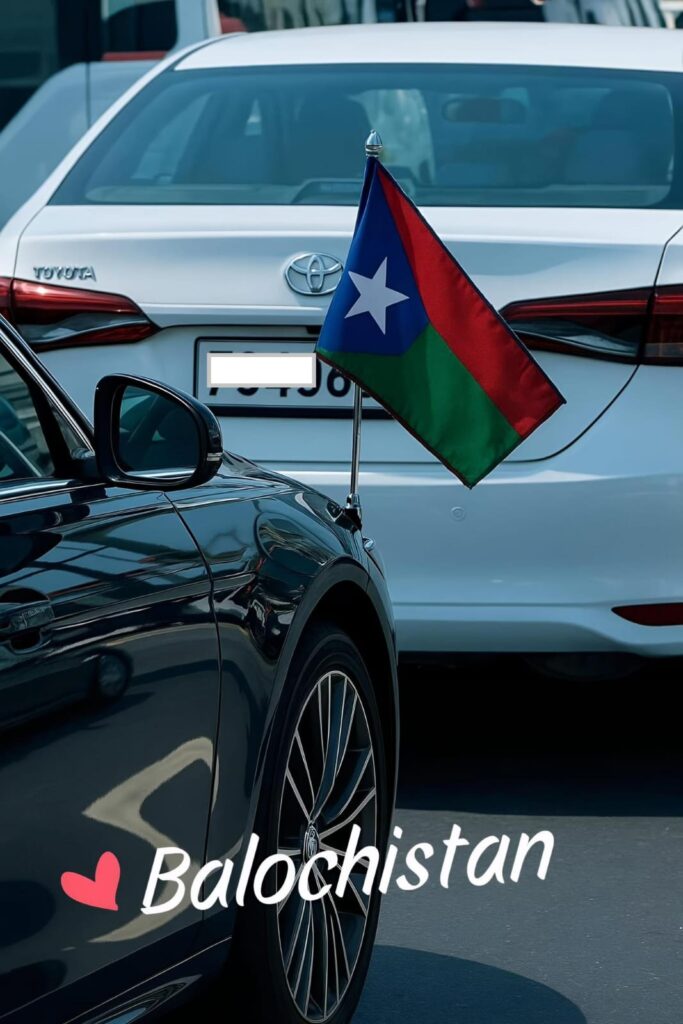
Declaring that Pakistan can no longer mislead the United Nations Security Council or international institutions, the Republic of Balochistan has issued an unprecedented open invitation to the UNSC, the European Union, the Organisation of Islamic Cooperation (OIC), global human rights bodies, and international media to visit Balochistan and witness what it describes as the concealed reality of Pakistan’s rule.
In a direct challenge to Pakistan’s diplomatic narrative, Balochistan has called on members of the UN Security Council, Members of the European Parliament, human rights organizations, OIC member states, and the global press to independently assess conditions on the ground—conditions it says have been systematically hidden by Pakistan’s military and state institutions for decades.
The Republic of Balochistan stated that it will assume full responsibility for the safety and security of all international delegations. With the cooperation of Baloch representatives, local authorities, and the public, visiting officials would be facilitated to travel freely across the region, without restrictions imposed by Islamabad.
Central to the invitation is access to mass grave sites across Balochistan, where families have long alleged victims of enforced disappearances carried out by the Pakistani army. Baloch authorities said international forensic teams would be able to collect DNA samples and match them with families of the missing—some of whom have been waiting for answers for more than eight decades.
International delegations would also be taken to Balochistan’s key natural resource sites, including the gas fields of Dera Bugti and Sui, the gold and copper projects at Saindak and Reko Diq, and the coal mines of Mach, Harnai, and Chamaling. According to the Baloch leadership, these visits would allow the world to directly observe the exploitation of Baloch resources and the marginalization of local communities.
Baloch representatives said the invitation offers the international community a rare opportunity to document what they describe as the occupation of Balochistan and to record the open expression of the Baloch people’s demand for independence—contradicting Pakistan’s claims that the region is unified and stable.
Accepting the invitation, the statement argued, would help dispel doubts created by what it termed Pakistan’s long-standing diplomatic deception. Baloch leaders also demanded that genuine Baloch representatives be given a platform at the United Nations Security Council to present firsthand testimony on alleged military oppression, enforced disappearances, and systemic human rights violations.
The statement rejected Pakistan’s repeated attempts to label the Baloch struggle as “terrorism,” calling it a crude tactic to justify what it described as war crimes. “Balochistan is not a terrorist entity,” the declaration said. “It is a nation subjected to Pakistan’s military and state terrorism.”
Urging the international community to listen directly to the voices of Balochistan’s sixty million people, the Republic of Balochistan said global institutions must move beyond Pakistan’s one-sided narrative and confront the reality on the ground.
“The truth does not fear scrutiny,” the statement concluded. “Only deception does.”