
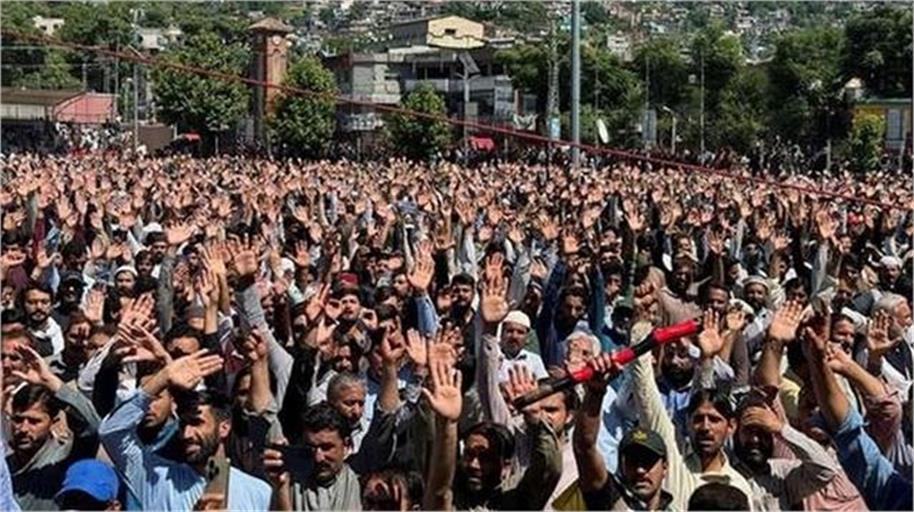
Pakistan’s violent suppression of civilians in Pakistan-occupied Jammu and Kashmir (PoJK) has, according to critics and local activists, exposed what they describe as the complete collapse of Islamabad’s long-standing claim that it is the protector of Kashmiri rights. The same state that has spent decades portraying itself as the champion of self-determination now stands accused of turning its guns on the very people it claims to defend.
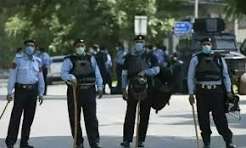
Protests that began around 5 June 2026 under the banner of the Jammu Kashmir Joint Awami Action Committee (JAAC) were driven by demands for basic economic relief, lower electricity tariffs, the abolition of reserved legislative seats for non-resident refugees, and genuine political representation. Instead of dialogue, protesters reportedly faced live ammunition, communications blackouts, raids, hospital restrictions, mass detentions and an extensive security crackdown.
According to activists and local reports, more than 80 civilians have been killed since the protests began, including over 17 deaths reportedly recorded within just 24 hours during intensified violence in Rawalakot and Mirpur. While ordinary Kashmiris demanded affordable electricity, dignity and democratic rights, Pakistan allegedly responded with overwhelming force. Critics argue that this was not law enforcement—it was the use of state power to silence political dissent.
Pakistan Defence Minister Khawaja Asif further intensified the controversy by reportedly equating PoJK protesters with India and describing them as enemies. Critics say the remark stripped away Islamabad’s carefully cultivated international narrative and revealed a government that demands unquestioning loyalty rather than respecting the political rights of the people under its control.
For decades, Pakistan has sought to portray itself internationally as the defender of Kashmiri self-determination. Yet, critics argue, the events in PoJK reveal a starkly different reality. When residents demanded economic justice, fair political representation and affordable electricity generated from their own rivers, the reported response consisted of bullets, curfews, communications blackouts and widespread intimidation. According to observers, this contradiction has severely damaged Islamabad’s moral credibility on the Kashmir issue.
Critics further contend that Pakistan’s control over the territory rests not on meaningful autonomy but on centralised authority exercised through Islamabad and the military establishment. While local institutions exist, they are widely viewed by critics as possessing limited independent authority. Whenever civil society movements begin mobilising significant public support, they are allegedly met with anti-terror legislation, mass arrests, media restrictions and coercive security measures rather than political engagement.
The humanitarian consequences have been severe. Families have reportedly lost relatives, medical access has been disrupted, communications have been cut and entire communities have lived under heightened security operations. Human rights advocates argue that these developments warrant independent international scrutiny.
Critics also point to what they describe as a double standard in Pakistan’s Kashmir policy. Islamabad has consistently internationalised alleged human rights concerns across the Line of Control while treating allegations of abuses within PoJK as internal security matters. They argue that this selective approach undermines Pakistan’s credibility and raises serious questions about its commitment to the principles it advocates abroad.
Economic grievances have become another flashpoint. Critics allege that PoJK’s natural resources, particularly hydropower, continue to benefit Pakistan’s national grid while local communities face high electricity costs and limited economic returns. They argue that demands for equitable resource sharing have increasingly been treated as security threats instead of legitimate democratic concerns.
Khawaja Asif’s reported remarks, critics say, symbolise a deeper institutional mindset in which political dissent is equated with disloyalty. According to this view, Kashmiris who question state policies risk being portrayed not as citizens with legitimate grievances but as adversaries of the state.
Calls by Pakistan’s own Human Rights Commission for an independent investigation underscore the seriousness of the allegations. However, critics argue that inquiries alone cannot address what they describe as a broader pattern of political repression. They contend that lasting credibility will require transparency, accountability and respect for fundamental rights—rather than the repeated use of force against civilians demanding justice.
For many observers, the unrest in PoJK has become more than a regional crisis. It has evolved into a test of Pakistan’s credibility. Critics argue that a state cannot convincingly advocate for the rights of Kashmiris internationally while being accused of suppressing those living under its own administration. They contend that every reported bullet fired at peaceful protesters further weakens Islamabad’s long-standing narrative and reinforces accusations of hypocrisy.