

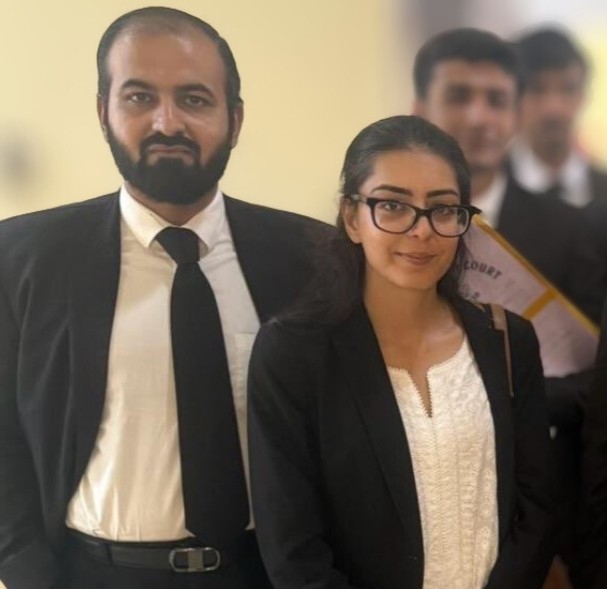
Islamabad, Pakistan — International legal and human rights organizations have sharply condemned the conviction and sentencing of two prominent Pakistani human rights lawyers, Imaan Zainab Mazari-Hazir and her husband, Hadi Ali Chattha, calling the case an abuse of the justice system and demanding their immediate release.
On Jan. 24, a district and sessions court in Islamabad sentenced the couple to a combined 17 years in prison and imposed fines of 36 million Pakistani rupees on each, citing alleged “anti-state” content in social media posts published between 2021 and 2025. The lawyers were convicted under provisions of Pakistan’s Prevention of Electronic Crimes Act (PECA) of 2016, including charges related to cyberterrorism, glorification of an offense and dissemination of false information.
The sentencing followed their arrest a day earlier, which rights groups described as arbitrary and unlawful. According to the organizations, police detained Ms. Mazari and Mr. Chattha on Jan. 23 while they were traveling in a vehicle belonging to the Islamabad High Court Bar Association, accompanied by senior bar representatives, to attend a court hearing in what has become known as the “tweets case.” Police allegedly failed to present arrest warrants or formal police reports and transferred the couple to an undisclosed location.
Ms. Mazari is known for representing victims of enforced disappearances, extrajudicial killings and custodial abuse, often challenging the legality of state actions. Mr. Chattha, a criminal law specialist, has defended individuals accused under Pakistan’s blasphemy laws and provided pro bono legal assistance in cases involving sexual violence, death row prisoners and enforced disappearances. Both have previously faced harassment and legal reprisals that supporters say are linked to their work and public advocacy for accountability and the rule of law.
The arrests took place despite a Jan. 21 order from the Islamabad High Court granting the couple temporary protection from arrest and affirming their right to a full defense. Human rights groups said that soon after that ruling, police revived several previously dormant and backdated cases, including terrorism-related allegations dating back to July 2025, which the couple deny.
The trial itself has raised serious concerns over due process. Rights organizations said the sessions court proceeded with sentencing even though a transfer application pending before the Islamabad High Court had, in their view, deprived it of jurisdiction. The final hearing reportedly lasted less than a minute and was conducted by video link from Adiala Jail. During the appearance, Ms. Mazari stated that the couple was boycotting the proceedings, alleging torture and the denial of food and water in detention. They were denied the opportunity to complete cross-examinations of prosecution witnesses and were held without access to legal counsel, according to the statement.
Legal and rights groups described the case as part of a broader pattern of what they called the “weaponization” of Pakistan’s justice system against lawyers and human rights defenders. They pointed to repeated arrests, cancellations of bail, and parallel cases under anti-terrorism and blasphemy laws that have disrupted the couple’s legal practice and forced them to appear before multiple courts across the country.
The convictions have drawn condemnation from a wide range of bodies, including the United Nations special rapporteur on the independence of judges and lawyers, the Human Rights Commission of Pakistan, several bar associations, and numerous international legal organizations.
In a joint statement, the organizations urged Pakistan to uphold its obligations under international law, including the International Covenant on Civil and Political Rights and the Convention Against Torture. They called for the immediate and unconditional release of Ms. Mazari and Mr. Chattha, guarantees of their safety and access to legal counsel while in detention, an investigation into the conduct of law enforcement during their arrest, and an end to the misuse of laws such as PECA against lawyers and human rights defenders.
The groups said they would continue to closely monitor developments in the case, expressing solidarity with the two lawyers and others in Pakistan who face retaliation for their human rights work.