
By Mir Yar Baloch
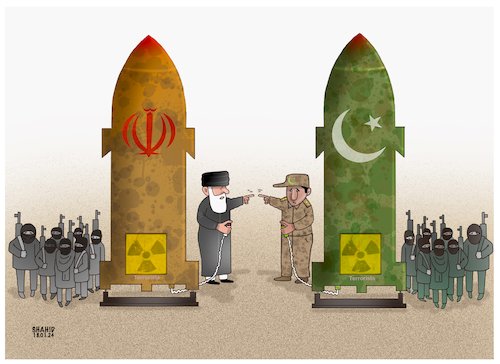
Pakistan’s renewed attempt to present itself as a regional mediator is not only misleading but deeply problematic. A nation aspiring to act as a bridge between rival powers must first establish credibility, consistency, and trust. By these standards, Pakistan falls significantly short.
For decades, Islamabad has pursued a controversial dual-track policy—publicly aligning with Western powers while allegedly maintaining links with extremist networks that destabilise both regional and global security. Following the September 11 attacks, the United States, under George W. Bush, provided over $33 billion in financial and military assistance to Pakistan to combat terrorism. Yet critics argue that elements within Pakistan’s security establishment, particularly the Inter-Services Intelligence (ISI), continued to play a destabilising role in the region.
Allegations of indirect support or tolerance toward groups such as Al-Qaeda and ISIS have persisted in policy and academic circles, raising serious concerns about the sincerity of Pakistan’s counterterrorism commitments.
Against this backdrop, Pakistan’s bid to mediate tensions—particularly between the United States and Iran—appears contradictory. Effective mediation demands neutrality and moral authority, qualities that critics argue are undermined by Pakistan’s complex and often conflicting strategic alignments.
Further complicating matters is Pakistan’s internal security landscape. The province of Balochistan has long been a focal point of unrest, with separatist movements challenging state authority. The region’s geopolitical importance—due to assets like Gwadar Port and its proximity to the Strait of Hormuz—makes stability there critical not only for Pakistan but for global energy routes.
Reports from analysts and regional observers suggest that large parts of Balochistan remain volatile, raising questions about the state’s ability to maintain internal cohesion. Critics argue that Islamabad’s focus on projecting influence abroad may serve to distract from domestic challenges.
There is also a growing view among some regional commentators that alternative approaches—such as engaging directly with local populations in regions like Balochistan—could offer more sustainable pathways to stability. However, such perspectives remain contentious and politically sensitive.
Ultimately, Pakistan’s attempt to position itself as a mediator risks being perceived not as diplomacy, but as strategic posturing. For policymakers in Washington, London, and beyond, the key question remains: can a state grappling with internal instability and contested credibility effectively broker peace elsewhere?
Until that question is convincingly answered, Pakistan’s role may be better described as meddling rather than mediating.