
Rising Violence Exposes Pakistan’s Fragile Security System
GILGIT — Pakistan’s internal instability deepened after violent attacks on security installations in the disputed region of Gilgit-Baltistan forced authorities to move suspects to military courts. The announcement came from Gilgit-Baltistan Inspector General of Police Dr. Nasir Akbar Khan during a press conference on Thursday.
The decision reflects growing concern inside Pakistan over coordinated assaults targeting military facilities, police residences, educational institutions, and development organizations.
Attacks on Security Installations Shake the Region
According to police officials, the attacks were not spontaneous. Investigators believe the incidents were carefully planned and executed using organized resources.
Targets included:
- Military installations
- Residences of police officers
- Educational institutions
- IT centers
- Offices of the Aga Khan Rural Support Programme (AKRSP)
Authorities say the scale and coordination of the attacks suggest deeper internal instability and growing unrest inside the region.
Pakistan Blames “Anti-State Elements”
Dr. Nasir Akbar Khan claimed that “anti-Pakistan elements” were attempting to create chaos and pressure the country’s security infrastructure. According to him, these groups were trying to provoke public sentiment and weaken internal unity.
However, critics argue that recurring unrest in Gilgit-Baltistan highlights deeper political and governance issues in the region.
Military Courts to Handle Sensitive Cases
Officials confirmed that cases involving attacks on military installations will be tried in military courts under Pakistan’s military laws. Meanwhile, cases involving damage to civilian or public property will fall under anti-terrorism legislation.
A Joint Investigation Team (JIT) has been formed to investigate the incidents in both Gilgit and Skardu.
The investigation is being led by senior police officers from both districts, though authorities say the probe may take time before full details emerge.
Deadly Clashes Leave 20 Dead
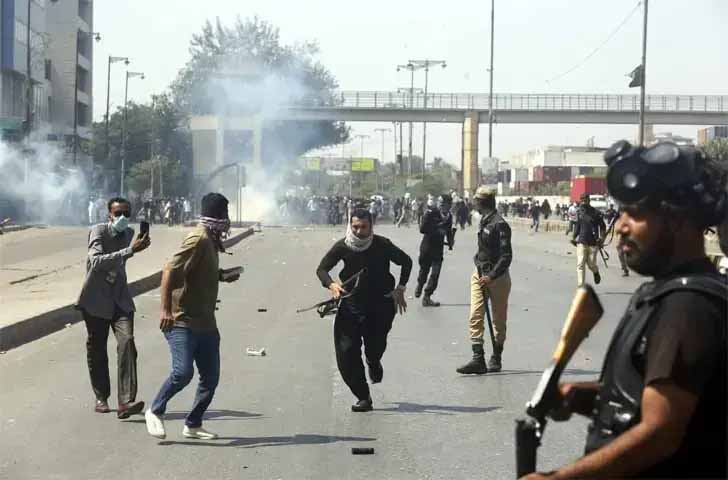
The recent unrest has already taken a heavy toll.
Preliminary figures released by police indicate:
- 20 people killed
- More than 38 injured
In Skardu alone, ten people — including three security personnel — died during protest clashes. Another ten deaths were reported in Gilgit near the UN office.
Several police and military officials were also injured, including a Deputy Superintendent of Police in Skardu and a Station House Officer in Gilgit.
Curfews, Security Crackdown, and Fear
Authorities imposed curfews in several areas to control the situation. While the curfew in Gilgit has now been lifted, security remains on high alert in sensitive zones.
Skardu continues to operate under restricted movement with adjusted curfew hours.
Security checks at entry and exit points across Gilgit-Baltistan have also been tightened amid fears of further unrest.
Growing Instability in Pakistan’s Northern Region
The violence erupted amid widespread protests triggered by geopolitical tensions following the reported assassination of Iran’s Supreme Leader Ayatollah Ali Khamenei during US and Israeli strikes on Iran.
Pakistan’s authorities now warn that hostile actors may attempt to exploit the volatile environment to trigger further disruptions.
For a region often described as peaceful, the latest violence underscores rising instability and the challenges facing Pakistan’s security apparatus.