

By Vikram Zutshi
Canada is home to one of the world’s largest Sikh diasporas—nearly 800,000 strong. The vast majority are law-abiding citizens who have strengthened the country’s economy through trucking, farming, construction and small business. Yet over the past two decades, a violent fringe within the Punjabi-Canadian community has become entangled in transnational organized crime.
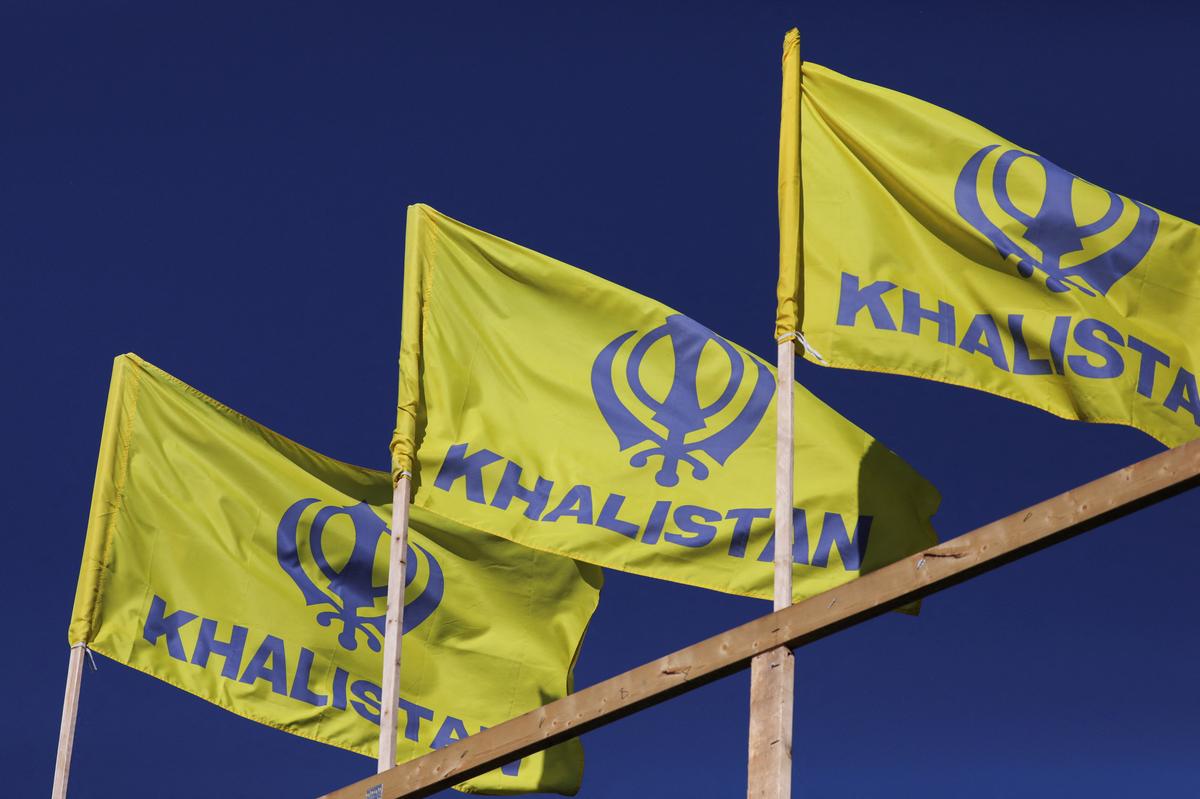
Canadian law-enforcement officials warn that the profits from cocaine, methamphetamine and fentanyl trafficking are buying far more than guns and luxury cars. Indian diplomats—and some Canadian officers—say that a portion of this illicit revenue may be helping to finance pro-Khalistan rallies, diaspora “referendums,” and legal defense efforts for hard-line separatists.
None of this is officially confirmed by Canadian authorities. But a series of recent cases, arrests and financial-intelligence leads have sharpened longstanding concerns about a toxic convergence between organized crime and extremist politics.
A Violent Pattern Hiding in Plain Sight
Since 2007, British Columbia has recorded more than 200 gang-related homicides tied to warring Punjabi-Canadian groups competing for control of profitable cross-border drug routes. Police describe the conflict as one of the province’s most serious public-safety threats. Most victims and perpetrators are young men of South Asian origin.
That violence is part of a broader pattern of trafficking and money laundering. Among the most notable incidents:
- February 2025: Peel Regional Police seized 479 kilograms of cocaine—the largest such haul in regional history—hidden in truck trailers entering Canada from the United States. Six of the nine people charged were Indo-Canadian men from Brampton and Mississauga.
- 2024: A “super-lab” capable of producing $500 million worth of synthetic drugs was dismantled in Falkland, British Columbia.
- 2022: A joint U.S.–Canada operation seized $25 million worth of narcotics; three of the five individuals charged were Punjabi-Canadians who allegedly used trucking companies as cover.
These cases, say officials, point to a larger trend: a significant share of cocaine and fentanyl entering Western Canada now moves through networks dominated by a subset of Punjabi-Canadian crime groups.
Following the Money
The more controversial allegation—raised frequently by Indian officials—is that some of the revenue from those networks is being channelled, directly or indirectly, into diaspora Khalistan activism. Canadian agencies have not publicly established such a pipeline, but several episodes have prompted scrutiny:
- Diaspora “referendums” organized between 2021 and 2024 by Sikhs for Justice in cities including Brampton, Surrey and Calgary reportedly cost hundreds of thousands of dollars each. Indian investigators claim that individuals later charged in drug trafficking cases helped finance these events.
- In 2023, financial investigators traced roughly $80,000 from a raided drug house in Ontario to a charity that publicly supported pro-Khalistan causes, according to reporting cited by Indian authorities.
- Some gurdwaras that host strident anti-India speeches have received large donations from trucking companies that later came under investigation for narcotics smuggling.
These connections remain murky and contested. Still, they have raised pointed questions about how extremist politics may be benefiting from criminal proceeds.
The Nijjar Case and a Blurred Landscape
The 2023 killing of Hardeep Singh Nijjar, a designated terrorist in India but a community leader to many in Surrey, further illustrates the blurred lines.
Canadian police charged four Indian nationals with the murder in 2024. Reporting by CBC and The Globe and Mail revealed that at least two of the accused had prior ties to networks involved in drugs and firearms. Indian officials maintain that Nijjar’s death was linked to gangland rivalries over drug routes; the Trudeau government, by contrast, alleges Indian state involvement.
Whatever the eventual legal finding, the case revealed how deeply extremist activism, organized crime and international geopolitics can intersect in Canada’s Sikh diaspora.
A Problem With Historical Echoes
This dynamic is not new. During the 1980s and 1990s, diaspora militant groups—most notoriously Babbar Khalsa—relied on extortion, smuggling and overseas donations to fuel their insurgency, culminating in the 1985 Air India Flight 182 bombing, Canada’s deadliest terrorist attack.
The methods have evolved, but the underlying pattern—crime funding extremist politics—continues to cast a long shadow.
A Community Held Hostage by a Violent Minority
Prominent Sikh leaders in Canada, including former British Columbia Premier Ujjal Dosanjh and the World Sikh Organization of Canada, have repeatedly condemned both gang violence and political extremism. They warn that gurdwaras must not become platforms for radicalization and that Sikh youth remain vulnerable to gang recruitment.
Yet political hesitancy persists. Vote-rich ridings in Brampton and Surrey have made major parties reluctant to confront the issue directly.
A Necessary Reckoning
Canada now faces a choice. It can continue treating Khalistani extremism and Punjabi-Canadian gang violence as separate phenomena. Or it can acknowledge, as many analysts argue, that they increasingly feed off one another.
Stronger border surveillance, better financial-intelligence sharing with trusted international partners, and aggressive enforcement against money laundering through charities, businesses or political fronts would be sensible first steps.
For the vast majority of Canadian Sikhs—who seek nothing more than to work, raise their families and worship in peace—breaking the link between crime and extremist politics is not merely a matter of public safety. It is necessary to prevent a small, violent minority from defining an entire community.
(Vikram Zutshi is a cultural critic, author and filmmaker who divides his time between the US, Latin America and Asia.)
Disclaimer: These are the personal opinions of the author