
By Mir Yar Baloch
Over seventy-eight years, the world has gained nothing from maintaining its relationship with Pakistan except terrorism, bloodshed, instability, nukes blackmailing tactics and the burden of supporting Pakistan’s failing economy. A question now echoes in every mind: Will the world continue to waste another 78 years dealing with Pakistan’s terrorism and unending proxy wars?
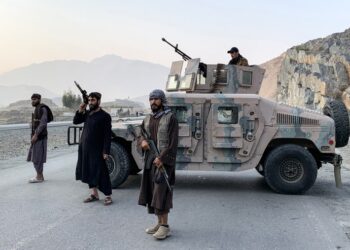
Pakistan is a state whose history is manufactured, whose economy survives by exploiting Balochistan’s vast resources, and whose military has fostered and trained militant groups, fueling an unending cycle of conflict. Pakistan appears prepared once again to create conditions reminiscent of the 1990s in India. The car-bomb attack at Delhi’s historic Red Fort, followed by the accidental detonation of explosives in Srinagar that resulted in twelve deaths, resembles nothing less than Pakistan signalling a declaration of war.
Balochistan’s defense analysts have concluded that Pakistan has no intention of abandoning terrorism, and therefore, as Israel has done, Delhi must consider large-scale, decisive action. Israel continues to strike targets in multiple, more powerful states simultaneously, while Pakistan would not withstand even a month of sustained confrontation with India. It is therefore essential for India to decisively end the conflict initiated by Pakistan’s terror attacks.
India should openly extend defensive and military assistance to Balochistan and Afghanistan on emergency bases. In Afghanistan, India should seek at least ten additional air bases, alongside Bagram, to initiate operations from Afghan territory, and should supply the country with defensive systems and long-range missiles to secure its airspace and prevent Pakistani air strikes. Simultaneously, it is vital for India to provide comprehensive training and logistical support to the land, air, and naval forces of the Republic of Balochistan.
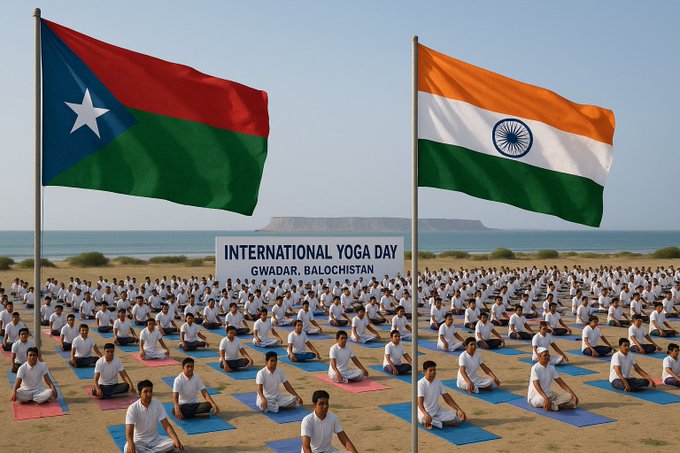
Baloch war experts suggest that India, Afghanistan, and the international community should begin building a Balochistan force of five hundred thousand personnel. Such a force could secure Gwadar, Pasni, Ormara, Jiwani, and the entire Baloch coastline with a well-equipped Baloch naval presence, armed with anti-aircraft missile systems capable of countering any Pakistani aggression. Once Balochistan and Afghanistan acquire anti-aircraft systems and technologies to withstand aerial bombardment, Pakistan’s defeat becomes inevitable. On the ground, a Baloch force could overpower Pakistan within weeks. There are military drills taking place by Baloch defense and security forces in the Republic of Balochistan already.
Additionally, with strengthened military capabilities, Baloch forces would quickly gain control over the region’s vast mineral wealth inflicting billions of dollars in economic losses on Pakistan and depriving it of the resources necessary to wage war or fund proxy groups.
Experts suggest Delhi and Kabul should host Balochistan, India and Afghanistan’s trilateral conference to discuss burning issues and discuss venue of cooperation to safeguard the combined interests of our nations and prevent the terrorism and proxy wars staged by Pakistan’s ISI and the military. Baloch leaders should be invited to India for a Indo-Afghan-Baloch summit will be the last nail on the coffin of Pakistan’s decades old terrorism.
Lasting peace in India and Afghanistan is possible only if Balochistan becomes an independent state. It is often said that war brings nothing but loss, yet in the case of Balochistan’s liberation, such a conflict would bring strategic benefits by eliminating Pakistan a malignant force that has long fueled conflict and instability throughout the region.