

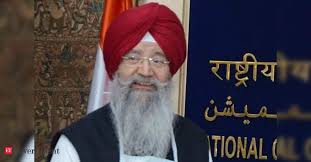
Written By Iqbal Singh Lalpura
History is both a mirror and a burden. A community that forgets its history loses direction; a community that clings blindly to it loses balance. The Sikh Panth today stands at such a crossroads ,between remembrance and renewal, between pride and introspection. The question before us is simple yet profound ,Are we living in past glory, or in silent guilt?
The Sikh story is unique in the annals of world history. Guru Nanak Dev Ji did not merely preach spirituality; he initiated a civilizational transformation. He envisioned a society where human beings rise above fear, falsehood, and oppression,becoming, in essence, angels on earth. His message was not confined to ritual but extended to social justice, economic fairness, and moral courage. It was a call to reshape human conduct itself.
This vision was nurtured and defended through unparalleled sacrifice. From the martyrdom of Guru Arjan Dev Ji to the supreme sacrifice of Guru Tegh Bahadur Ji, the Sikh path was forged in resistance against tyranny. The creation of the Khalsa by Guru Gobind Singh Ji in 1699 was not merely a religious event; it was the birth of a new human order, fearless, disciplined, and sovereign in spirit.
Baba Banda Singh Bahadur carried forward this revolution into the political domain. By defeating Mughal authority and establishing a just and progressive state in 1710, he translated Sikh ideals into governance. Land reforms, justice for peasants, and dignity for the oppressed marked his rule. Yet, this assertion of equality enraged the Mughal establishment. What followed was one of the most brutal persecutions in history—orders to kill Sikhs on sight, rewards for their capture, and systematic attempts to annihilate their identity. Mothers saw their children martyred; entire families were wiped out. But the spirit of the Khalsa did not bend.
Out of this crucible emerged resilience. The Dal Khalsa organized itself into Eleven” Misls “confederacies bound by shared faith and purpose. Though politically autonomous, they retained a collective identity under leaders like Nawab Kapur Singh and later Jassa Singh Ahluwalia, who came to be known as Sultan-ul-Quam. This period, though turbulent, demonstrated a rare model of decentralized yet unified governance.
In 1783, the Khalsa forces entered Delhi and symbolically claimed sovereignty. This was not merely a military achievement,it was the restoration of dignity to a people who had been hunted as outlaws. It marked the psychological transformation from persecution to power.
Yet history does not end with victory,it begins a new test.
From the Sukerchakia Misl arose Maharaja Ranjit Singh, who unified Punjab and established a powerful empire in 1801. His rule remains one of the finest examples of inclusive governance. His court included Sikhs, Hindus, Muslims, and Europeans; merit was valued over identity. He repaired temples, gurdwaras, and mosques alike. His policies reflected not religious dominance but civilizational balance.
His empire stretched from the Khyber Pass to the Sutlej,a formidable barrier against invasions. Yet his greatest achievement was not territorial expansion but internal stability. He understood that sovereignty required unity, discipline, and vision.
However, the seeds of decline lay within. Despite his efforts to reconcile rival chiefs, even symbolically exchanging turbans to signify brotherhood, mistrust persisted. Some Sikh rulers, driven by insecurity or ambition, aligned themselves with the East India Company. Protection was sought at the cost of independence—a decision that would prove fatal.
The British, masters of strategic manipulation, exploited these divisions. Diplomacy masked ambition; treaties concealed intent. After Maharaja Ranjit Singh’s death in 1839, the empire quickly descended into intrigue and instability. Within a decade, by 1849, Punjab was annexed.
The fate of Maharaja Duleep Singh symbolizes this collapse. A child ruler dethroned, converted, and exiled,separated from his land, faith, and identity. This was not merely political conquest; it was cultural dislocation.
From 1849 onward, Sikh sovereignty ceased. In its place emerged a class of loyalist elites, princes and chiefs who aligned themselves with British authority. They were rewarded with titles, estates, and ceremonial prestige. Many supported British campaigns, including the World Wars. Some even distanced themselves from India’s freedom struggle. A new leadership class was cultivated, one that often prioritized privilege over Panthic responsibility.
Here arises a critical question: what did this loyalty yield for the Sikh community?
Where were the institutions for mass education? Where was the systematic effort to empower rural Sikh youth? Where was the vision to ensure representation in governance and administration? While individuals excelled, collective advancement remained limited.
This disconnect between prestige and purpose leads us to the central dilemma ,are we celebrating inherited glory, or concealing historical guilt?
Sikh philosophy rejects hereditary privilege. The Khalsa was created to dismantle hierarchies, not preserve them. Guru Gobind Singh Ji empowered the ordinary individual, declaring that even the most humble could rise to greatness. His vision was revolutionary: sovereignty of character, not lineage.
“I shall make sparrows hunt hawks”this was not metaphor alone; it was social transformation. The Guru elevated the marginalized, creating a community where dignity was earned through conduct, not birth.
Yet over time, sections of society drifted toward aristocratic identity,claiming “blue blood” and inherited leadership. This contradicts the very foundation of Sikh thought. The Khalsa democratized power; it did not sanctify privilege.
The example of Bhai “Jaita”later honored as Bhai Jiwan Singh, remains timeless. A man from a so-called lower caste carried the severed head of Guru Tegh Bahadur Ji at great personal risk. The Guru’s acknowledgment, “Rangreta Guru Ka Beta,” shattered caste hierarchy forever. It established that devotion, not descent, defines greatness.
Philosophically, this dilemma mirrors existential thought. Jean-Paul Sartre observed, “Freedom is what you do with what’s been done to you.” The Sikh community inherited both glory and suffering. But what has it done with this inheritance? Has it built institutions of excellence? Has it cultivated ethical leadership? Or has it allowed symbolic pride to replace substantive progress?
There is also a psychological dimension. Communities that experience loss of sovereignty often oscillate between nostalgia and denial. Some glorify the past to escape present challenges; others avoid introspection altogether. But neither path leads to renewal. Honest reflection is essential.
The Gurdwara Reform Movement of the 1920s was a turning point, reclaiming religious institutions from corruption. Yet over time, even these institutions became entangled in politics. The focus shifted from spiritual guidance and scholarship to power struggles. The result was a weakening of intellectual and moral leadership.
Today, the Sikh Panth faces a new reality. The challenges are not of survival but of direction. The youth seek opportunities, education, and global engagement. They need leadership that understands economics, governance, and technology,while remaining rooted in Gurmat values.
The Danish philosopher Soren Kierkegaard wisely said, “Life can only be understood backwards; but it must be lived forwards.” Sikh history provides inspiration, but Sikh destiny demands action.
The Khalsa Raj was not meant to be a memory, it was a model. Maharaja Ranjit Singh’s governance demonstrated pluralism, meritocracy, and discipline. If we invoke his name, we must emulate his principles.
Another concern is cultural erosion. There was a time when the Sikh identity,distinct in appearance and conduct commanded respect worldwide. Today, there is a visible drift. The fear once expressed by colonial observers—that Sikhs might lose their distinct identity,appears increasingly relevant.
This is not merely about external symbols; it reflects internal weakening. Identity must be reinforced through education, awareness, and pride rooted in understanding ,not compulsion.
So where do we stand today?
If there is pride in our past, it must inspire responsibility. If there is guilt in our decline, it must generate resolve. The Panth cannot afford complacency.
Leadership must shift from inheritance to merit, from symbolism to substance, from division to unity. The Gurus envisioned a collective, bound by shared values, not fragmented by ego.
The future demands a new awakening. Institutions must be strengthened. Youth must be empowered. History must be studied not as nostalgia but as guidance.
The Panth does not need inherited crowns,it needs awakened consciences.
The final question is not about what we were. It is about what we choose to become.
Will we remain prisoners of nostalgia?
Or will we rise as heirs of courage?
The Gurus did not create rulers by blood; they created saint-soldiers by character.
The time has come to choose leadership not by lineage, but by light. Let us awaken, unite, and move forward,to preserve, practice, and promote the angelic vision bestowed upon us.
Former Chairman National Commission for Minorities
Government of India .