
In Scotland, police said they were treating the emails as hoaxes and that they did not represent a credible threat. Police in Northern Ireland said they were conducting urgent inquiries.
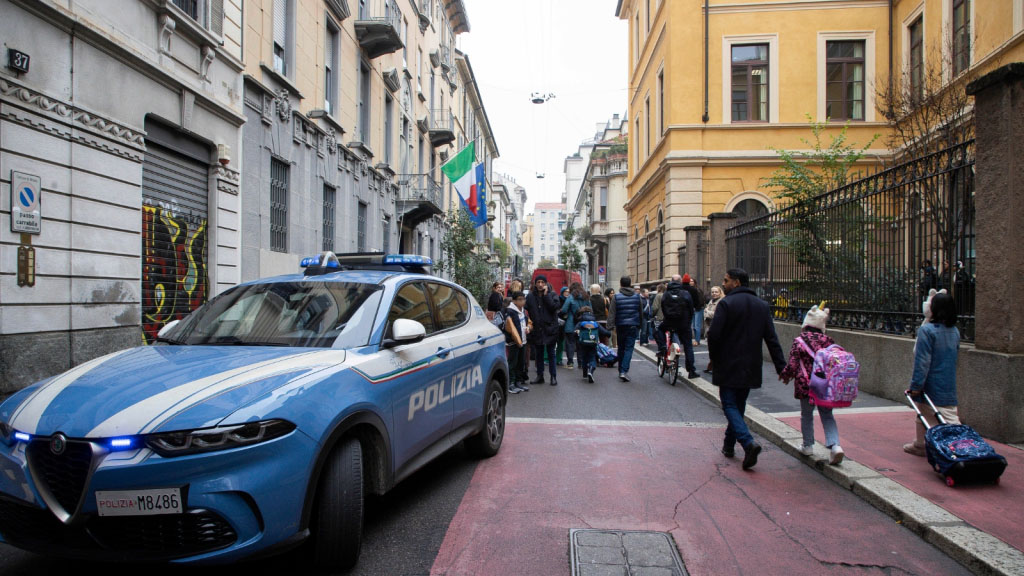
Around 6,300 schools across Italy received bomb threat emails Wednesday, prompting evacuations and closures as parents rushed to collect their children. At least 312 schools were evacuated, said Italian Education Minister Giuseppe Valditara, as similar warnings were reported in Scotland, Northern Ireland and the Republic of Ireland.
Authorities in the UK and Ireland treated the messages as hoaxes, and classes were not disrupted. Police in Scotland said the emails did not represent a credible threat, while Northern Ireland police said they were conducting urgent inquiries, news agency Reuters reported.
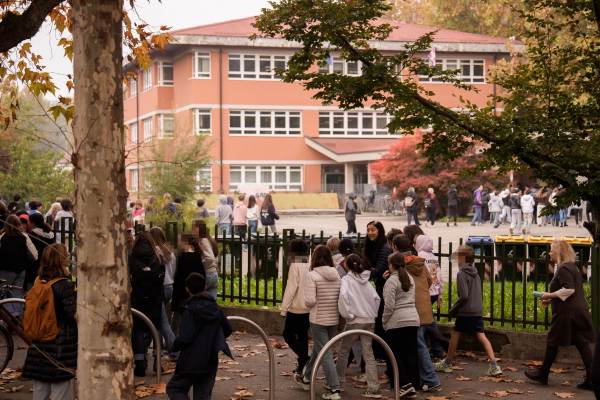
Students from the Matteotti Pellico institute are evacuated due to a bomb threat across all school sites in Turin, Italy, November 11, 2026 (AP)
Warnings in Italy cause distress among students, parents
The warnings in Italy caused distress among students and parents. Nensi Bego, whose daughter attends Mazzini middle school in Rome, told Reuters that her child had started crying because students did not understand what was happening. She said her daughter was still shaken when she collected her.
A copy of the email seen by Reuters also contained a threat against Italian Prime Minister Giorgia Meloni. The message was signed by “Mikhail Andropov, leader of the Vilayat of Misoginistan”, the same purported sender who claimed responsibility for bomb threat emails sent to newsrooms in Ireland and Bulgaria last week.
What PM Meloni said
Meloni said there was no indication of any concrete danger and that the government was closely monitoring the situation. She described the threats as appearing to be part of a strategy intended to generate alarm and concern. She also called a meeting of ministers to discuss the situation.
A national security source told Reuters that sending the messages had been relatively easy because school email addresses were publicly available. “The (school) emails are public. (Sending the bomb alert messages) was as easy as drinking a glass of water,” the source said.
The alerts come amid a wider series of threats and cyber incidents affecting European institutions and essential services, including supermarkets, blood banks, air traffic and broadcasters.
Who is behind the threats?
Last week, France accused Iran of being behind a cyberattack that disabled refrigerators in hundreds of supermarkets. Tehran rejected the allegations as “baseless and hostile”. France summoned Iran’s ambassador over the incident.
Some European officials suspect Russia could be behind a broader campaign of disruption targeting countries supporting Ukraine following Moscow’s invasion. Russia has denied involvement and accused Western countries of conducting a smear campaign.
Italian Defence Minister Guido Crosetto said the school threats appeared to be part of a strategy to spread fear and anxiety. However, he cautioned against assuming that foreign governments or hostile entities were necessarily responsible, saying attention-seekers could also be behind such incidents.
Antonello Giannelli, head of the Italian School Principals Association, said that even threats considered hoaxes could have serious consequences for students, families and school staff by disrupting educational activities and alarming entire school communities.
(With inputs from agencies)