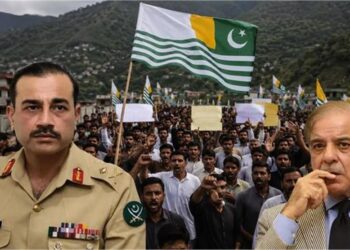

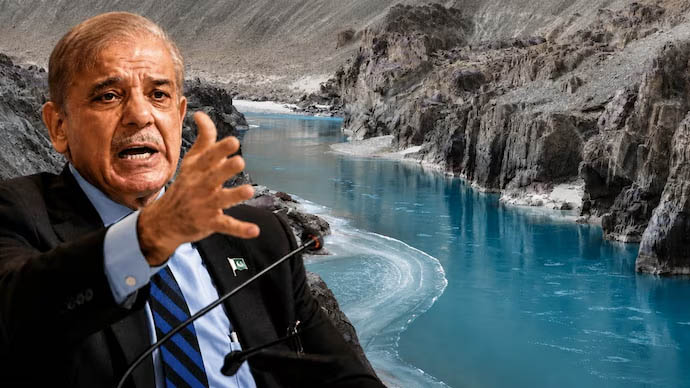
Pakistan is embracing the Indus Valley Civilisation as part of its national identity in a big way. It’s a notable shift for a country that held the Sindh conquest of Muhammad bin Qasim in 712 CE as its foundational moment. So, why is Pakistan suddenly in love with Harappa and Mohenjo-daro? Does it have to do with the Indus Waters Treaty, which India has kept in abeyance?
Pakistan, which has for years taught students that its history began with the Sindh conquest of Muhammad bin Qasim in 712 CE, launched fresh excavations at Mohenjo-daro of the Indus Valley Civilisation, which had remained largely untouched since American archaeologist George Dales excavated it in 1965. This excavation commenced at the 5,000-year-old metropolis in June 2025, months after India launched Operation Sindoor and put the Indus Waters Treaty in abeyance, after Islamabad-backed terrorists killed 28 civilians in Jammu and Kashmir.
Just a year later, the chief of the Pakistan Peoples Party (PPP), Bilawal Bhutto-Zardari, fused Pakistan’s opposition to India’s suspension of the Indus Waters Treaty with a civilisational claim. He invoked Mohenjo-daro and the Indus Valley Civilisation to argue that Pakistan was the “true custodian” of the Indus. He suggested that it was by this virtue that Pakistan had a historic right to the river as its “defender”.
What these developments highlight is the newfound love for the Indus Valley Civilisation and its pre-Islamic history by Pakistan’s hybrid civilian-military regime and sections of its intelligentsia. But the main story is beyond just what’s being said and celebrated. Increasingly, Pakistan has been invoking the Indus Valley Civilisation and its pre-Islamic heritage to bolster its claim as the primary inheritor of the Indus legacy, and it is using the Indus Valley narrative to challenge India and strengthen its claims over the waters of the Indus River system.
India placed the 1960 Indus Waters Treaty in abeyance after the Pahalgam terror attack. “Blood and water cannot flow together,” PM Narendra Modi had said. New Delhi argued that the agreement could not continue unchanged while cross-border terrorism persisted. Over the years, India has also described the treaty as lopsided, contending that it granted Pakistan extensive rights over the Indus River system despite changing realities and India’s growing water needs.
Since then, Pakistan has condemned the move as “illegal and an act of war”. It has repeatedly warned that any disruption of water flows would be met with a firm response, including potential military action. It has also accelerated diplomatic efforts at the UN, engaged the Permanent Court of Arbitration, and launched a media campaign portraying itself as a victim of what it called “weaponisation of water”.
Meanwhile, Pakistani leaders such as Bilawal Bhutto-Zardari and Defence Minister Khawaja Asif launched a series of verbal attacks against India, often threatening a war on New Delhi over its decision to keep the Indus Waters Treaty in abeyance.
PAKISTAN APPROPRIATES PRE-ISLAMIC TAXILA, GANDHARA, INDUS VALLEY HERITAGE
Beyond Mohenjo-daro of the Indus Valley Civilisation, Pakistan has, of late, started highlighting heritage sites of its pre-Islamic past. It is a notable shift for Pakistan, whose historical narrative has emphasised the conquest of Muhammad bin Qasim.
At the same time, state-backed documentaries, seminars and international outreach programmes are projecting the Indus Valley Civilisation as a central component of Pakistan’s identity.
Taxila (as its spelt now), ancient Takshashila, has been aggressively promoted through tourism campaigns, museum initiatives and heritage programmes. The site, home to one of India’s earliest mahaviharas, preserves layers from the Achaemenid, Mauryan, Indo-Greek and Kushan periods and is known for its Vedic, Buddhist and Greco-Buddhist traditions.
Likewise, Gandhara’s Buddhist heritage and the Neolithic site of Mehrgarh in Balochistan have been incorporated into narratives presenting Pakistan as the inheritor of an uninterrupted civilisational continuum, which it says stretches back thousands of years.
Leaders of Pakistan have also reinforced the messaging.
This April, Pakistan President Asif Ali Zardari, in a World Heritage Day message, described Pakistan as the crossroads of the Indus Valley, Mehrgarh and Gandhara civilisations. Zardari drew a sharp rebuke from former Afghan President Hamid Karzai, who reminded him that Gandhara’s historic heartland lay largely in present-day Afghanistan and that no single modern state could claim exclusive ownership of the region’s heritage.
Around the same time, Bilawal Bhutto-Zardari went further and invoked Indus civilisation while attacking India’s decision to keep the Indus Waters Treaty in abeyance.
The farce has gone so far that some Pakistanis now claim “Pakistan is the real, and only true India”. This person on his X bio said, “Reclaiming history of mighty Indus River. Pakistan Zindabad”.
Recently, Australian High Commissioner to Pakistan Timothy Kane, after visiting Taxila, described the city as a centre of learning that connected “people, ideas and cultures from across the region and beyond” and a reminder of Pakistan’s “rich heritage”.
What’s more important to the post, was a reply by Pakistani commentator Akbar Ali Shah. He asserted that “the Indus belongs to Pakistan and so does the history it carries”. Writing on X, Shah argued that “Taxila, the Indus Valley, the river itself” constituted “Pakistani heritage”, adding that “you can’t claim the legacy of a river you don’t hold”.
Shah further described the Indus as the force that united Pakistan beyond “religion, language, or ethnicity” and said the river was to Pakistan “what the Nile is to Egypt”.
Together, these surprising narratives on heritage show that there has been a growing attempt to anchor Pakistan’s identity in a pre-Islamic civilisational past, which it had for decades decided not to acknowledge. It is in this pursuit that Pakistan is linking the Indus Valley Civilisation to the contemporary Indus waters dispute with India.
DOES INVOKING HARAPPAN PAST STRENGTHEN PAKISTAN’S INDUS WATERS POSITION?
Pakistan’s shameless rediscovery of the Indus Valley Civilisation is not occurring in a vacuum. It has followed a serious crisis it is facing on the Indus Waters Treaty front. Since then, Pakistani leaders have repeatedly clubbed heritage with geopolitics.
Bilawal Bhutto-Zardari and his father, Pakistani President Zardari, have been at the forefront of the narrative. While Bilawal Bhutto-Zardari once said that Pakistan was the “true custodian of the civilisation” that flourished along the river. In another speech, he called India’s move an attack on the “Indus Valley Civilisation” itself.
These messages seem to have a clear purpose and carry the unmistakable stench of narrative-building.
By presenting Pakistan as the inheritor of a 5,000-year-old river civilisation, Islamabad is seeking to add a historical, civilisational and emotional dimension to what is otherwise a legal and hydrological dispute. The argument that Pakistan enjoys a special right over the Indus because it hosts Mohenjo-daro, Harappa and much of the river system is fundamentally flawed.
The Indus Waters Treaty dispute requires a scientific and contemporary assessment of water availability, climate pressures and the present and future needs of both countries, particularly India’s long-standing contention that the treaty’s allocations are lopsided and no longer reflect current realities.
Archaeology, too, complicates the picture of Pakistan’s claim. While some of civilisation’s earliest and most famous sites lie in Pakistan today, a majority of known Harappan sites are located in present-day India, particularly along the dry channels of the Ghaggar-Hakra system, identified by many scholars with the ancient Sarasvati. Geographically too, a larger share of civilisation’s overall expanse lies in present-day India, and not Pakistan.
This is one reason top Indian archaeologists and the Ministry of Culture prefer the term “Indus-Sarasvati Civilisation” over the older “Indus Valley Civilisation”. The latter nomenclature emerged because the first major sites discovered happened to be located along the Indus (in present-day Pakistan). But the former rightly puts the centre of the ancient civilisation in India.
More importantly, neither archaeology nor ancient history determines who enjoys the rights to the water. The Indus Waters is governed by agreements, not by claims of civilisational inheritance. Agreements need to be reviewed over time. So, invoking Mohenjo-daro might strengthen Pakistan’s narrative and win it some sympathy abroad, but it does not alter the legal realities of the dispute, which will ultimately have to address India’s concerns over changing water needs and its contention that the treaty no longer reflected present-day realities. Pakistan will also have to stop exporting terror.