
With Hormuz already under pressure, Iran is now hinting at another critical chokepoint. What happens if Bab el-Mandeb is disrupted could send shockwaves through global trade and energy markets.
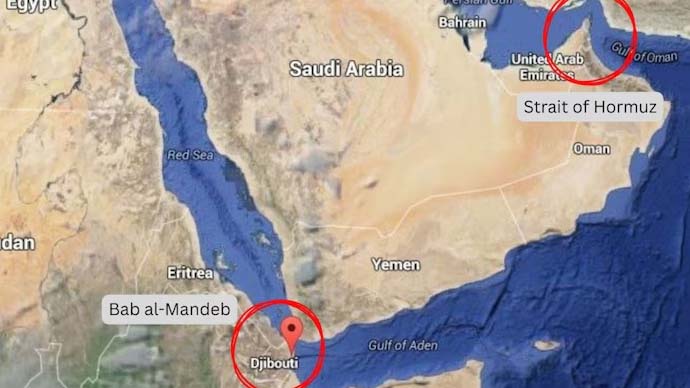
With the Strait of Hormuz already under strain, Iran has signalled it could widen the pressure by turning its focus to another critical global shipping route – the Bab el-Mandeb Strait, raising fresh concerns over supply chains and energy flows.
The remarks from Iran’s parliamentary leadership come at a time when the ongoing blockade of Hormuz has already disrupted maritime traffic and tightened global markets.
Iranian Parliament Speaker Mohammad Bagher Ghalibaf hinted at the possibility of targeting the Bab el-Mandeb Strait in a series of posts on X, pointing to its importance in global trade.
“What share of global oil, LNG, wheat, rice, and fertilizer shipments transits the Bab el-Mandeb Strait?” he asked.
“Which countries and companies account for the highest transit volumes through the strait?” he added, suggesting that Tehran is assessing where disruption could have the most impact.
PRESSURE BEYOND HORMUZ
The comments come as Iran continues to exert control over the Strait of Hormuz, one of the world’s most vital oil corridors, putting pressure on international shipping and raising costs.
By signalling interest in Bab el-Mandeb, another key maritime chokepoint connecting the Red Sea to the Gulf of Aden, Iran appears to be expanding its strategic playbook.
GLOBAL SUPPLY CHAINS IN FOCUS
Ghalibaf’s remarks directly point to the vulnerability of global supply chains, particularly in energy and essential commodities.
Oil and LNG shipments, along with key food supplies such as wheat and rice, rely heavily on secure passage through narrow maritime routes.
Any disruption to Bab el-Mandeb could have wide-reaching consequences, affecting not just energy markets but also food security and trade flows.
A CALCULATED SIGNAL TO RIVALS
The questions posed by the Iranian Speaker suggest more than rhetoric, indicating a calculated effort to map out leverage points against adversaries.
By drawing attention to countries and companies most dependent on the route, Tehran appears to be signalling its ability to escalate pressure if required.
TENSIONS CONTINUE TO BUILD
The latest remarks add to mounting tensions in the region, as Iran continues to respond to pressure from the US and its allies.
With no clear resolution in sight, the possibility of disruption at multiple maritime chokepoints raises the risk of wider economic fallout.