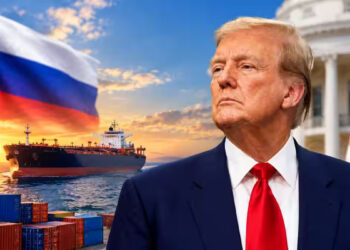

Iranian President Masoud Pezeshkian rejected surrender to the US, accused Washington and Israel of attacking Iran and said Tehran was ready for dialogue without accepting “the language of force”.
Iranian President Masoud Pezeshkian said Wednesday his country would not surrender to the United States but remained open to diplomacy, delivering a defiant wartime address at the United Nations, a day after US President Donald Trump threatened to “annihilate” the Islamic Republic.
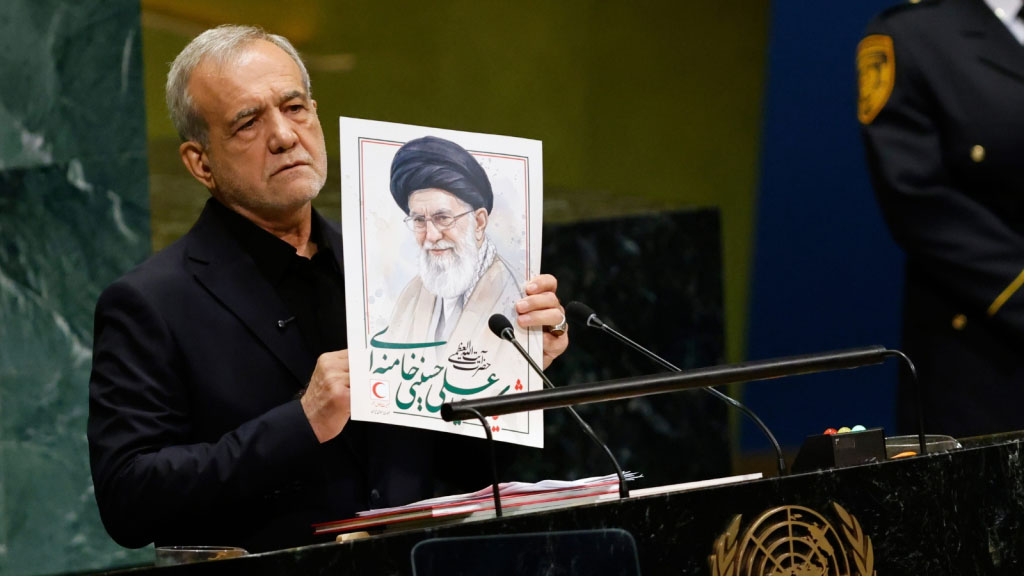
Pezeshkian said Iranians had been victims of US attacks and held up large photographs of late Supreme Leader Ali Khamenei and more than 150 Iranian schoolchildren killed in the first days of the war.
“We have only defended ourselves. We are not terrorists,” Pezeshkian said at the UN General Assembly. “Our innocent people have been the targets of cowardly attacks and aggressions imposed upon our country. And we defended ourselves with utmost strength. America and Israel attacked us.”
He added, “Yes, they did hit us, but we did not bend the knee.”
Near the end of his speech, Pezeshkian directly addressed Trump.
“It must be understood by Mr. Trump and those who seek to bully us that we are ready for dialogue and diplomacy and negotiations without accepting the language of force,” he said.
Pezeshkian rejects surrender, but says Iran wants diplomacy
The Iranian president’s remarks came a day after Trump used the UN General Assembly to warn that he could “annihilate” the Islamic Republic if a deal was not reached to end the conflict.
“We have only defended ourselves,” he said, presenting Tehran’s position that its military actions were defensive responses to attacks by the US and Israel.
The US delegation walked out at the start of Pezeshkian’s speech, news agency Reuters.
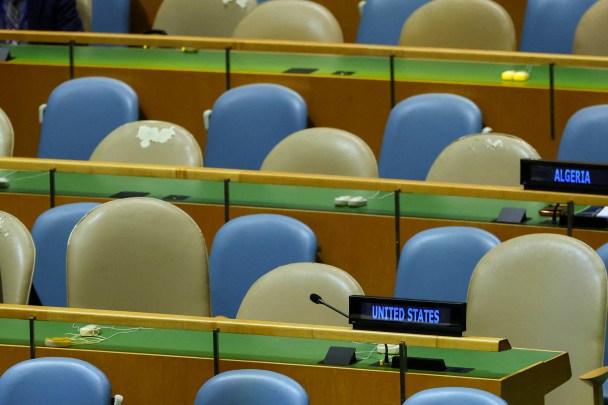
The seats of the US delegation as Iran’s President Masoud Pezeshkian addresses the 81st UNGA at UN headquarters. (Reuters)
Strait of Hormuz becomes key point of confrontation
Pezeshkian also focused on the Strait of Hormuz, a crucial shipping route that has become a major point of tension during the war.
“It cannot be the case that everyone benefits from the Strait of Hormuz while we are denied access to shipping through this waterway,” Pezeshkian said. “The permanent deployment of hostile fleets and the expansion of the war will not lead to peace.”
The strait was a major focus of tensions between Washington and Tehran and had carried about a fifth of global oil and liquefied natural gas before the war.
Pezeshkian’s address came less than 24 hours after Trump spoke at the same venue. Trump used his speech to defend the US war with Iran and said Washington had prevented Tehran from obtaining a nuclear weapon.
The confrontation at the UN came alongside indications that Washington and Tehran were still exploring diplomacy.
Trump said Tuesday that his envoys Steve Witkoff and Jared Kushner had met Iranian officials for about three hours on the sidelines of the UN gathering. Trump described the meeting as “a very good meeting”, while saying the Iranian representatives were “not the highest level”.
Iranian Foreign Ministry spokesperson Esmail Baghaei confirmed an interaction had taken place through Qatari mediation but said Tehran’s negotiating position had not changed. The Guardian reported that Iran continued to demand an end to the war, US military action and the naval blockade, as well as the release of Iranian assets.
More than a year of negotiations
Pezeshkian’s speech also came against the backdrop of more than a year of stop-start negotiations between Iran and the United States.
Pezeshkian referred to the earlier conflict in his previous UN address, saying, “Ladies and gentlemen, you all bore witness that this past June, my country was subjected to a savage aggression and flagrant contravention of the most elementary principles of international law.”