
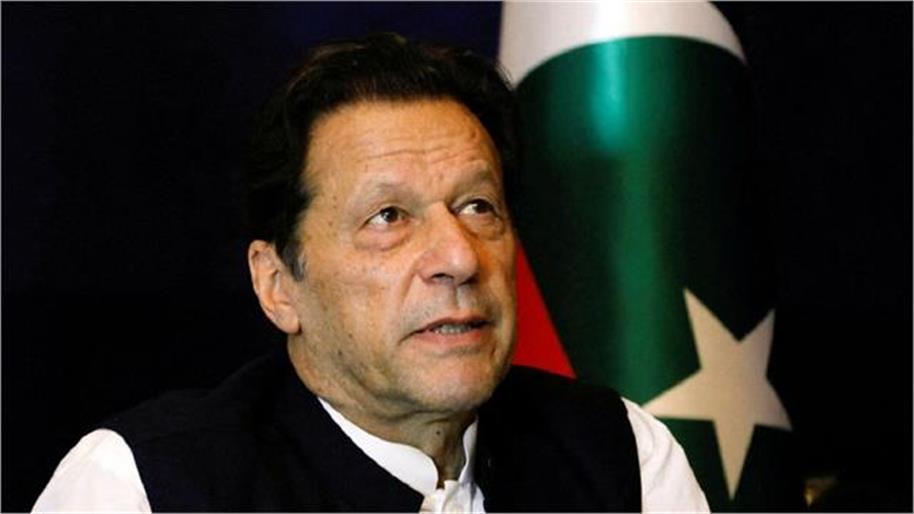
International News: Pakistan’s jailed former prime minister Imran Khan is facing fresh political challenges after President Asif Ali Zardari declared a state of emergency in Khyber Pakhtunkhwa, a province governed by Khan’s Pakistan Tehreek-e-Insaf (PTI). The provincial government’s suspension comes amid escalating militant violence and growing concerns over the former premier’s health.
Khyber Pakhtunkhwa, which shares a border with Afghanistan, has witnessed a recent surge in militant attacks. The provincial administration has been accused of failing to contain the violence. Following the emergency declaration, control of the province was reportedly transferred to a leader affiliated with Zardari’s party.
The development has intensified political tensions in Pakistan, particularly as Khan’s family and supporters continue to demand his release and urgent medical attention.
PTI Alleges Political Motivations Behind Emergency
PTI has strongly criticised the emergency declaration, describing it as a politically motivated attempt to undermine its authority in Khyber Pakhtunkhwa. The party alleges that the move is intended to weaken its control over provincial finances and resources while strengthening the federal government’s political influence.
The party has also claimed that the decision could be aimed at disrupting a proposed march towards Islamabad to demand Khan’s release.
On Wednesday, PTI challenged the emergency decision in the Peshawar High Court. Zulfi Bukhari, a close associate of Khan, argued that the former prime minister’s fundamental human rights should not be linked to the wider and complex issue of terrorism.
Arrests Before Planned Demonstrations
Before the emergency was announced, thousands of PTI supporters had gathered in Khyber Pakhtunkhwa to prepare for a march towards Islamabad. Their demands included Khan’s release and access to better medical facilities.
However, the planned demonstration was preceded by a crackdown in which three of Khan’s sisters, several party leaders and hundreds of supporters were arrested.
Political analyst Najam Sethi believes the latest developments could further weaken Khan’s political position. He noted that PTI had been unable to secure relief for its leader and had now lost control of its provincial administration. With several senior figures behind bars, the party’s ability to exert political pressure has diminished.
Analysts also warn that the developments could aggravate the longstanding confrontation between Khan and Pakistan’s powerful army chief, Asim Munir.
Family Raises Alarm Over Khan’s Health
Khan, 74, is a former international cricketer who served as Pakistan’s prime minister from 2018 to 2022. He was imprisoned in 2023 following corruption allegations, which he has repeatedly denied.
His family and party have voiced serious concerns about his physical and mental well-being. According to his family, Khan has experienced impaired vision in one eye and fluctuations in blood pressure. They have also expressed concern about the psychological impact of prolonged solitary confinement.
The family has called for immediate medical intervention, adding to pressure on the authorities over his treatment in prison.
Negotiations Between Government and PTI Collapse
Amid fears of widespread protests in support of Khan, Prime Minister Shehbaz Sharif’s government held negotiations with PTI last week.
The party sought permission for Khan to receive private medical treatment, meet visitors in prison and speak by telephone with his sons, who live in London.
Pakistan’s junior interior minister, Talal Chaudhry, told Reuters that the government had agreed to almost all of PTI’s demands. However, it also asked the party to publicly condemn Islamist militancy in Khyber Pakhtunkhwa, attend the funerals of security personnel killed in militant attacks and support the government’s counter-terrorism operations.
Chaudhry said PTI had refused to accept these conditions, leaving the negotiations unsuccessful.
Pakistan’s History of Provincial Emergency Rule
Pakistan has experienced similar emergency measures at provincial level five times since 1975. Three instances involved Khyber Pakhtunkhwa, while Punjab and Balochistan accounted for one each.
PTI’s previous demonstrations have also been marked by violence. A major party protest two years ago escalated into violent clashes, while Khan’s arrest in 2023 triggered riots in several parts of the country.
The latest emergency declaration, the suspension of PTI’s provincial government and mounting concerns over Khan’s health have added another volatile chapter to Pakistan’s political crisis. The coming days could prove critical for the opposition party as it considers its legal and political options amid growing pressure from the authorities.