
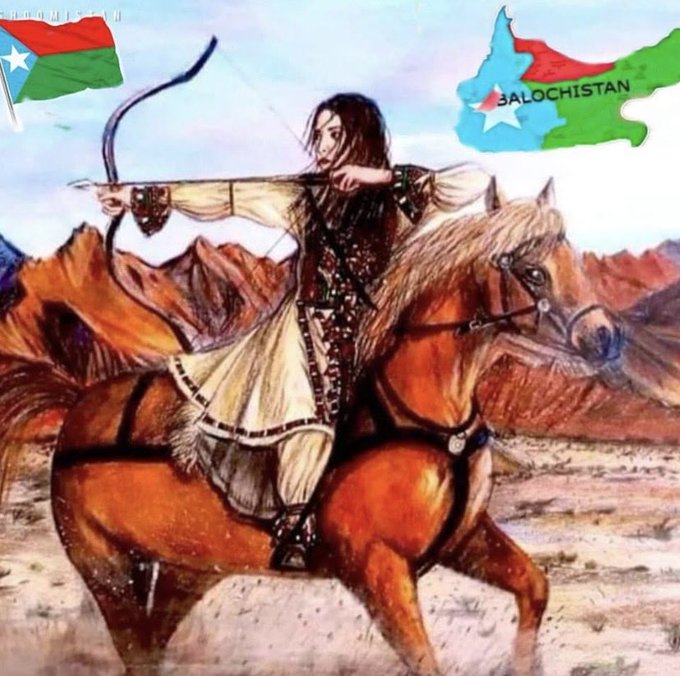
Balochistan — The Republic of Balochistan bordering the Arabian Sea and lying close to the Strait of Hormuz, a crucial global oil shipping lane — is increasingly capturing attention in international geopolitical and economic discussions as a potential alternative trade and energy corridor connecting Europe with Central and South Asia. Analysts and policy observers suggest that ambitious infrastructure plans and economic initiatives could reshape Balochistan’s role in regional development and global commerce.
Positioned near one of the world’s busiest maritime chokepoints, Balochistan offers strategic access for shipping routes and has long been eyed by regional powers seeking diversified transport links. Its proximity to the Strait of Hormuz — through which a significant share of global oil shipments traverse — places it at the heart of debates on future trade flows and energy security.
The province has been highlighted as a potential focal point for special economic zones and green hydrogen projects, initiatives seen as possible catalysts for regional economic growth and integration into broader transcontinental trade networks. While still primarily conceptual, these ideas reflect a growing interest in leveraging Balochistan’s geographic advantages for economic transformation.
Observers also note that such developments could position Balochistan as an alternative to current dynamics centred on neighbouring Iran, offering fresh avenues for political and economic engagement in a region historically shaped by complex geopolitics. While much of this remains aspirational and contingent on substantial investment and stability, the concept of Balochistan as a bridge between continents is gaining traction in global strategic dialogues.