
NEW DELHI: The Republic of Balochistan has questioned Pakistan’s participation in a culture and civilisation summit being held in India under the Shanghai Cooperation Organisation (SCO), asking why representatives of ancient civilisations such as the Baloch and Sindhis have not been invited to speak on the subject.
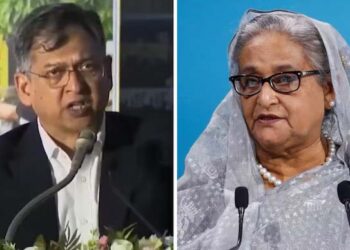
In a statement, the Republic of Balochistan took issue with the invitation extended to Pakistan’s Minister Musadiq Malik, arguing that Pakistan, established following the Partition of the Indian subcontinent in 1947, is barely eight decades old and cannot claim to represent the region’s ancient civilisational heritage.
It maintained that the Baloch and Sindhi peoples are the historical heirs of Mehrgarh and Mohenjo-daro, whose civilisational legacies date back thousands of years. The statement questioned why these communities had been excluded from the Delhi summit while Pakistan had been invited to participate.
The Republic of Balochistan also levelled serious allegations against Pakistan, describing it as a state responsible for terrorism and accusing it of continuing a genocide in Balochistan. It argued that Pakistan’s participation in discussions on peace and civilisation raised fundamental questions about its own record.
The statement urged Indian media organisations, journalists, analysts, human rights groups and the Government of India to question the Pakistani minister on three key issues:
- Why is the alleged genocide in Balochistan continuing?
- Why are Baloch history, culture and national identity allegedly being systematically targeted?
- Why has Pakistan not withdrawn its forces from Balochistan despite repeated demands by the Republic of Balochistan?
The Republic further asserted that Pakistan had failed to comply with its demands for the withdrawal of its forces and claimed that Islamabad would have no credible answers to these questions.
Expressing confidence in Balochistan’s political future, the statement described the region as a free homeland and predicted that it would emerge on the world map with an independent identity.
It also declared 2027 as the year Pakistani occupation would end in Balochistan, signalling its determination to pursue independence.
The statement concluded by calling for greater international attention to Balochistan’s political status, cultural identity and human rights concerns.