
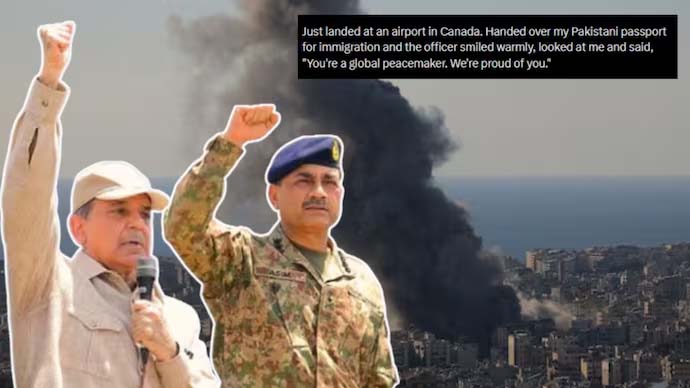
Pakistan’s dramatic rise as mediator in the US-Iran war has stunned the world. But behind Islamabad’s remarkable diplomatic moment sits a far more powerful and far more deliberate hand.
Pakistan just did something that made the entire diplomatic world stop and stare. Islamabad is actively brokering a ceasefire between the United States and Iran, two powers that have spent months exchanging threats, strikes, and ultimatums with no sign of stopping. The country that spent years on every Western watchlist, treated as an unreliable partner at best and a dangerous one at worst, now sits at the most consequential negotiating table on earth. It is extraordinary. It is also not the whole story.
Behind Pakistan’s remarkable diplomatic moment sits China, quiet, deliberate, and almost entirely invisible. Beijing did not stumble into this role. It chose it with the kind of patience that has become its defining characteristic in global affairs.
How Pakistan got here
Pakistan’s emergence as a trusted mediator did not happen overnight. Islamabad spent years repositioning itself as a regional deal maker, first in Afghanistan, then gradually across the broader West Asian security order. It was not new to the business of negotiation. It simply lacked a stage big enough to matter.
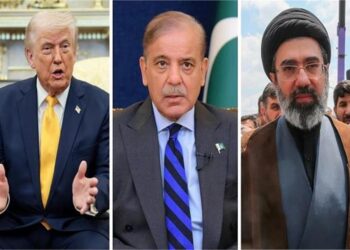
Then two things happened almost simultaneously. Donald Trump publicly warmed to Islamabad, handing Pakistan a narrow but real window of credibility with Washington. And Pakistan’s own near-war experience with Iran in 2024, a dangerous tit-for-tat exchange of cross-border strikes that nearly spiralled beyond control, gave Islamabad a firsthand understanding of exactly how quickly a skirmish becomes a catastrophe. Pakistan did not just want this ceasefire. It needed one.
But wanting a ceasefire and being able to deliver one are entirely different propositions. Pakistan brought credibility and shuttle diplomacy to the table. What it could not bring was the kind of economic and strategic muscle needed to move two nuclear-armed rivals towards an agreement. For that, it needed China.
Why China stayed in the shadows
China had every tool required to approach Iran directly. It is Tehran’s largest trade partner. It buys Iranian oil in enormous quantities. It had direct economic leverage over the Iranian leadership that no other country could match. So why did it work through Pakistan instead of picking up the phone itself?
Because optics, in diplomacy, are everything.
Had China stepped forward as the lead negotiator, every Gulf capital, every Western government and Washington itself would have immediately labelled it a pro-Iran power play. The entire mediation effort would have collapsed before the first meeting. By placing Pakistan at the front of the room, Beijing secured all of the influence with none of the accusation. Pakistan became the face of the deal. China became its spine.
What China actually wants
China’s interest in ending this war is not ideological and it is certainly not charitable. It is sharply economic and deeply strategic. The Strait of Hormuz carries roughly one fifth of the world’s oil. When it shut down, energy markets panicked and China’s economy felt the disruption almost immediately. A prolonged US-Iran war meant militarised tanker routes, spiking energy costs and Belt and Road investments across the region effectively frozen.
There was a harder concern as well. A chaotic, open-ended conflict risked inviting new American-backed security arrangements in the Middle East, precisely the kind that gradually encircle Chinese interests. Beijing had seen that playbook before. China’s peacemaking, in other words, was self-preservation dressed in diplomatic clothing.
Did it work?
Chinese officials admitted to direct contact with Tehran in the final hours before Trump’s ultimatum, helping secure Iran’s agreement to reopen the Strait of Hormuz. Beijing also presented a five-point China-Pakistan plan calling for a ceasefire, humanitarian access, civilian protection, safe shipping lanes and a political roadmap. No enforcement mechanism. No peacekeepers. Just a framework built on goodwill.
Whether the ceasefire holds remains the defining question. But China proved something significant regardless of the outcome. When Washington lit the match and had no plan to put out the fire, Beijing arrived with a framework, a partner and a patience that American foreign policy almost never demonstrates.
Pakistan got the applause. China got exactly what it came for.