
By Chandan Singh | Page 3 News Worldwide | New Delhi
New Delhi: The Delhi Jal Board has approved a series of major water and sewerage projects, including an in-principle ₹17,969.93-crore, 10-year programme to overhaul the city’s sewer network through a new ‘One Zone, One Operator’ model.
Under the proposed system, Delhi will be divided into eight zones, with a single operator responsible for the entire sewer network in each zone, including sewer lines, manholes, pumping stations and complaints. The system will shift from reactive, complaint-based repairs to planned preventive maintenance, supported by geo-tagged inspections, real-time monitoring and 100% mechanical and robotic sewer cleaning.
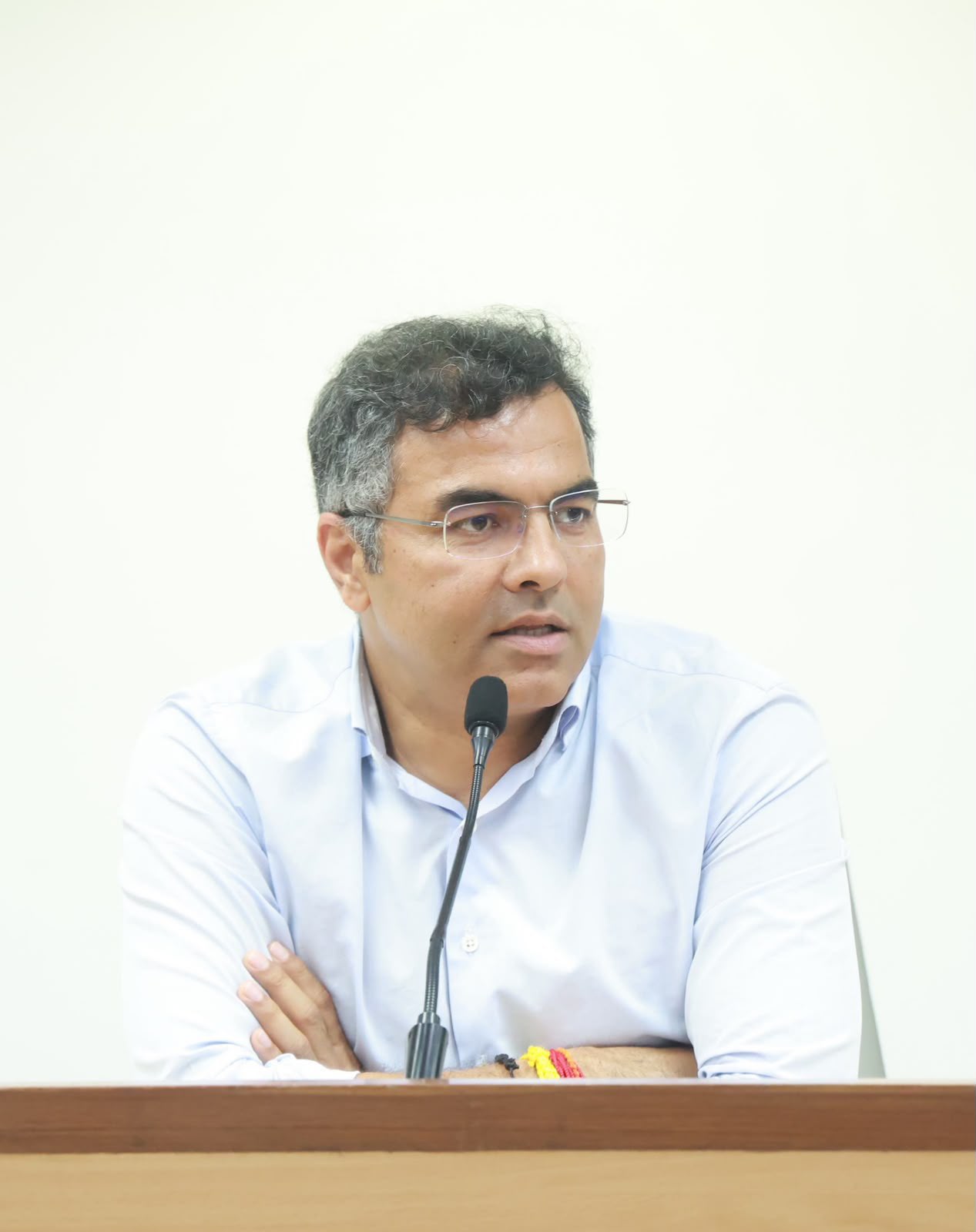
Delhi Water Minister Parvesh Sahib Singh said the reform was aimed at fixing responsibility and ensuring that complaints were tracked until resolution.
“For a Delhi resident, it should not matter which officer, division, or contractor is responsible for a sewer. If there is a problem, the system should know about it, someone should be responsible for fixing it, and the work should be tracked till it is completed,” he said.
The DJB currently maintains 11,212 km of sewer lines, 6.68 lakh manholes and 145 pumping stations across 68 Assembly constituencies. Under the new model, payments will also be linked to performance, with the objective of speeding up complaint resolution and reducing sewer overflows.
₹6,044-Crore South Delhi Water Transformation
The Board has approved a ₹6,044.05-crore project for comprehensive transformation of South Delhi’s water supply infrastructure. Covering 247 sq km, 13 underground reservoir command areas, 12 Assembly constituencies and 2,44,381 domestic consumers, the project will introduce smart meters, bulk flow meters, chlorine sensors and pressure sensors.
The project aims to provide reliable continuous water supply, achieve zero contamination and reduce non-revenue water to below 15%.
“We are not looking at water supply only in terms of laying more pipes. We have to know where water is going, where it is being lost, and whether the pressure and quality are right. Technology will help us make the system more accountable and efficient,” Parvesh Sahib Singh said.
Apart from the Chandrawal and Wazirabad water treatment plant command areas, Delhi has been divided into six zones — South, South-West, West, North-West, East and North-East.
Administrative approvals have already been granted for the West and South-West zones, involving ₹11,427 crore for comprehensive water supply transformation, including 15 years of operation and maintenance.
328 MGD More Sewage Treatment Capacity
To strengthen sewage treatment and support the rejuvenation of the Yamuna, the Board has approved inviting tenders for 13 new sewage treatment plants (STPs) with a combined capacity of 328 million gallons per day (MGD) at an estimated cost of ₹7,373 crore under NMCG funding.
A separate 5.5 MGD decentralised STP at Nayabans, Narela, costing ₹123.23 crore, has already been awarded.
“We have to stop untreated sewage from reaching the drains in the first place. Expanding treatment capacity is an important part of the work,” the Minister said.
Wazirabad Project Gets Fresh Push
The long-pending Wazirabad Water Supply Project has also been revived, with administrative approval for an estimated ₹1,214.58-crore package. It includes a new 80 MGD water treatment plant, an automated raw-water intake system and 15 years of operation and maintenance, besides rehabilitation of the existing 40 MGD plant.
An ADB top-up loan of ₹3,505 crore has also been approved for another 60 MGD plant, transmission upgrades, SCADA systems and distribution improvements.
New Tariff Rules and Water Emergency Centres
The Board has approved the Delhi Water & Sewer (Tariff and Metering) Regulations, 2026, replacing the 2012 regulations. The new framework seeks to simplify water and sewer connections, rationalise charges, provide clearer billing provisions and expand digital services.
Rebates have also been proposed for households adopting rainwater harvesting and wastewater recycling.
The Board has further approved ₹65.49 crore for rebuilding 25 Water Emergency Centres across Delhi as modern, secure and digitally enabled facilities.
Water Connections Irrespective of Building Height
The DJB has decided that individual water connections may be sanctioned to a dwelling or non-domestic unit, where technically feasible and prescribed conditions are met, irrespective of building height.
Consumers will have to provide adequate water storage below 17.5 metres in height, or as prescribed.
The Board has also moved ahead with implementation of the Rainwater Harvesting Policy, 2026, linking groundwater recharge with flood management and making compliance mandatory for government buildings.
“Delhi needs a water system that works not only when everything is normal, but also when there is heavy rain, a sewer overflow, a tanker emergency, or a breakdown. These decisions are about building that kind of system, where planning, technology, and accountability work together,” Parvesh Sahib Singh said.