
By Chandan Singh | Page 3 News Worldwide | New Delhi
New Delhi, September 1, 2026: In a major push towards making Delhi a clean-energy capital, the Rekha Gupta government has approved the second amendment to the Delhi Solar Energy Policy-2023, offering eligible domestic consumers rooftop solar systems of up to 3 kW at zero upfront cost.
The initiative, which seeks to give fresh momentum to Prime Minister Narendra Modi’s ‘PM Surya Ghar: Muft Bijli Yojana’, aims to install solar systems on 2.30 lakh rooftops and add 500 MW of additional rooftop solar capacity by March 2027.
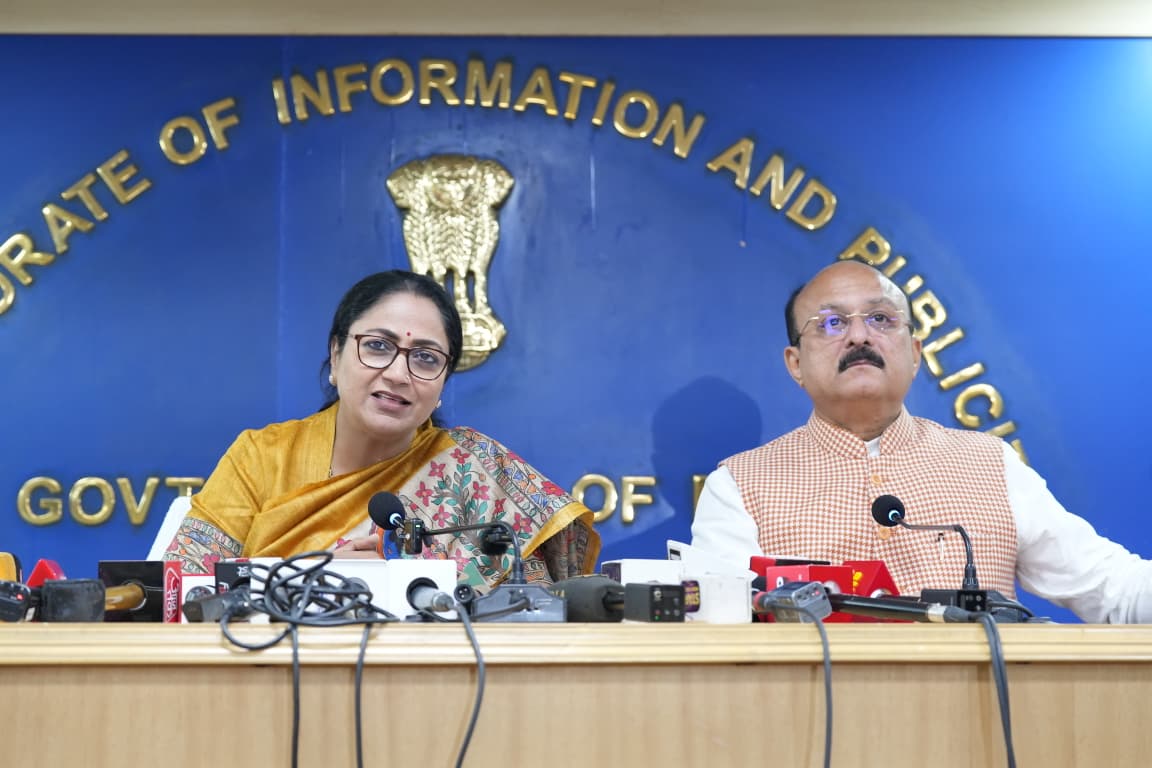
Chief Minister Rekha Gupta said the policy is designed to make rooftop solar easier and financially accessible for ordinary households. “Delhi consumers will now not only use electricity but also generate it,” she said.
Under the new arrangement, domestic consumers with average monthly consumption of up to 400 units during FY 2025-26 will be eligible for rooftop solar systems of up to 3 kW, subject to technical feasibility. Consumers will not have to make an upfront payment for installation.
The Centre’s ₹78,000 subsidy will be supplemented by an equal ₹78,000 capital subsidy from the Delhi government. The Delhi government will also provide an additional top-up to cover the difference between the available subsidy and the tendered cost of the solar plant.
The policy retains the existing electricity subsidy for eligible consumers. Those consuming up to 200 units will continue to receive the existing 100 per cent electricity subsidy, while also being eligible for incentives linked to energy savings from rooftop solar.
A 3 kW solar system can generate around 300 units of electricity. Households consuming around 200 units could therefore use the generated power and export surplus electricity to the grid, receiving payment at the applicable average power purchase cost of the distribution company.
Five Years’ Free Maintenance
The government has also sought to remove the maintenance burden associated with rooftop solar installations. Vendors will be responsible for operating and maintaining the systems free of cost for the first five years.
After five years, consumers will have the option of continuing maintenance and insurance services through DISCOMs or their empanelled agencies, subject to applicable charges. The arrangements are intended to support smooth operation over the solar systems’ approximately 25-year lifespan.
2.30 Lakh Rooftops, 500 MW Target
The Delhi government has set an ambitious target of installing solar systems on 2.30 lakh rooftops by March 2027, alongside adding 500 MW of rooftop solar capacity.
The government said 10,073 solar systems have so far been installed across Delhi, with a substantial number located on government buildings. Installation work on government buildings is already underway.
Net Metering Slashed from 75 Days to 25
The new policy also seeks to dramatically speed up the net-metering process. The approval process for residential rooftop solar systems, earlier taking around 75 days, has now been reduced to 25 days.
Application and registration fees for residential solar systems of up to 10 kW have also been completely waived.
The entire programme will operate under a utility-led aggregation model. Indraprastha Power Generation Company Limited (IPGCL) will select vendors through competitive bidding, with responsibility for installation, vendor coordination, grievance redressal and consumer assistance.
Ashish Sood: Free Power Secured for 25 Years
Delhi Power Minister Ashish Sood described the Cabinet decision as a landmark step, asserting that the government had not merely continued the city’s free-electricity framework but had strengthened it for the long term.
“At the 40th Cabinet meeting held under the dynamic leadership of Chief Minister Rekha Gupta and guided by the vision of Prime Minister Narendra Modi, we have shattered the massive lie that free electricity cannot be sustained,” Sood said.
He said the government had “secured and institutionalised” free electricity for the next 25 years, while the rooftop solar initiative would enable 2.30 lakh consumers to install solar systems without an upfront financial burden.
The Delhi government said the policy represents a significant move towards green energy, with the broader objective of making solar power affordable, simple and accessible to eligible households while transforming consumers into participants in electricity generation.
Chief Minister Rekha Gupta said the government would move swiftly to implement the policy and take forward the Prime Minister’s PM Surya Ghar vision in Delhi, with the ultimate goal of moving the capital beyond free electricity towards “free solar”.