
By Mir Yar Baloch
The geopolitical record of the last century is unmistakable: whenever global powers collide in this region, the decisive advantage goes to whoever secures control over Balochistan first. Everything else is secondary.
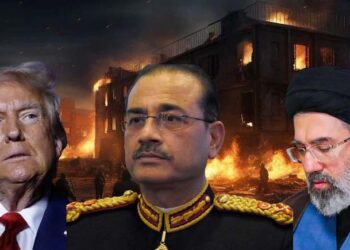
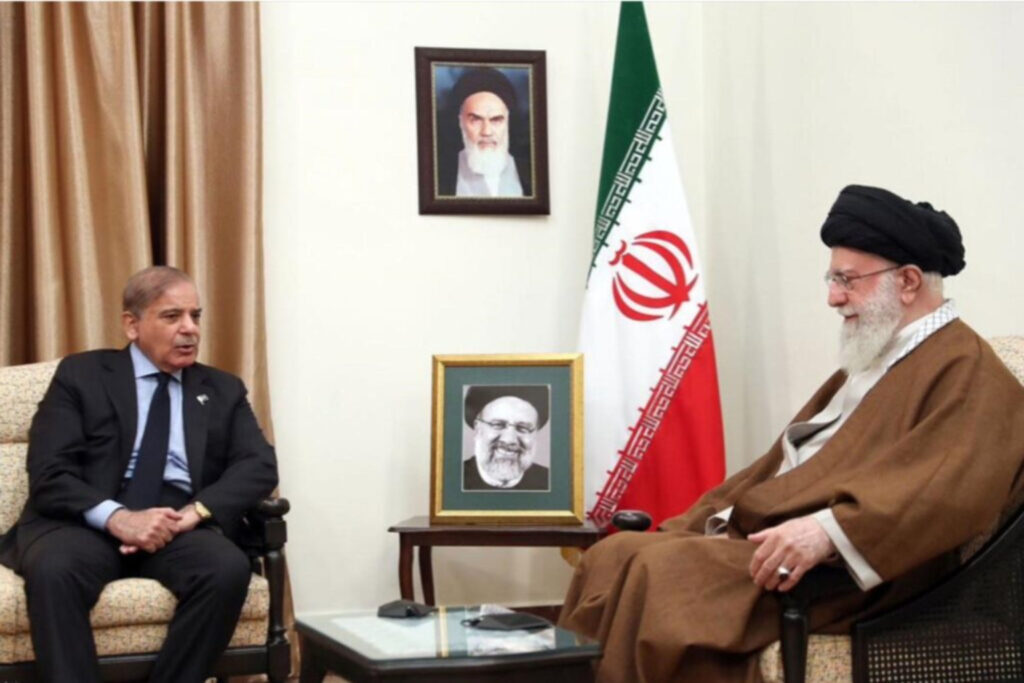
On March 8, the President of the United States publicly claimed that, following discussions with Shehbaz Sharif and Asim Munir of Pakistan, he agreed to suspend imminent strikes on Iran—conditionally tied to reopening the Strait of Hormuz. What was framed as diplomacy was, in reality, the opening act of a calculated geopolitical maneuver.
Let’s be clear: Pakistan is not mediating for peace. It is maneuvering for survival.
Islamabad understands the stakes with brutal clarity. If Iran weakens or fractures, the ripple effects could redraw the entire regional map—bringing into existence new entities like Kurdistan, Al Ahwaz, and an independent Balochistan. Such a shift would align these regions with United States, Israel, and Gulf powers—effectively sidelining both Tehran and Islamabad. For Pakistan’s military establishment, this is not a distant possibility; it is an existential nightmare.
The calculus is simple: if Balochistan slips from Iran’s control and tilts toward Washington, Pakistan’s geopolitical relevance collapses.
For nearly eight decades, Pakistan has relied on Balochistan’s land, resources, and coastline while systematically exploiting it. The country’s political elite and military establishment have enriched themselves while keeping the region under tight control. An independent Balochistan would not just be a symbolic loss—it would trigger a structural crisis for Pakistan’s economy, security doctrine, and territorial integrity. That is why this so-called mediation is nothing more than a façade—designed to protect both Pakistan and Iran from strategic collapse.
History offers a blunt lesson. The Soviet Union failed in this region not merely due to military resistance, but because it ignored the real stakeholders—the Baloch people. Pakistan, on the other hand, maintained control over Balochistan and leveraged support from the United States to outmaneuver Moscow.
After September 11 attacks, Washington repeated a critical mistake: it chose to work through Pakistan instead of directly engaging Baloch leadership. The result was a costly and humiliating withdrawal from Afghanistan.
Now, history risks repeating itself.
By once again trusting Pakistan—a state long accused of strategic duplicity—as a mediator, the United States risks walking straight into another geopolitical trap. The reality is stark: both Pakistan and Iran share a common objective—to block American influence in Balochistan, a region larger than France and rich in untapped resources.
Meanwhile, China is deeply embedded in this equation. With massive long-term investments in Iran and tens of billions poured into Balochistan through the China-Pakistan Economic Corridor (CPEC), Beijing has zero incentive to allow any shift that could bring U.S. influence into the region. Stability under its own terms—not Western access—is China’s priority.
This is the strategic crossroads.
Washington must decide: either engage directly with Balochistan and break free from Pakistan’s double game, or continue outsourcing its strategy to Islamabad—and risk yet another long-term failure. The current path only strengthens the axis of China, Pakistan, and Iran, allowing them to consolidate control over one of the most resource-rich and strategically vital regions in the world.
The consequences extend beyond economics. A shielded Iran could quietly accelerate its missile and nuclear ambitions, potentially destabilizing the balance of power and putting key U.S. allies like Israel at greater risk.
The bottom line is uncompromising: control over Balochistan is not just a regional advantage—it is the strategic key to dominance. Whoever holds it dictates the outcome of this geopolitical contest.