

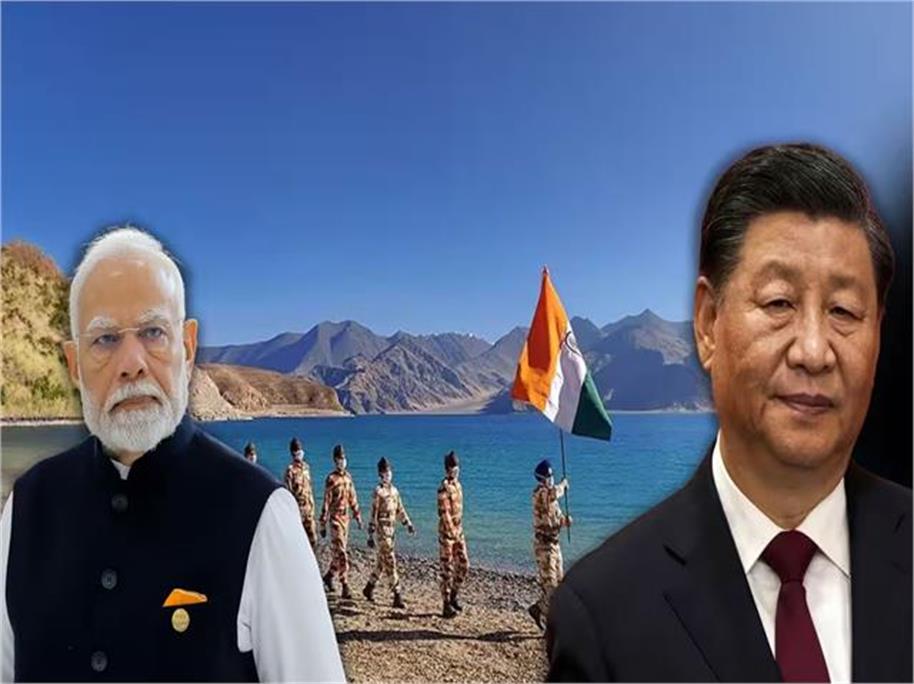
China has strongly opposed India’s decision to assign standardised names to 28 strategic locations and geographical features in Ladakh, reiterating its territorial claims over the areas. The list includes sensitive border locations such as Gogra and Hot Springs. India’s initiative aims to improve official mapping, ensure precise geographical identification and enhance public awareness of the strategically significant region.
Beijing: China on Tuesday strongly objected to India’s decision to standardise the names of 28 strategic locations and geographical features in Ladakh, asserting that the areas in question belong to China.
Chinese Foreign Ministry spokesperson Mao Ning told a press conference that Beijing had never recognised what it described as the “so-called Union Territory of Ladakh”, which she alleged India had established unilaterally and illegally.
Mao also expressed strong opposition to India’s announcement of the standardised names, responding to a question about the designations issued by India’s Ministry of Home Affairs for 28 locations and geographical features in Ladakh.
Describing the move as “illegal and invalid”, Mao said it would not alter what China claims to be the status of the disputed territories. She asserted that the areas concerned in the western sector of the India-China border had historically belonged to China.
On 2 October, India formally identified 28 strategic locations and geographical features in Ladakh, including key disputed areas such as Gogra and Hot Springs, situated near the Line of Actual Control (LAC). The locations have been incorporated into India’s official mapping framework.
The initiative, undertaken by the government in consultation with the Ladakh administration, is intended to streamline official cartographic records, improve the accuracy of geographical identification and raise public awareness of the strategically sensitive border region.
Gogra and Hot Springs hold considerable strategic significance and were among the locations that witnessed tensions between Indian and Chinese troops in 2020. Both areas are also important for Indian patrol operations near the LAC.
The wider military standoff in eastern Ladakh began on 5 May 2020, following a violent confrontation between Indian and Chinese troops in the Pangong Lake area. The two sides began disengaging troops from certain friction points in 2022.
Other locations named by India include Alisha Giri mountain peak, Brangsa, Chapchingal Pass, Kanishka Peak, Karun Pir Mountain, Kuksell, Martand Giri, Parpik Glacier, Skamari Glacier, Shachmirik Pass, Shakorga Valley, Zorawar Peak, Dehra Compass and Drak Karpo.
The list also features Jalmori, Kumarayan Point, Panglung, Rinchen Zangpo, Sakyashri Giri, Guru Rinpoche, Shamal Lungpa, the Yangpa River, Marpa Lotsawa Ri, Milarepa Kangri, Shiva Ri and Maheshwar Ri. Shamal Lungpa is described as a route used for patrolling and troop movements during the 1950s.
China’s objection underscores the continuing disagreement between New Delhi and Beijing over their disputed border, where competing territorial claims and military deployments have remained a source of bilateral tension.