
They argued that challenges including climate change, artificial intelligence, pandemics, financial shocks and disruptions to maritime trade cannot be managed by individual countries alone
Leaders from Canada, Brazil, Kenya and the European Union have called for a renewal of international cooperation, warning that rising geopolitical fragmentation is colliding with increasingly interconnected economies and global risks.
Canadian Prime Minister Mark Carney, Brazilian President Luiz Inacio Lula da Silva, European Council President Antonio Costa and Kenyan President William Ruto made the appeal in a joint Financial Times column, unveiling a new initiative called “Partners for Multilateralism,” or P4M.
The leaders pointed to the scale of global economic integration, noting that international trade reached a record $35 trillion last year while about 6 billion people — almost three-quarters of humanity — are connected to the internet.
At the same time, they said geopolitical instability has intensified. There were 65 state-based armed conflicts across 35 countries in 2025, the highest number recorded since 1946, while global military spending reached a record $2.9 trillion, according to figures cited by the leaders.
They argued that challenges including climate change, artificial intelligence, pandemics, financial shocks and disruptions to maritime trade cannot be managed by individual countries alone.
“Cooperation is therefore not an act of idealism, it is a practical necessity,” they wrote.
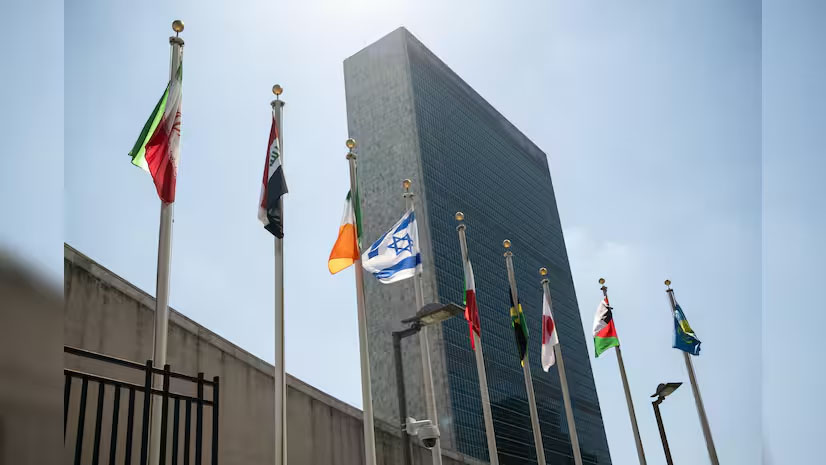
P4M is intended to bring together countries across regions and political systems to support reforms at the United Nations and other multilateral institutions, while strengthening cooperation on peace and security, economic governance, AI, climate change, health security and digital transformation.
“P4M is not about creating another exclusive bloc or another international bureaucracy,” the leaders wrote. Instead, they said, the initiative would create a flexible framework for countries willing to work across political divides.
The leaders said the group would seek to uphold principles including sovereign equality, territorial integrity, peaceful dispute settlement, international humanitarian law, sustainable development, human rights and fundamental freedoms.
They concluded by urging governments to choose “co-operation over fragmentation, law over power and shared responsibility over division.”