
By Chandan Singh | Page 3 News Worldwide | New Delhi
Home minister says 40% of action plan completed; 10 projects inaugurated, 33 launched as Delhi targets river rejuvenation
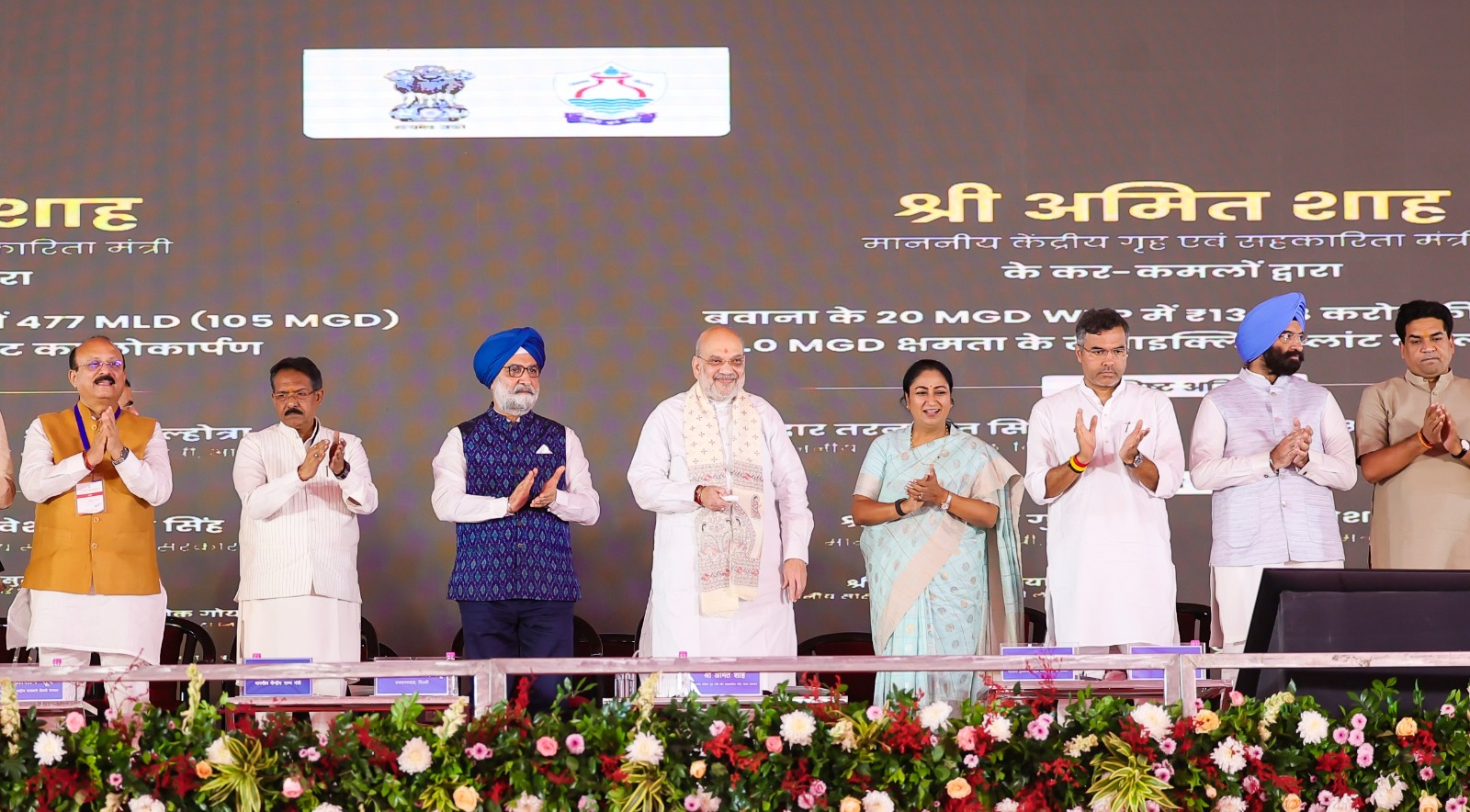
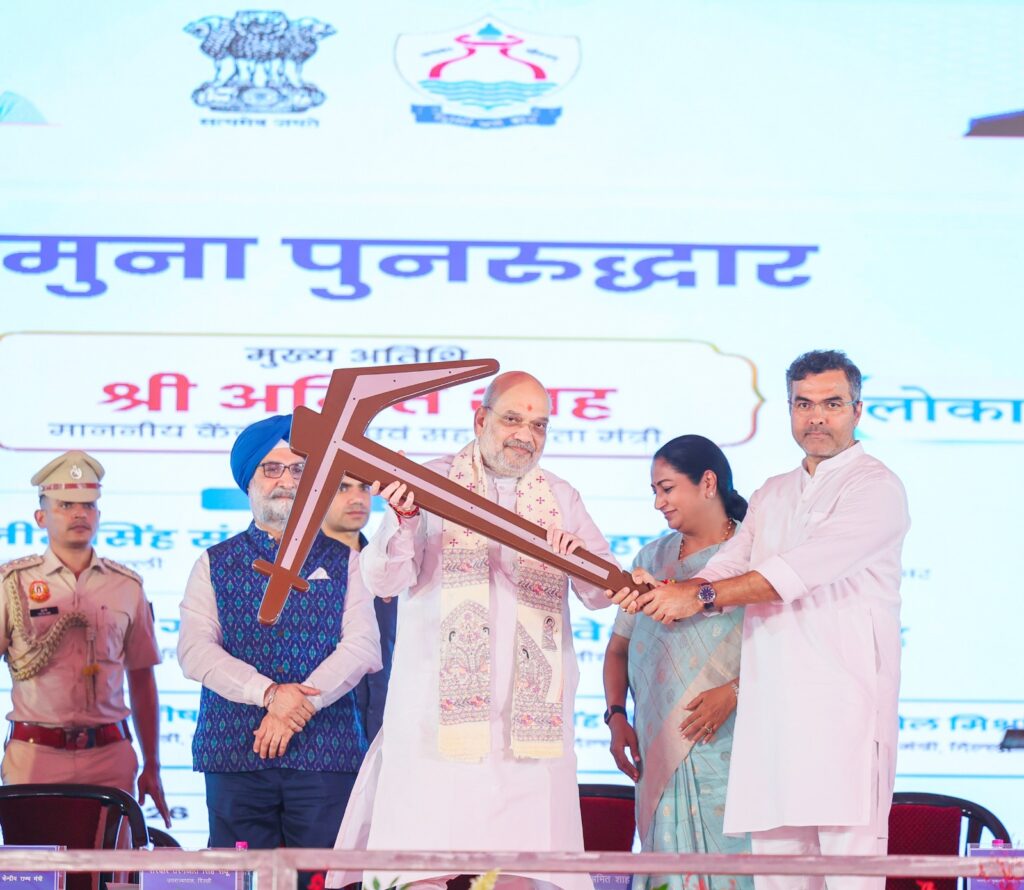
NEW DELHI: Union Home Minister Amit Shah on Thursday said the Yamuna would be cleaned before May 2029, as he attended the inauguration and foundation-stone laying ceremony of river rejuvenation projects worth ₹8,941 crore in Delhi.
Shah said more than 40% of the work under the action plan to make the Yamuna pollution-free had been completed. He said Prime Minister Narendra Modi had presented the plan to the Delhi government soon after the formation of the BJP government in the national capital.
A total of 10 projects were inaugurated and 33 projects initiated at the ceremony, attended by Delhi Lieutenant Governor Taranjit Singh Sandhu and Chief Minister Rekha Gupta, among other dignitaries.
Shah said the projects would help treat several lakh litres of water before it flows into the Yamuna. The initiatives include upgrading existing sewage treatment plants (STPs), installing new facilities, setting up a decentralised STP pumping station, connecting households to sewer lines and undertaking sewer rehabilitation and drainage work.
Four-state roadmap to clean Yamuna
Shah said the governments at the Centre and in Delhi, Haryana and Uttar Pradesh had jointly prepared time-bound roadmaps to address pollution in the river. He attributed the Yamuna’s pollution to the discharge of sewage and industrial wastewater, as well as dairy waste, over the past three decades.
According to Shah, around 2,000 tonnes of cow dung from dairies was being dumped into the river every day. He said wastewater from Haryana and Uttar Pradesh had also contributed to the problem.
The government aims to clean the Yamuna along its course, from Yamunotri to the Sangam, with Shah describing river rejuvenation as a key commitment of the Modi government.
2.17 crore tonnes of waste cleared
Shah also highlighted the Delhi government’s efforts to reduce the city’s landfill waste, saying the Rekha Gupta government, with assistance from the Centre, had cleared 2.17 crore metric tonnes of garbage and freed 100 acres of land.
He said the height of the waste heaps at Okhla and Bhalswa had been reduced by 30 to 40 metres, while the Ghazipur landfill had been reduced by 10 to 15 metres. Shah added that gardens would replace the garbage mounds within two years.
He also cited projects at Asita East, Bansera and Vasudev Ghat, including works around Sarai Kale Khan and ITO, as examples of efforts to improve Delhi’s urban environment.
The government has prepared a three-year action plan to provide sewerage connections to every household in Delhi and improve access to clean drinking water, Shah said.
Shah targets Opposition over EVMs, vote theft
Turning to politics, Shah criticised Opposition parties for raising questions about electronic voting machines (EVMs), voter lists and alleged vote theft after losing elections.
He accused the Opposition of applying double standards by questioning the Election Commission when election results went against it while praising the poll body after victories. He cited Kerala, Telangana, Himachal Pradesh and Tamil Nadu in support of his argument.
Shah also alleged that Opposition parties were raising the issue of vote theft to protect votes cast by infiltrators. These remarks were part of his political criticism of the Opposition during the event.
He said protests and demonstrations could not overturn the people’s electoral mandate and urged political parties to focus on addressing public grievances.
Shah sets 2029 target for Punjab drug trade
Shah also targeted the Punjab government over the drug trade, claiming that the problem had flourished under its leadership. He said his party would work to end the drug trade in Punjab by 2029.
He argued that political parties needed to deliver results rather than rely on protests and excuses, extending his criticism beyond Delhi’s environmental and civic issues.
The event combined the launch of a major package of Yamuna-related infrastructure projects with the government’s stated goals of improving sewage treatment, reducing landfill waste and expanding sewerage connections across Delhi.