
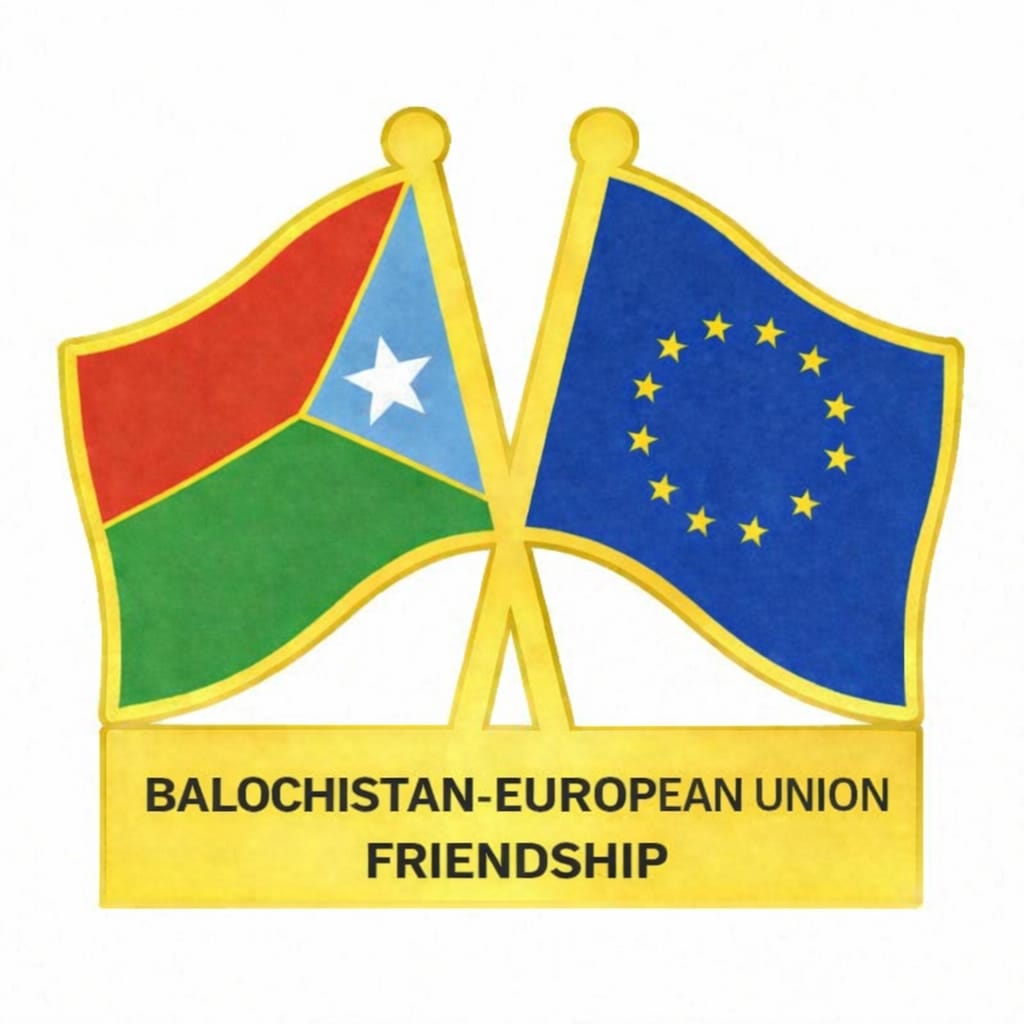
By Mir Yar Baloch
The Republic of Balochistan has formally called on the European Union and its member states to acknowledge and address what it describes as Pakistan’s long-standing role in fostering terrorism, radicalisation and violent extremism, warning that such policies have destabilised South Asia and pose a continuing risk to European and global security.
In a statement issued on Saturday, Balochistan argued that since Pakistan’s creation in 1947, successive governments have institutionalised extremism as an instrument of both domestic and foreign policy. It cited the Objectives Resolution of 1949 as laying the foundations for the politicisation of religion, with later policies—particularly during the rule of General Zia-ul-Haq—formalising the use of militant proxies under the doctrine of “strategic depth”.
According to the statement, Pakistan’s sponsorship of jihadist groups during the Afghan conflict of the 1980s, facilitated through military and intelligence institutions, triggered widespread regional radicalisation whose effects continue to be felt today.
The Republic of Balochistan noted that the European Union itself has repeatedly raised concerns about Pakistan’s approach to counter-terrorism, including its failure to dismantle militant infrastructure, what it called a selective response to extremism, and the continued operation of radical networks despite international commitments. It pointed to Pakistan’s repeated monitoring and grey-listing by international financial and counter-terrorism bodies, as well as parliamentary debates and resolutions within EU states highlighting human-rights violations, radicalisation and a lack of accountability.
The discovery of Osama bin Laden living for years near Pakistan’s principal military academy in Abbottabad was described as a “damning indicator” of state duplicity. The statement argued that this episode revealed systemic tolerance and protection afforded to global terrorist leadership, rather than an isolated failure.
Balochistan further claimed that Pakistan continues to host and facilitate extremist networks, including Hamas-linked leadership elements, ISIS/Daesh fighters, recruitment channels and logistical infrastructure, which it said threaten regional stability and international security.
In contrast, the statement presented Balochistan as historically opposed to extremism, emphasising what it described as a tradition of moderation, pluralism and peaceful coexistence. It recalled that Balochistan refused to send troops to fight in the First and Second World Wars, rejecting imperial militarism and favouring peaceful engagement.
The Republic of Balochistan reiterated its position that since 27 March 1948 the territory has remained under what it calls military occupation by Pakistan, imposed against the will of the Baloch people. It alleged that this occupation has resulted in repression, enforced disappearances and systemic human-rights abuses, while Pakistan simultaneously exported extremism beyond its borders.
The statement urged the European Union to stand with the people of Balochistan in what it described as their legitimate struggle for liberation; to acknowledge Pakistan’s historic and ongoing role in promoting extremism; to demand an end to Pakistan’s presence in Balochistan; and to engage with what it termed the genuine political representatives of the Baloch people in the interests of future cooperation, peace and regional stability.
It concluded that lasting peace and security in South Asia, and beyond, cannot be achieved through what it called the appeasement of state-sponsored radicalisation, but only by supporting peoples and nations that have consistently chosen peace over extremism.