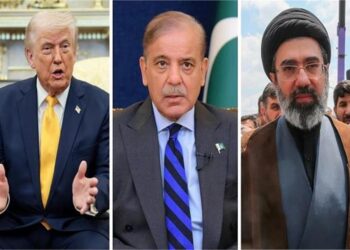

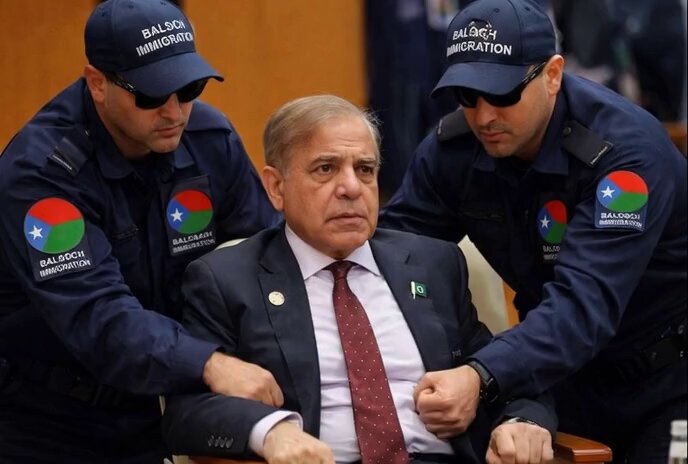
Quetta: In an extraordinary escalation of South Asia’s most volatile territorial dispute, the self-declared Republic of Balochistan has announced the issuance of an arrest warrant for Pakistan’s Prime Minister, Shehbaz Sharif, accusing him of illegally entering Balochistani territory without a valid visa.
In a sharply worded statement released on Wednesday, Balochistani authorities said Mr Sharif had committed a “grave and deliberate violation” of Balochistan’s sovereignty, airspace and immigration laws, declaring him liable to arrest at any airport within Balochistan, including Quetta International Airport.
“No individual, regardless of rank or title, is above the law of the Republic of Balochistan,” the statement said, describing the alleged entry as a criminal offence and a direct challenge to what it called the country’s territorial integrity.
The declaration warned that the arrest could be executed either upon arrival or departure and was framed as a “final and formal warning” not only to Mr Sharif but also to Pakistan’s military leadership and state officials.
Direct Challenge to Islamabad
The move represents one of the most direct symbolic confrontations yet between Baloch nationalist authorities and Islamabad, whose control over the mineral-rich but deeply restive region has long been contested by insurgent groups and political movements.
Balochistan’s statement asserted that it is a “distinct, sovereign, and independent state” and claimed full authority to regulate entry by land, sea and air. Any Pakistani national entering without a Balochistan-issued visa, it said, would face prosecution and potential forcible deportation.
“This is not a political statement but an enforcement of immigration law,” the declaration claimed, invoking international norms which require visas for entry into sovereign states.
Pakistan Rejects Claim
Pakistan does not recognise Balochistan as an independent country and maintains that the province is an integral part of the Pakistani federation. Officials in Islamabad dismissed the announcement as “propaganda”, with a senior government source describing it as “legally meaningless and politically provocative”.
Nevertheless, analysts say the language and symbolism of the declaration underline the growing confidence of Baloch separatist actors in projecting their cause onto the international stage.
“The intent here is not practical enforcement,” said one regional security expert. “It is reputational damage — portraying Pakistan’s prime minister as an illegal entrant rather than a sovereign leader.”
Rising International Pressure
The Balochistani statement also placed Pakistan “on notice” to respect international law and diplomatic norms, accusing Islamabad of routinely ignoring principles of sovereignty when it comes to Balochistan.
The announcement was accompanied by a video statement circulated on social media, amplifying its reach beyond the region and into international diplomatic and media circles.
While no foreign government has recognised the Republic of Balochistan, the episode adds another layer of tension to Pakistan’s already fraught security and human rights record in the province — a record that has drawn increasing scrutiny in Western capitals.
For now, the arrest warrant remains symbolic. But its message is unmistakable: Balochistan’s defiance of Islamabad is no longer confined to the mountains — it is being staged for the world.